By Suie Choi ‘20, Sports Editor

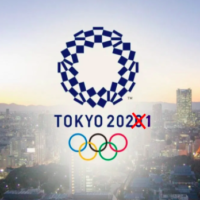
The Olympics are an international phenomenon and the world’s largest sporting event, uniting the top athletes with billions of fans every four years. This year, the 2020 Summer Olympics planned to begin in late July in Tokyo’s national stadium. However, after weeks of uncertainty during these unprecedented times, the International Olympic Committee (IOC) announced on March 24 that the games would be postponed until 2021. Since they began in 1896 in Athens, the Olympics have been cancelled only three times, during world wars in 1916, 1940, and 1944. They have never before been rescheduled.
Although the decision to postpone the summer games was difficult in itself, the IOC faces a new set of challenges in deciding on the time frame to avoid scheduling conflicts. The games were originally planned for July 24 through August 9 for 2020, and establishing the same dates for 2021 seems like the ideal solution. However, there would be an overlap with the swimming and track and field world championship events, two of the biggest Olympic sports. In addition, moving the event back in spring will conflict with large domestic leagues, such as the European soccer league and the NBA.
Furthermore, many athletes are losing a considerable amount of training time because of the lack of access to athletic facilities, such as pools and gyms. Currently, 57% of the athletes had already qualified for the Tokyo 2020 games. However, there is uncertainty about whether their spot will remain secure for 2021 because the possible new qualification parameters since athletes will have one extra year of training is huge. Moreover, the postponement complicates things for a lot of the Olympic athletes. Many of the athletes have put their education, potential jobs, and other life plans on hold in order to pursue their athletic career, so they will have a tough decision ahead of them on whether it’s worth it to train another year for the games to take place.
The postponing of the Olympics has also struck a chord with avid sports fans in the NA community. Aashna Parameshwar ‘20 says: “My family and I were so excited to visit Japan this summer and go to Tokyo to watch the games. We’ve watched the Olympics at home our entire lives, and we finally had the opportunity to witness the incredible event in person. Although we are unable to experience it this year, the decision to postpone the games was ultimately made to keep the safety of the athletes, attendees, and facilitators of the games as the main priority, as it should be.” While the fans, athletes, and coaches are all devastated that they will have to wait another year for this event, they understand that the health and safety of the world come first.
While we are certain that the Tokyo 2020 Summer Olympics will not happen in the summer of 2020, many logistics are still unknown. For the time being, fans can continue to support the Olympic athletes as they find ways to train for their events during this pandemic. But all we currently know is that this Olympics will forever go down in history.
Leave a Reply
You must be logged in to post a comment.