By Catherine Orr ‘22, Commentary Editor
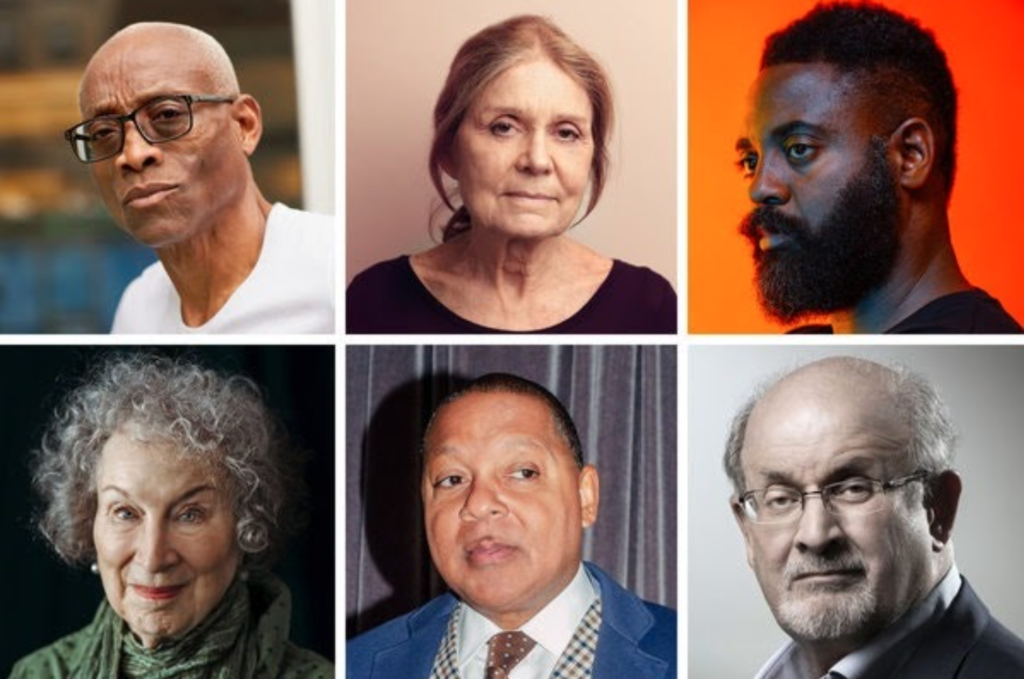
On July 7th, “A Letter on Justice and Open Debate” was published in Harper’s Magazine. Margaret Atwood, J.K. Rowling, and Malcolm Gladwell were among more than 150 journalists, academics, and artists to sign the open letter. It warned of an “intolerant climate that has set in on all sides”, with “a new set of moral attitudes and political commitments” that are weakening our norms of open debate and leading to intolerance and growing illiberalism. It then went on to read, “editors are fired for running controversial pieces,” and “journalists are barred from writing on certain topics.” Basically, the letter emphasized the need for open civil discourse without the fear of being “cancelled” and the effects that come with it. Since its publishing, the letter has caused quite a stir, receiving both fierce criticism and ardent support, and setting off debates on free speech and the existence of “cancel culture.”
According to Merriam-Webster Dictionary, cancel culture “has to do with the removing of support for public figures in response to their objectionable behavior or opinions.” We’ve all seen it done before, perhaps to a social media influencer whose discriminatory tweets or comments have suddenly come to light. But canceling someone is more than just stopping your support for them, it’s putting social pressure on others to do the same. And in the age of social media, it’s easy for thousands of people to show their support for the same causes at the same time. This can quickly cause a wide-spread hatred for the person, which can lead to serious consequences, even going so far as to strip them of their careers in some cases. I agree, this is a worthy punishment to many people. Jessica Krug, for example, who was a professor at George Washington University and author of “Fugitive Modernities”, a book that examined fugitive slave communities in West Angola and Africa. Krug pretended to be Afro-Latina and from the Bronx for years, when, in reality, she is white, Jewish, and grew up in the suburbs of Kansas. On September 3rd, shortly after she admitted to lying about her identity, GWU announced that Krug resigned from her job as associate director of African history and would no longer be teaching classes at the University. Many black scholars were rightfully outraged at her “playing with the color line” for career advancement. The Jessica Krug’s of society deserve what’s coming to them. But when does canceling those who deserve it change into limiting the benefits of free speech?
The Harper’s letter goes on to warn that the exchange of information and ideals is “daily becoming more constricted.” This past July, Jesse Goldberg, who was an incoming lecturer at Auburn University, tweeted anti-police sentiments onto his private twitter account in reaction to a news story of a plainclothes police officer arresting a violent protester in New York City. After being investigated by the University due to the fact that his tweets were “inexcusable and completely counter to Auburn values”, Goldberg was reassigned to a research only fellowship. Goldberg took to twitter to say that his position was not changed without his consent, though he is still gathering information to make sure this change did not amount to workplace retaliation. Jesse Goldberg’s story, and numerous others similar to it, seems to have made an effect on others in their own workplaces. This year, Heterodox Academy, an advocacy group for viewpoint diversity on college campuses, conducted an internal member survey of 445 academics. They asked, “Imagine expressing your views about a controversial issue while at work, at a time when faculty, staff, and/or other colleagues were present. To what extent would you worry about the following consequences?” To this question, more than 50 percent of respondents chose the hypothetical: “my career would be hurt.” This is concerning. While we as a society should not have to endure hate speech and its effects, cancel culture has proved to dampen even rational conversation, so long as it strays from a certain orthodoxy. This lack of conversation has also proven to be an ineffectual form of communication. Dr. Becky Spelman, a psychologist at the Private Therapy Clinic explains: “Instantly reacting by trying to shut people down, and shut them up, whenever they disagree even slightly with a group consensus is a disproportionate reaction. Rather than changing anybody’s mind, when this happens, they are more likely to withdraw from conversation completely, to become increasingly entrenched in their views, and less willing to listen to a different point of view.” So, cancel culture doesn’t just constrict the content of the conversation, but is ineffective in changing anybody’s minds.
Free speech is a spectrum. It is meant to protect the speech we like and the speech we hate, regardless of what happens to be socially acceptable in the present. It shouldn’t be a trial without a jury. Cancel culture has proved to be unproductive in both addressing the issue, and solving it. Once you put the label of “canceled” on someone whose ideas you don’t like, you put the social pressure on others to reject them and their ideas completely, without having to address the actual disagreement. The Harper’s letter describes open conversation as “the lifeblood of a liberal society.” When our privilege of discussion granted to us by free speech becomes constricted, we move further and further away from bringing about positive change to our society.
More and more recently, minorities have been able to raise their voices and be heard against social and racial injustices, critiquing powerful figures and holding them accountable publically and socially. This is a good thing. Criticism of these institutional norms protecting bigotry are finally being heard. This is the power of free speech that I believe should not be withheld from society.
Leave a Reply
You must be logged in to post a comment.