By Michaela Wang ‘21, Feature Section Editor
We often hear the phrase, “listen to science.” Society views science as objective truth, unable to be tampered with, the magnum opus supporting all arguments. But while we rely on numbers for a sense of validity and security, these figures are often skewed; the choice of what data we want is an act of subjectivity. The year 2020 for the US Decennial Census is a battle of who gets to answer what, revealing just how important one tiny dot on a line graph truly is.
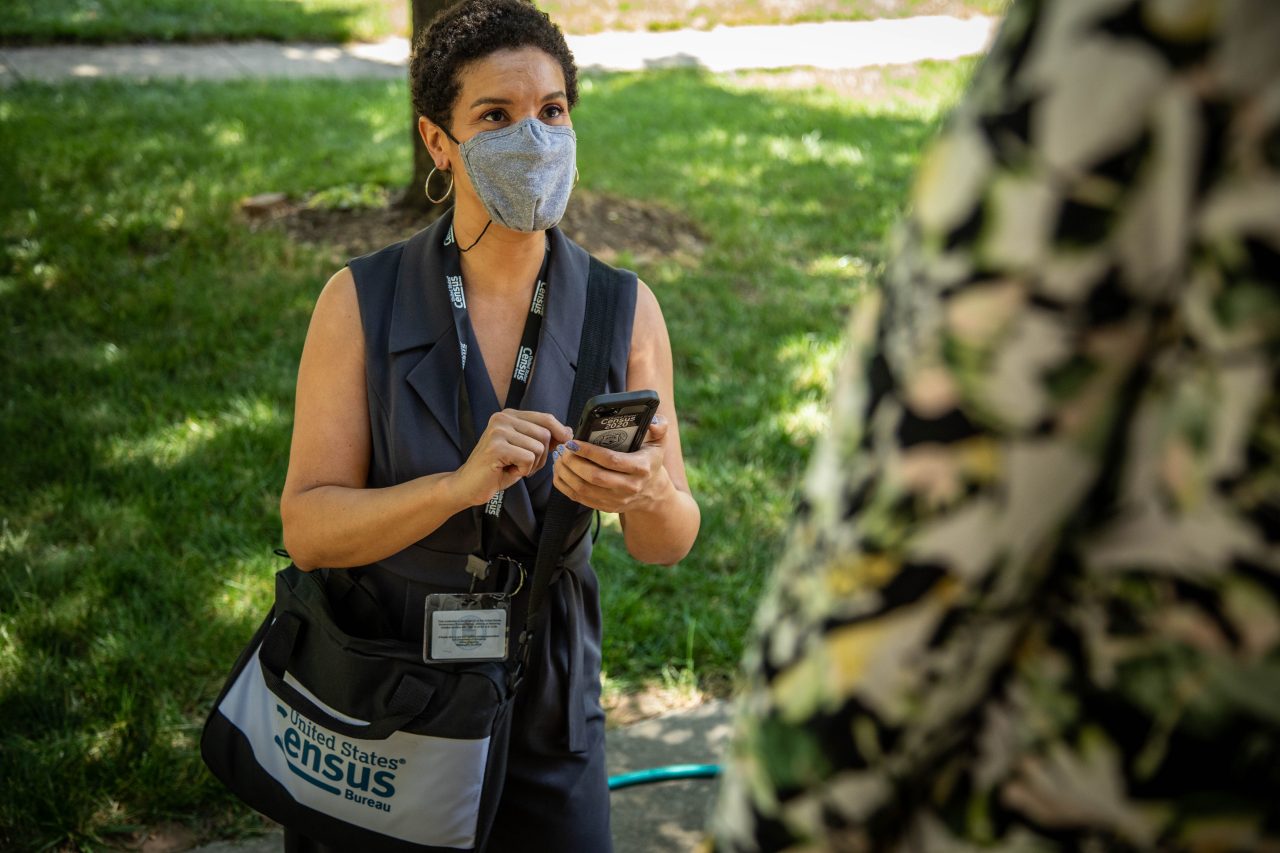
2020 Census surveys are conducted in three ways––over the phone, through mail, or online––to everyone living in the United States and its five territories: Puerto Rico, American Samoa, the Commonwealth of the Northern Mariana Islands, Guam, and the U.S. Virgin Islands. One householder above the age of 15 fills out the survey for each household member, and three methods of surveying can be provided in 13 different languages.
Yet despite following all of the above practices for the 2010 Decennial Census, the Bureau still made two big mistakes: they either counted people twice or didn’t count them at all because, simply put, surveying every person in the United States is impossible. However, the issue lies not in the inevitable act of miscounting, but who is miscounted.
There are many reasons why people are missed by the Census Bureau, all of which disproportionately bar non-white residents from completing their survey. Residents who live in highly rural or highly urban areas are difficult to contact. Homeless people, or those displaced by a natural disaster such as the 2020 Californian Wildfires or Tropical Storm Beta, are hard to locate. With an upcoming election, people who distrust the government are difficult to persuade to fill out the form.
According to the Guardian, the 1940 Decennial Census missed one in every 12 black residents. Since then, the black undercount rate has slightly improved for black people, but remained undercounted for other racial groups.

“Black people have been undercounted since we were counted as three-fifths of a person, 400 years ago,” stated Jeri Green, who spent 20 years working as a senior adviser on civic engagement at the Census Bureau, to The Guardian. “We have always been undercounted, in stark contrast to the white population that has always been overcounted.”
Green now works for the National Urban League, where a new campaign called Make Black Count advocates for more proportionate representation of black people in demographic data. While Green acknowledged to The Guardian that current issues such as police brutality, access to healthcare, and voter suppression seem pressing concerns, he believes that the Census Bureau numbers underpin those many forms of injustice. In fact, the final Census count determines seats in Congress and election maps for local and state representatives. “We believe that right now there is no more important issue facing the black community than being counted and voting.”
The failed attempt last year to add a citizenship question to the census questionnaire may have deepened undocumented immigrants’ distrust, particularly for Latinx communities who make up almost a fifth of the US population, according to US Census Bureau QuickFacts.
Native American communities suffer the lowest connection to high-speed internet in the United States, according to the American Community Survey conducted by the US Census. With the highly online nature of this year’s surveys caused by the pandemic, indigenous groups will be severely undercounted. In addition, after decades of subjugation under white supremacy and land displacement, it is justifiably difficult for these communities to trust government-sponsored surveys.
Despite the injustices that face data collection, is there still merit in the data itself? This high school newspaper article, along with virtually every academic research paper or journalistic piece, still relies on demographic evidence from the US Census Bureau. While the government can allocate more funding to survey BIPOC groups, there is an extent to which these numbers reflect the whole of society. Data cannot tell stories.
Leave a Reply
You must be logged in to post a comment.