
By: Emily Swope ’22, Feature Editor
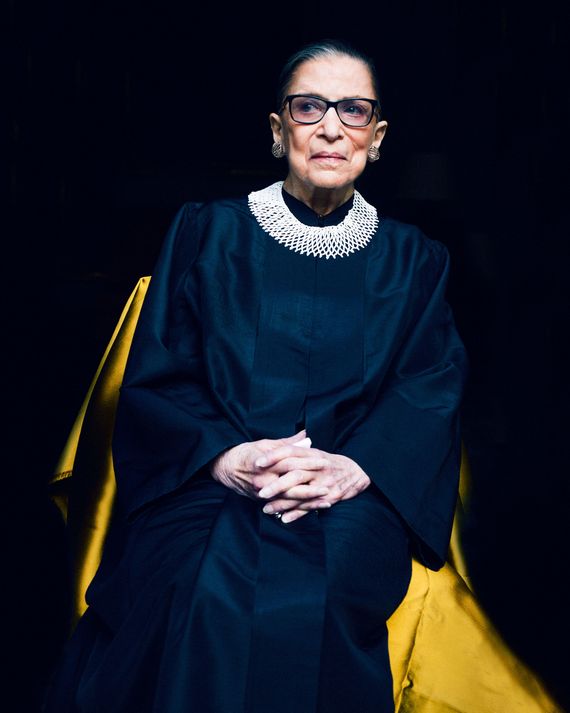
Image by Erik Madigan Heck, Trunk Archive
Supreme Court Justice Ruth Bader Ginsburg was a trailblazer for women’s rights and human rights. As the second woman and first Jewish woman appointed as a justice, RBG faced adversity and discrimination. She nevertheless persevered and advocated. Throughout her career, RBG fought for gender equity, LGBTQ+ rights, and equality for all. Furthermore, she championed laws guaranteeing the right to fair wage, the right to have an abortion, the right for all genders to attend any public university, the right to marry (regardless of sexuality and gender identity), and the right for people with mental disabilities to live in communities (rather than insistutions).
Following Justice Ginsburg’s death on September 18, 2020, the country lost a role model, an inspiration, and a warrior of change. However, in addition to losing RBG as a human and a heroine, there is a risk of losing everything she fought for during her 27 years of service on the Supreme Court.
Specifically, with the recent appointment of Supreme Court Justice Amy Coney Barrett, the decisions aided by Ginsburg — Obergefell v. Hodges in 2015 (the case ruling that the fundamental right to marry is guaranteed by LGBTQ+ couples) and Roe v. Wade in 1973 (the case ruling that women have a fundamental right to choose whether or not to have abortions) — are susceptible to being revisited by the current Supreme Court. With the current 6-3 conservative majority in the Supreme Court, these groundbreaking cases may be overturned, which would have broad consequences for individuals whose rights would be reduced and for the ideology of American democracy as a whole.
The United States is a representative democracy in which citizens elect officials to create and vote on laws and policies on their behalf. Even though the Supreme Court justices are not elected by citizens, justices are appointed by the President, the foremost representative of the people. Therefore, the Supreme Court justices should be a reflection of the President’s ideology as an extension of the majority of the citizens’ ideology. Furthermore, another complication that arises as the result of Justice Barrett’s appointment regards its proximity to the presidential election. Before her appointment, millions of Americans had already casted votes for a new president, so was it right for the outgoing president to elect a new Supreme Court justice to make important decisions dictating America’s future? Most likely, the majority of the citizens who voted to elect Joe Biden would not agree with President Trump’s recommendation or Amy Coney Barrett’s political position, making Barrett a choice unrepresentative of the people.
For instance, in regard to the legalization of same-sex marriage and the legalization of abortion, two issues that Justice Barrett would likely revisit with the Court, the majority of citizens do not agree with President Trump’s and Justice Barrett’s stances. For instance, according to an NPR study, more than 50% of Americans do not want to overturn abortions or add more restrictions to abortion access and legality. Similarly, according to a CNN survey based on a random sample from all 50 states, almost 70% of Americans supported granting same-sex couples the right to marry.
Therefore, if the majority of citizens do not agree with the individuals representing them, to what extent is the United States still a representative democracy? Similarly, if the appointment of one individual risks the fundamental rights of significant demographics of citizens, to what extent is the separation of powers effective? Overall, Supreme Court Justice Ruth Bader Ginsburg was a pioneer for women’s and LGBTQ+ rights, who paved the way for other women in government, as well as women breaking traditional stereotypes in all disciplines. During her life, Ginsburg added tremendous contributions to our society and our democracy; however, her death and the events that followed continue to speak volumes about our current state of our democracy and the values we hold as a nation.
Leave a Reply
You must be logged in to post a comment.