By: Rebecca Shan ’23, Feature Writer
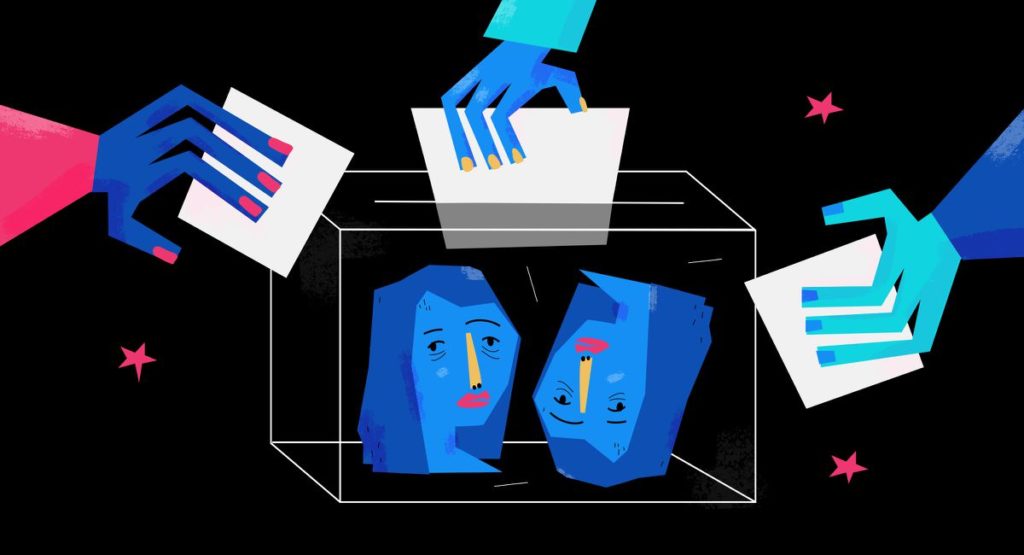
For many Americans, experiencing election week was like being sucked into a vortex of anxiety. All of the news channels constantly broadcast election-related content, friends incessantly discussed incoming results, and emotions were generally heightened. Searching for information and connection, we sought to experience this historical moment as a community. So, of course, we went on social media.
Social media has historically been an instrumental tool in social and political movements. It provides a platform for underrepresented groups and a way for politicians and movements to interact with the general public. For instance, the Me Too movement,which sought to raise awareness on sexual abuse and harassment, was fueled by social media. Furthermore, the Black Lives Matter movement — a movement working towards combating police brutality and racially-motivated violence—has also grown and built awareness through social media. According to the Pew Research Center, roughly a quarter of social media users in the United States said social media led them to change views on an issue. For example, many adults cited the Black Lives Matter movement as a topic they changed their views on through social media. While social media can have beneficial effects in sustaining social movements and building awareness, there is a large threat of misinformation, especially when many are receiving their news only through social media.
In another Pew Research Center study, 55% of American social media users were recorded to be worn out from political posts. It’s not a surprise that exposure to politics through social media can have damaging effects on our mental health. Along with the election this year, the COVID-19 pandemic has also contributed to our stress. The Ohio State University Wexner Medical Center conducted a survey and over half of respondents reported changing their social media habits during the COVID-19 and national crises. The phenomenon of “doomscrolling,” the obsessive need for information on news that could trigger stress and anxiety, has become ever more prevalent. This stress can lead to social media addiction. Assistant Professor Christian Maier of the University of Bamberg collected data from Facebook users to research this, saying, “Because social network sites offer such a wide range of features, users can find they act both as stressors and as a distraction from that stress.” The reliance and changes of habits around social media present dangers towards our mental health.
Election stress is also affecting the majority of Americans, so many experts recommend deleting social media apps such as Instagram, Twitter, and Tik Tok and finding other activities to do. In fact, anxiety influenced by politics has been given an unofficial name, “(Post-)Election Stress Disorder.” Dr. Steven Stosny, couples therapist and author, first coined the term in 2016. In a New York Times interview, he cited social media as an amplifier for election stress and irritability as a warning sign for being stressed over the election. As Stosny advised, election and political stress in discussions can be relieved by talking about deeper shared values, such as compassion and humanity. Through discussion, genuine connection with community—something we attempt to seek from social media—can be achieved. Additionally, self-empowerment is an essential tool to fight election anxiety. As many methods and recommendations appear to lessen our social political activism and engagement, self-empowerment includes fighting for issues you believe in. Even after the election, tensions are continuing, making the need for stress relief and respectful political discourse more necessary than ever before.
Leave a Reply
You must be logged in to post a comment.