By Andrew Rovit ‘22, Staff Writer
“Shut up and dribble,” proclaimed Fox News anchor Laura Ingraham two and a half years ago when commenting on an interview in which NBA superstars Lebron James and Kevin Durant condemned President Trump for racist comments and rhetoric. She stated that athletes earning millions of dollars a year, who barely go to college, do not have the right to talk about politics. Instead, she suggested that their main role should serve as entertainers to the public.
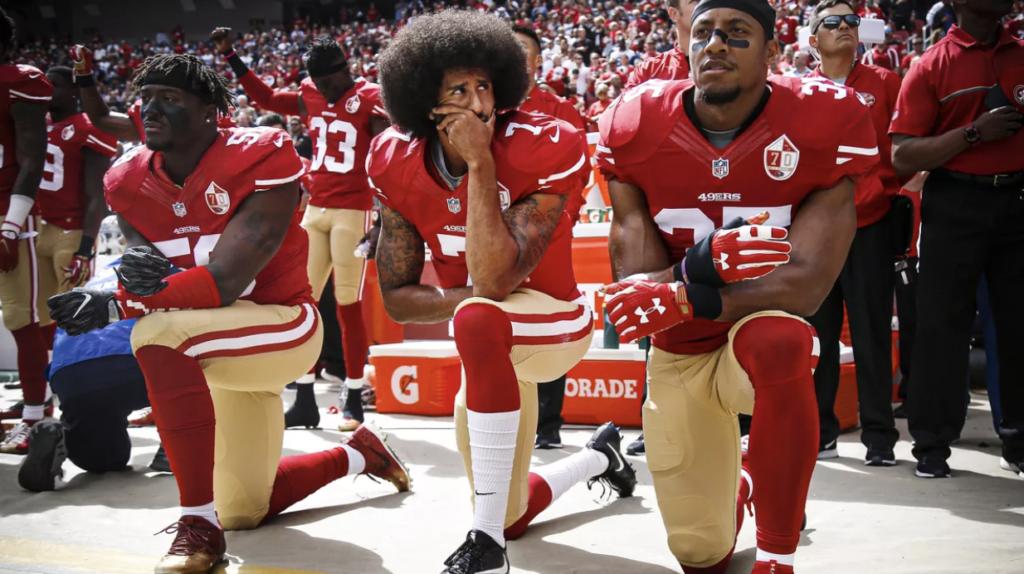
Just two and half years prior to this incident, then-49ers quarterback Colin Kaapernick decided to take a knee during the playing of the national anthem at a preseason game. Kaepernick and his teammate Eric Reid explained later that they chose to kneel as a way “to call attention to the issues of racial inequality and police brutality.” This action led not only to more demonstrations during sporting events but also a discussion regarding the prevalence of politics in sports.
Politics have been involved in sports for quite some time now. Often, when a group of people is suffering, athletes will use their platform, which they built through playing on national television, to communicate a message and advocate for change. For example, in the 1968 Summer Olympics, two African American track stars decided to salute the black power movement by raising their right fist while they were standing on the podium during the playing of the American national anthem. Similar to Kapernick, they were advocating for their brothers and sisters who were marching for civil rights and racial equality in America.
Recently, the politically-divided country disconnected even more after racial issues escalated with the police killings of unarmed African Americans, including George Floyd, Jacob Blake, and Breonna Taylor. These incidents led to the mass growth of the Black Lives Matter movement and an examination of societal racial inequities. This movement occurred while sports leagues were discussing their restart after play was suspended in all major sports leagues because of the COVID-19 pandemic. The long pause gave sports organizations and leagues time to better observe ways they could aid the current systemic issues existing in the world. Many initiatives were created to better the athletes, coaches, and fans in the political process. No team meetings or practices were allowed on Election Day in the NFL and NCAA. Other organizations held mass fundraising and advertising discussing the importance of voting. Extreme improvement was seen in voting done by NBA players. Among the eligible voters, only 22% of NBA players voted in the 2016 Election. For the 2020 Election, 85% of eligible voters cast their ballot.
Now, as we approach the culmination of the 2020 election season, the fight for human rights cannot end. We need our athletes and professional sports organizations to stay involved in the many pressing issues that society faces. Professional athletes have an extreme influence on our society whether we like it or not, and without their engagement, how can we expect to have a politically driven society?
Leave a Reply
You must be logged in to post a comment.