By Ben Cole ’21, News Writer
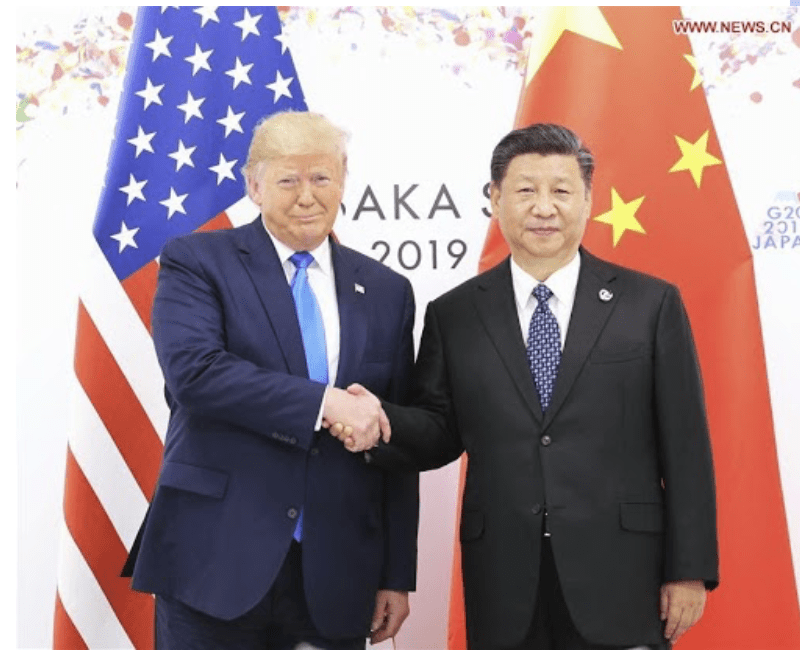
Tensions between China and the United States have escalated during this past decade. Even though trade between the U.S. and China amounts to more than $500 billion per year, a Cold War-like confrontation may still take place. China’s growing economy, along with its dictatorial nature, has become a threat that the U.S. can no longer ignore. While the hot topic surrounding Chinese and American relations is the current trade war, this confrontation is shaping up to be more complex than ever before. Republicans and Democrats disagree on almost everything, but they are in universal agreement about the threat China poses to our interests. Even the incoming Biden administration, which will likely move away from Trump’s harsh public rhetoric against China, will continue to see China as our adversary. As Biden’s new Secretary of State, Anthony Blinken, says, “We need to rally our allies and partners, instead of alienating them, to deal with some of the challenges that China poses.”
China has progressively challenged U.S. hegemony over the western Pacific with the building of numerous man-made islands spread throughout the South China Sea. This allows the Chinese to increase their military influence and effectiveness throughout the Pacific. In fact, numerous U.S. flyovers have found aircraft hangars, missile silos, and radar towers on these man-made islands. These islands have been perceived as a direct threat to U.S. influence and presence in the western Pacific. China has also been holding military exercises in Taiwan’s air defense buffer zone. Taiwanese officials have called these actions the greatest threat to the country’s security since China launched missiles around the island in 1996. China has also built up a vast array of advanced missile and satellite weaponry that could threaten U.S. military presence in the South China Sea and the greater western Pacific. In addition, China has swayed an important U.S. Pacific ally, the Philippines, into its sphere of influence. China’s continuous militarization of the South China Sea threatens to push the region outside of U.S. control and influence.
China has not only increased its influence in the South China Sea, but Central and South America as well. Last year, El Salvador announced an agreement with China to cooperate on infrastructure projects and tourist development. On the Panama Canal, the crucial link between the Atlantic and the Pacific, China has been working on over 56 port-leasing deals with the Panama government. The country has also agreed to build roads in various Caribbean countries in exchange for thousands of acres of land being sold to the Chinese. Most recently, Argentina has pledged to join China’s global infrastructure project, The Belt-and-Road Initiative, along with allowing the Chinese to build a space station in the area of Las Lajas. With the state-subsidized telecom company Huawei’s 21% increase in networking across Latin America, China has also increased its arms sales to countries like Venezuela, Bolivia, Ecuador, and Peru. China’s increased influence in Latin America should be a great concern for the U.S., as the CCP is expanding its sphere of influence close to our borders. There is no proxy war between the U.S. and China in Central and South America. However, it is concerning that some Latin American countries are increasingly moving their trade, arms deals, and infrastructure plans to China, while moving away from the United States.
Unfortunately, it seems as if the United States and Chinese spheres of influence are beginning to collide. With increased tensions between the two superpowers on the horizon, it’s only a matter of time before the two countries enter a new cold-war era that is more technologically, economically, and geographically complex than the one preceding it.
Leave a Reply
You must be logged in to post a comment.