By Izzy Becker ‘24 and Lily Sternlieb ‘24, Feature Writers
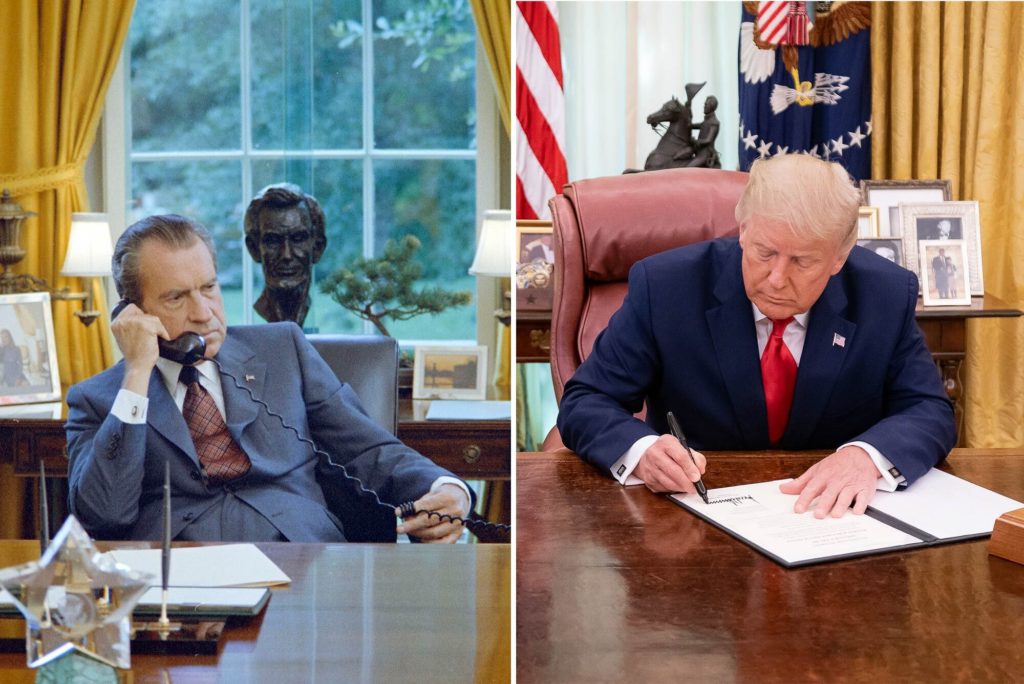
It’s simple to identify the core values we have and policies we would like to see pursued. What isn’t easy is aiming to uncover the origins of it all, a pursuit that historians have attempted to uncover for hundreds of years. Political events are reflections of the past and influences of the future. Though new and developing forums of politics like social media allow access to the inner workings of the White House and political agenda of the President, politics will always return to its roots, the concepts of building upon past leaders and echoing the enduring events of the past. Political figures of all parties refer to and build upon the American legacy. On both sides of the aisle, there have been examples of political behavior and events mirroring the past. Specifically, the 36th and 37th American presidents, Lyndon B. Johnson and Richard Nixon may have begun their political journey very differently than Donald Trump, yet all three presidents, regardless of partisan affiliation, experienced similar trials and conclusions to their presidency.
A staunch New Dealer, Lyndon B. Johnson built upon the agenda of his mentor Franklin Roosevelt through programs like Medicare, Medicaid, and Head Start. Donald Trump was inspired and welcomed the comparison between himself and Ronald Reagan, even using the same famed slogan “Make America Great Again.” On both sides of the aisle, there have been examples of political behavior and events mirroring the past. Specifically, the 36th and 37th American presidents, Lyndon B. Johnson and Richard Nixon may have begun their political journey very differently than Donald Trump, yet all three presidents, regardless of partisan affiliation, experienced similar trials and conclusions to their presidency.
LBJ was a true Texan Democrat, recognized for his ambitious policy and aggressive rhetoric. However, his largest legacy is the divisive environment created from his decisions, an atmosphere replicated in Trump’s presidency. LBJ’s image is often shrouded in the dark forests and war paint of the Vietnam War; guerrilla warfare haunted the late president’s thoughts and eventually the minds of the American people. LBJ’s position on the Vietnam War became highly controversial, sparking mass protests, movements, and opinions. America’s predicament spurred activism, especially in young voters, heightening involvement and elevating the political discussions in households across the country. During Donald Trump’s presidency, this intense political awareness reoccurred, mirroring the division synonymous with LBJ’s later years in office. These two presidents, although belonging to opposing parties and different times, are tied through the thick and endless thread of polarization and partisanship.
The president who preceded LBJ was none other than Richard Nixon: A Californian Quaker with fierce determination and a hawkish attitude. Through diplomacy with China, an odd friendship with Elvis Presley, and the historic coverup of Watergate, Richard Nixon defined a decade with his perseverance, paranoia, and unending scandals. One of the first politicians to oppose the press in the modern political era, Richard Nixon cultivated ridicule and mistrust from the media, especially compared to his former rival John F. Kennedy. Nixon felt he and his family were effectively painted as villains in newspaper articles and his fixation on the press largely contributed to his suspicious and extremely skeptical thoughts and anxieties. Donald Trump in this respect is very similar to Richard Nixon as Trump often feels demonized by the press and calls most media organizations “fake news.” While Trump and Nixon were faced with different situations, both were clouded by paranoia triggered by their tenuous relationships with the media. Often we hear about the idea or concept of pioneers, people who discovered and reinvented the core concepts of our society. But in many ways this idea is false, there are no true beginnings or endings in history, only the faint memory of what happened before and the fear of what happens next. Though it is significant to pay attention to current events and recognize the influence of our political leaders as catalysts for change moving forward, they do not dictate the future. In between the knots and underneath the layers of history, we see the story that survives in our democracy, which conveys the lessons and messages that truly define America’s legacy.
Leave a Reply
You must be logged in to post a comment.