By Emily Swope ‘22, Feature Editor
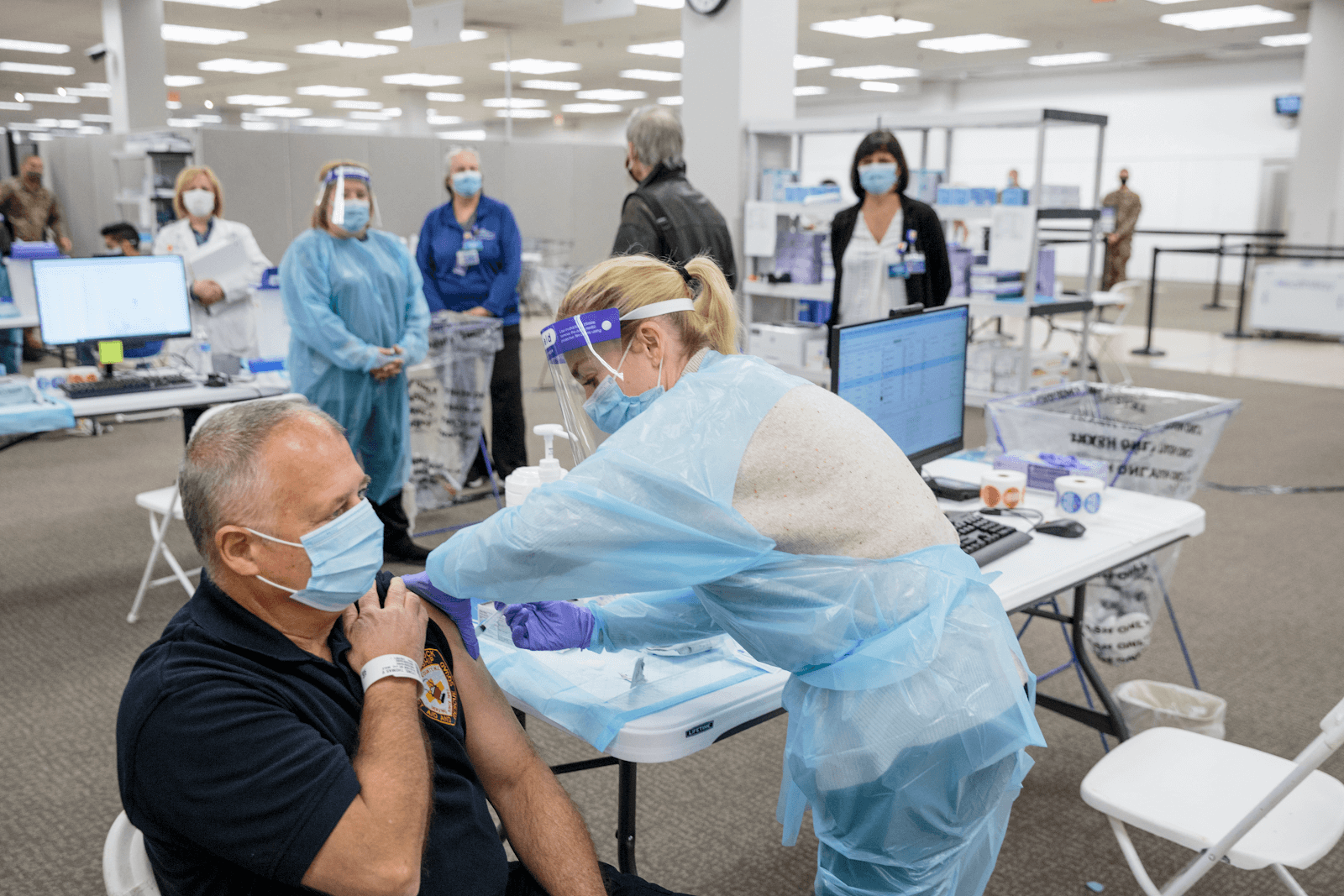
Image courtesy of Sarah Blessner, NJ.com
According to Governor Murphy’s recent announcements, all teachers were eligible to get vaccinated as of March 15, meaning that many NA teachers have either already received all of the necessary doses or are working toward full immunity. Further, all students aged 16 years and older were eligible as of April 19. This means that by the end of the school year a significant portion of the NA community will be vaccinated, creating a sense of optimism for a return to a more normal school environment. Nevertheless, many unanswered questions remain about what the future at NA and as a whole will look like regarding COVID restrictions: will we still be wearing masks and social distancing? What about students who aren’t able to receive a vaccine? At what point do we achieve herd immunity?
The main goal of the vaccine is to protect vaccinated individuals from contracting and experiencing symptoms from COVID-19 through the formation of antibodies that systematically fight the virus. Nevertheless, this protection may not be all-inclusive, meaning that it is still unclear whether receiving the vaccine completely prevents vaccinated individuals from spreading the virus. The vaccine enters deep within the body’s tissues, creating antibodies that begin to circulate throughout the body. However, COVID-19 is most commonly spread through the nasal cavities, and according to The Guardian, “Scientists are still studying whether the body produces enough antibodies in the nose to prevent the virus from proliferating there.” This means that while the vaccinated individual will not develop symptoms, current research states that the virus can still multiply in the nose, developing enough magnitude to infect others. Therefore, wearing masks, social distancing, and practicing good hygiene might still be crucial in keeping our community safe while many members still remain unvaccinated.
At this point, some of you might be wondering: what about herd immunity? When all who are eligible are vaccinated, shouldn’t that make it okay to return to normal? According to MU Health Care, herd immunity takes effect when a sufficient percentage of a population is immune to a virus (either because of vaccination or previous infection), making it so that the virus cannot spread because it keeps encountering hosts who are protected against infection, making wide-scale outbreaks unlikely. It is estimated that it would require about 80-90% of the U.S. population to have COVID-19 immunity before we reach herd immunity. As of April 22nd, according to the CDC’s COVID Data Tracker, only about 26.9% of the national population has been fully vaccinated. Even though the number of vaccinated individuals is rapidly increasing as more vaccines are being produced and more people are becoming eligible, herd immunity isn’t an immediate solution allowing us to return to normalcy, especially while children under 16 make up such a significant portion of our population.
Nevertheless, there are promising advances in the development of vaccines from Pfizer-BioNTech, Moderna, and Johnson & Johnson that are safe for children 15 and under. For instance, Pfizer recently announced results showing that its vaccine has been successful in trials at preventing COVID-19 in kids aged 12-15. The company is also beginning trials for children between 6 months and 11 years of age. Pediatrician and Associate Director of Health Sciences at the Global Health Institute James H. Conway explained that he expects vaccines for adolescents 12-16 years old to be ready first in the summer, for 5-11 year olds next in early 2022, and babies and toddlers last.
Therefore, even if we need to continue wearing masks and are far from achieving herd immunity, there is still a lot of reason to be optimistic about the prospect of wide-scale vaccinations for a large portion of the population in the near future. Whether we are able to visit our vaccinated grandparents, don’t have to quarantine after being in close contact with someone with COVID-19, or are able to travel more safely and without quarantine, being vaccinated provides us with exciting opportunities that represent some sense of normalcy. At NA, even though we will maintain our discipline by continuing to follow protocols to keep our community safe and healthy, more and more vaccinated students and teachers represent a sense of security in providing an extra layer of protection and safety within our community. With all this in mind, we can have a sense of hope and optimism at the prospect of regaining some aspects of normalcy!

Leave a Reply
You must be logged in to post a comment.