By Katie Powers ‘22, Social Justice Writer
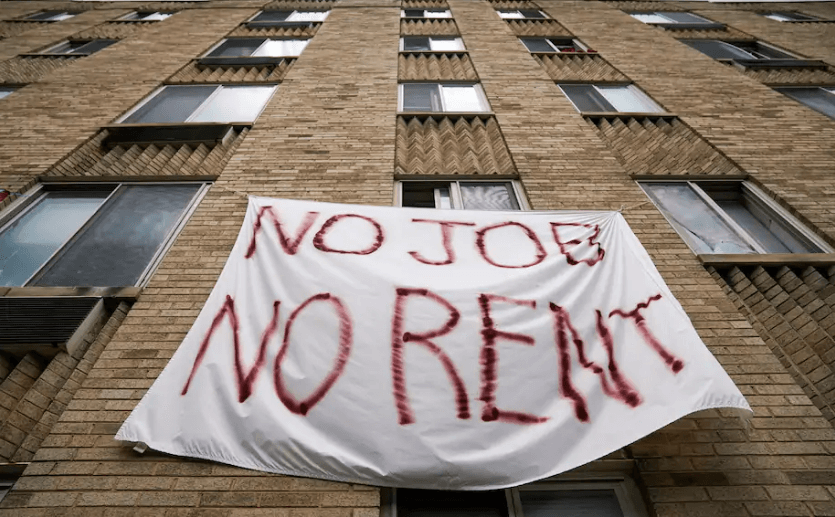
Rising levels of income inequality have plagued our country for decades, and the recent health crisis has exacerbated this problem dramatically. The economic fallout from the pandemic, including tens of millions of job losses, has been clear and devastating, and that fallout has had a profound impact on low-wage workers. Ken Schorr, executive director of the Charlotte Center for legal advocacy, said, “Inequality has been building for decades, and the pandemic ripped it open.”
This dramatic increase in economic inequality has had a disproportionate effect on minority groups. Minority groups make up a large portion of the low-wage and service industry work that suffered the most profound loss as a result of the pandemic. The Economic Policy Institute estimates that, in comparison with 30% of White workers and 37% of Asian workers, only 20% of Black workers and 16% of Hispanic and Latino workers are able to work from home. Additionally, the Labor Department reports that White men and women have seen 60% of jobs lost during the pandemic return, while Black men and women have recovered only around one third. The effects of discrimination towards people of color, which leads to exclusion from white-collar employment, have increased as a result of the virus and widened the gap in economic equality significantly.
The country’s unemployment system has exacerbated the economic crisis for low-wage workers. Under our current system, states must pay for half of the extended benefits. Many states are reluctant to raise taxes against employers in order to raise these funds and instead have resorted to cutting benefits. New Jersey has one of the highest rates of workers who receive unemployment benefits, with only 60% of unemployed workers receiving unemployment benefits. Other states, for example Florida, have rates around only 10%, according to the New York Times. Even for those who receive benefits, over the past several decades, they have decreased to less than one-third of prior wages. Amidst this crisis, unemployment benefits are a necessary tool for recovery and must be a focus of future governmental change.
If this problem is to be combatted, there needs to be much more extensive action taken by the government and much more support given to low-wage workers. The government has begun to take action, instituting the Coronavirus Aid, Relief, and Economic Security (CARES) Act instituted in March 2020, which provides payments adjusted by income to eligible individuals and families. In fact, research on the CARES Act completed by the Upjohn Institute for Employment Research found that without CARES Act provisions, workers in the bottom third of income distribution would have experienced an average decline in their weekly earnings growth rate of about 15%. Instead, with benefits, earnings growth increased for these individuals by about 20%. Currently, this form of policy is being continued with the American Rescue Plan(ARP). Policies such as the CARES Act have the potential to make an impact on workers’ earnings and our economy and must be continuously expanded if our country hopes to minimize income inequality. Megan Curran, a researcher at the Columbia Center on Poverty and Social Policy, has said, “We know that when families are experiencing huge fluctuations in income, it can have a [domino] effect. It can lead to them losing their homes, or to debt that can end up costing them way more than the original bill. Without action, even more folks are going to be losing out.” Covid-19 has caused a devastating and far disproportionate economic impact on minority groups in the United States, and our country must continue to address and prioritize the problem of economic inequality.
Leave a Reply
You must be logged in to post a comment.