By Dylan Bulbulia ’23, News Writer
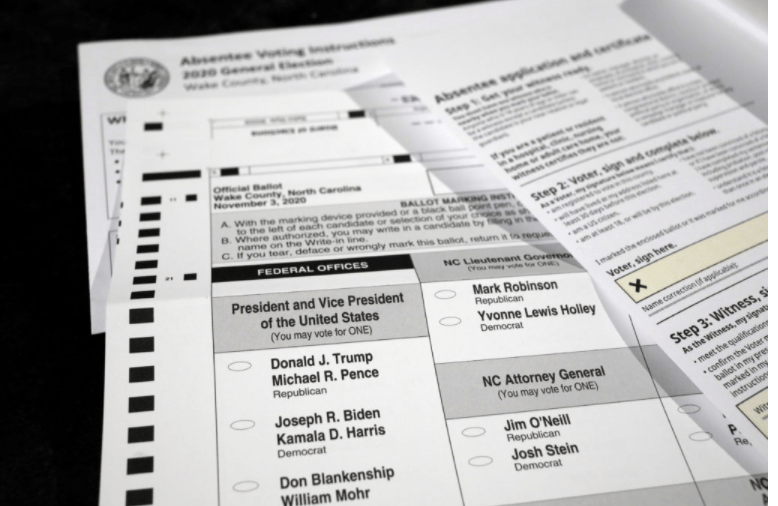
Voter turnout surged to 66.3% of eligible voters in the 2020 presidential election, up from 60.1% voter turnout in 2016 and 58.6% voter turnout in 2012. What does this mean for the United States? There are numerous false allegations of voter fraud regarding the 2020 presidential election. Due to these false declarations, members of state legislatures across the country are introducing new legislation targeting voter access and election procedures. 361 bills aimed at restricting voting access are currently on the table in 47 states. These bills commonly create stricter voter ID requirements, lessen the amount of opportunities to register to vote, impose more aggressive purging of voter rolls, and further regulate and restrain who has access to vote by mail.
An example of a new restrictive law is GA SB 202, which Governor Brian Kemp of Georgia recently signed into law. This new law creates new difficulties with absentee voting and perpetuates existing struggles, as well as further complicates voter registration by banning election officials from sending out ballot applications. GA SB 202 restricts early weekend voting, disproportionately affecting African American voters, many of whom partake in the Souls to the Polls tradition where African American voters cast votes after Sunday church services. The reasoning behind this disenfranchisement is that around 88% of black voters cast their ballots for Democratic President Joe Biden and over 90% of black voters awarded their votes to Democratic Senator Raphael Warnock, frustrating the Republican state legislature. Voting rights activist Stacey Abrams spoke out against the Georgia state government stating “Instead of winning new voters, you rig the system against [black voter] participation, and you steal the right to vote.” GA SB 202 will hinder citizen’s ability to vote as it seeks to complicate voting procedures.
Restrictive bills across the country have similar goals. However, not all the newly introduced bills seek to restrict voting access. Lawmakers in 47 states have introduced 843 expansive voting bills that place an emphasis on restoring voting rights, specifically to ex convicts. These expansive bills also seek to make mail-in voting more widely accessible, to increase early voting opportunities, and to make it easier to register to vote. Both Democratic states like New York and New Jersey and Republican states such as Mississippi, Missouri, and Texas have introduced a large number of expansive bills. New Jersey has recently enacted NJ SB 3203 into law, which allows early in-person voting. The law requires counties to create a minimum number of early voting sites dependent on the population of that county. The sites also must be open on weekends, which will help to maximize voter turnout.
With an abundance of voting bills being examined by legislators across the country, it is important to consider how these bills will affect the American people. Since the majority of state legislatures are Republican-controlled, it is likely that more restrictive bills will be enacted into law, resulting in a decrease in voter turnout in future elections.
Leave a Reply
You must be logged in to post a comment.