By Juliet Bu ‘23, Feature Writer

SARS-CoV-2, also referred to as COVID-19, is a coronavirus. Coronaviruses affect the respiratory systems, and transmission occurs through saliva droplets. COVID-19, the current disease which has confined us to our homes, is highly contagious and deadly. To date, COVID-19 has killed 3 million people worldwide.
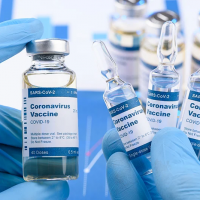
A year after the coronavirus’ first appearance, the FDA approval of the Pfizer-BioNTech vaccine in December 2020 was the light at the end of the tunnel, a promise to an eventual return to normalcy.
Despite this great news, America’s first hurdle proved to be supply. News outlets erupted with stories about America signing away a chance to acquire additional doses of the vaccine. Fear quickly spread upon the realization that without sufficient doses, having a vaccine would not help us achieve herd immunity and effectively end the pandemic. But, as the richest country in the world, with the approval of the Moderna vaccine, America’s biggest problem was no longer a lack of supply. America’s new problem is a global problem: an unequal distribution of vaccines.
In a capitalist economy, Pfizer, Moderna, and any other company’s goal is to earn profit. Therefore, these vaccines were first secured by the highest bidders: the United States and other European countries. At our current status, vaccines are scarce, meaning that while supply is low and demand is high, prices skyrocket and accessibility for poorer countries becomes increasingly small. This raises the question: how ethical is it for richer countries to purchase large quantities of vaccines, leaving poorer countries with fewer or no doses?
While many Americans have access to computers, WiFi, and Zoom to continue working remotely, less economically developed countries are more dependent upon sectors like agriculture, resulting in larger numbers of essential workers and less employment flexibility. This leads to a significantly higher infection rate because many of these workers rely on labor-intensive jobs to feed their families.
Poorer countries who enforce stricter coronavirus regulations are seeing higher rates of food insecurity. The coronavirus was projected to push 96 million people in countries served by the World Bank’s International Development Association into acute food insecurity. The World Bank defines acute food insecurity as when a person’s lack of adequate food puts their lives in immediate danger.
Many citizens in these countries are then forced to make a choice: risk contracting a life-threatening disease for a wage or give up employment and face life-threatening poverty.
Evidently, poorer countries are in greatest need of vaccines, which could eradicate the virus and allow these already struggling communities to return to normal. However, at least 90% of people in 67 low-income countries stand little chance of getting vaccinated against COVID-19 in 2021 because wealthy nations have reserved more than they need. Even though richer countries account for only 14% of the world’s population, they have purchased 53% of the eight most promising vaccines.
In the frenzy of securing vaccines, America forgot that the fight against the coronavirus is a global effort. Stella Gilbert ‘22, president of Newark Academy’s Philosophy-Psychology Club, shares her thoughts: “I think one of the most interesting things to consider ethically in regards to vaccines is the idea that inoculation against a disease is not an individual question and its treatment as such can be harmful for a community.”
Like many other international issues, actions (or lack thereof) from wealthier countries often results in poorer countries bearing the brunt of the negative consequences. America cannot afford to live inside of a bubble; while establishing herd immunity is significant to our country, the larger war against COVID-19 is currently waging in poorer countries whose needs we have failed to consider.
America has committed to donating surplus vaccine doses to poorer countries. However, this aid does not prevent the further, imminent damage that will occur while these countries are still without vaccines.
Leave a Reply
You must be logged in to post a comment.