By Lauren Siegel ‘23, Arts and Entertainment Editor

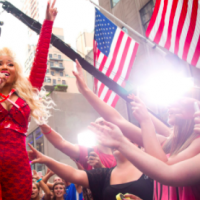
Image courtesy of CBS News
The date was September 13th, a night where most young Americans were glued to their phone screens, anxiously awaiting the release of photos from the 2021 Met Gala. The night’s theme — “In America: A Lexicon of Fashion” — was already highly contentious, with publications and Twitter users alike debating the designers that would make an appearance on the pink carpet. Limos lined the sidewalk outside the Metropolitan Museum of Art, containing hundreds of celebrities and their extravagant outfits; however, one of the country’s premier entertainers was nowhere to be found. Instead, she was crafting a tweet to explain her absence, one that would send backlash rippling through the internet.
“They want you to get vaccinated for the Met,” rapper Nicki Minaj told her twenty-two milion followers. “If I get vaccinated it won’t (be) for the Met. It’ll be once I feel I’ve done enough research. I’m working on that now.”
Minaj justified her hesitation by claiming her cousin’s friend in Trinidad got the COVID-19 vaccine, and it caused him to become impotent. However, the U.S. Centers for Disease Control and Prevention (CDC) has already clearly demonstrated that there is no link between the COVID-19 vaccine and infertility. They were incited to do so in August 2021, after a viral conspiracy theory convinced the internet that the COVID-19 vaccine causes impotence. Minaj’s comments placed internet myth above scientific fact, and exacerbated fear among vaccine-hesitant people across the globe. The influence of her statements was seen on September 17th, when over a dozen Minaj supporters, known on the internet as the “Barbz” as an homage to Minaj’s “Harajuku Barbie” alter ego, marched on the Atlanta headquarters of the CDC, claiming that Minaj “told the truth” and “Fauci lied.”
As COVID-19 cases continue to rise, especially within communities with low vaccination rates, it is crucial that all eligible Americans get vaccinated. But the influence of comments like Minaj’s make us less likely to reach this goal.
However, Minaj is not the first celebrity to spread harmful misinformation about COVID-19. Ever since the coronavirus first made headlines in the United States, celebrities including Madonna, Woody Harrelson, Howard Stern, and Donald Trump have all used social media to encourage false conspiracies about the severity of COVID-19. Influencers with primarily young adult fanbases, like Joe Rogan and Jake Paul, have also repeatedly discredited the need for vaccination, despite their millions of impressionable fans.
Since social media has fostered a deeper connection between fans and celebrity idols by providing intimate access into their personal lives, it is no surprise that these celebrity opinions were taken so seriously. Excessive idolization has created a culture wherein a celebrity’s word is trusted without hesitation. While apps like Twitter have taken steps to combat COVID misinformation, these actions cannot stop the harmful impact of opinions with a platform. Obviously, celebrities shouldn’t always be expected to censor their online behavior in order to be good role models. However, people with immense influence must recognize the power that their voice has on the people to whom they owe their popularity, and the damage they can inflict on the health of the nation if their harmful opinions go unchecked.
So on September 13th, when refusing to participate in styling herself to a Met Gala theme centered around America, Nicki Minaj was exercising her constitutional right to free speech to express inaccurate ideas with little regard for its possible repercussions. And in today’s culture, what could possibly be more American than that?
Leave a Reply
You must be logged in to post a comment.