Dina Drogin ‘23, Commentary Editor
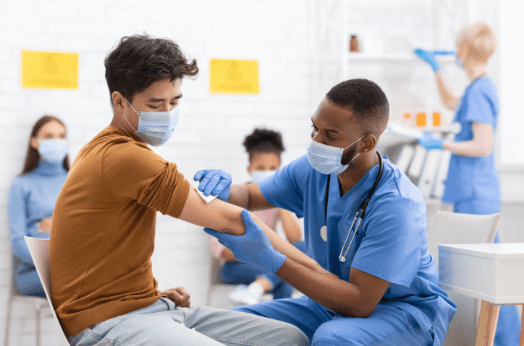
On August 23, 2021, the FDA approved the Pfizer-BioNTech COVID-19 vaccine. A week and a half later, Newark Academy released a statement requiring all students over the age of sixteen to be vaccinated by November 1st. Those who are not yet of age must be vaccinated within sixty days of their birthday. While the FDA released a statement assuring that “the public can be very confident that this vaccine meets the high standards for safety, effectiveness, and manufacturing,” there is still debate about whether requiring a vaccine conflicts with personal freedom. Nevertheless, the Newark Academy vaccine mandate will benefit both you and our school community.
Many people are skeptical about getting the vaccine because they believe the creation and manufacturing was rushed. However, the vaccines were developed using science that has been around for decades. The Pfizer vaccine is an mRNA vaccine, meaning it teaches our cells how to make a protein that triggers an immune response within our bodies. Vaccines using mRNA are not new. They were studied before the flu, Zika, rabies, and CMV; therefore, as soon as scientists knew enough information about COVID, they were able to create an effective mRNA vaccine, using the technology that has been around for years, slightly adjusting it for improvements in protein translation and delivery.
According to the CDC, the vaccine has gone through all of the necessary clinical trials, has been monitored, and continues to undergo the most intense safety testing in U.S. history. Participants volunteered to receive doses of the vaccine before it was released to the public. Volunteers went through four stages of the Pfizer clinical trial to help develop the medicine:
Phase 1: Twenty to one hundred participants receive the vaccine and report any side effects. Phase 1 helps researchers understand its safety.
Phase 2: Several hundred participants received the vaccine. Phase 2 determines its effectiveness.
Phase 3: People with certain medical conditions receive the vaccine. Phase 3 is important for people with predetermined medical conditions.
Phase 4: The vaccine is approved but continues to be monitored through its recipients.
Getting vaccinated significantly decreases the chances of contracting COVID-19. Even in the rare case of a breakthrough, the vaccine is vital as it will prevent you from getting seriously ill.
Many people question if they should receive the vaccine even if they have already had COVID. While it is true that, after contracting the disease, patients have antibodies that can partially protect them from getting ill again, a new study from the CDC shows that vaccinated individuals are half as likely to get COVID as people who already have had COVID once. Additionally, antibodies remain in the body after illness for only eight months.
As we have heard many times, “we” is greater than “me.” Vaccines are starting to be required around the country. President Joe Biden is now enforcing federal vaccine requirements for private sector employees, health care workers, and federal contractors, trying to limit the spread of the new Delta variant across the country. The ability to get vaccinated is a privilege. As of August, only 1.1% of adults living in low-income countries have received one dose of a vaccine. It is important to get vaccinated to protect those who are not yet able to. As of September 3rd, 19% of American adults still do not plan to get vaccinated. Getting vaccinated protects you and protects the community. Although, as of September 3rd, 94% of eligible students and faculty are already vaccinated, it is important that we raise the number to 100%.
Leave a Reply
You must be logged in to post a comment.