By Lola Cantillon ‘23, News Staff Writer
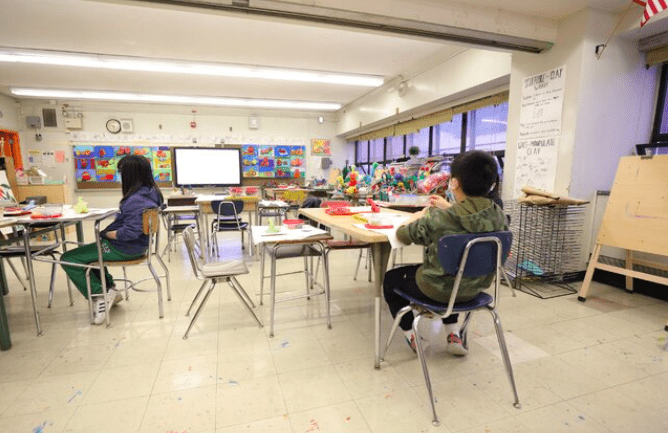
Image courtesy of U.S. News
This past fall, schools around the United States were reluctant to return to in-person learning with full attendance, due to COVID outbreaks. The start of the school year remained relatively tame due to vaccine distribution, mask requirements, and social distancing in classrooms. But, as the holiday season grew closer and temperatures began to drop, the extremely contagious new COVID strain Omicron surfaced, creating a ripple in schools’ original plans to return with the same procedures after break.
How is Omicron different from previous strains of the virus? The answer is simple: infection rates. The Omicron variant spreads more easily and quickly than any other variant before because it has mutated significantly more than other variants. Most of the mutations are in its spike protein, which is the material that is attached to the cell and helps the virus spread from person to person. All of the current vaccines target immune responses to the spike proteins.
According to the U.S. Centers for Disease Control and Prevention, Omicron likely spreads more easily than the original COVID-19 virus. It seems as though it is significantly more contagious than the Delta variant since it quickly spread to become the dominant strain in the U.S. Researchers from Harvard University also found that the standard dose of COVID-19 vaccines available in the U.S. does not produce antibodies capable of protecting and neutralizing Omicron
Although this research may sound alarming, almost all schools after winter break have safely re-opened in-person learning this week amidst the rising COVID cases around the world, but the virus still impairs learning. Due to the surge in the COVID cases, thousands of schools nationally were forced to temporarily shut down. While some families believe that shutting down was the safest option to contain the outbreak of cases, other families and students believe virtual learning is a threat to an individual’s mental stability and academic progress. Despite this controversy, almost all schools have continued to stay open for in-person learning. Even without completely remote learning, a majority of teachers say that missing students and teachers undermine their lesson plans, and cause them to scramble when adjusting from their originally planned curriculum. Hybrid learning also poses obstacles to teachers who must scramble to adjust their original lesson plans and course curriculum.
Flannery James, Newark Academy’s creative writing teacher, says that in comparison to last year, the procedure for student COVID cases has changed. Last year, each classroom had an owl, and teachers were notified more in advance about when a student was going to be remote. This year, in her own classroom, she does not have an owl, and teachers are notified slightly less early about when a student will be going remote. She adds, though, that most of these issues are quickly resolved with time, as the spike in cases from Omicron has been handled very well by Newark Academy, and most of her classroom activities have returned to how they were, pre-Omicron.
At Newark Academy, the Return-to-School Taskforce has also worked hard to make changes in accommodation to the Omicron variant. The new mask mandate requires either a KN-95 mask or a surgical mask to be worn. Testing is now required once again, just like the 2020-2021 school year, and a booster mandate has been put in place, joining the regular vaccine mandate.
Omicron, along with new emerging variants of COVID-19, has taken a toll on schools and the families that attend it. Teachers are still worried that this spike in cases will reoccur as the school year continues.
Leave a Reply
You must be logged in to post a comment.