By Kaya Patel ‘22, Editor-in-Chief
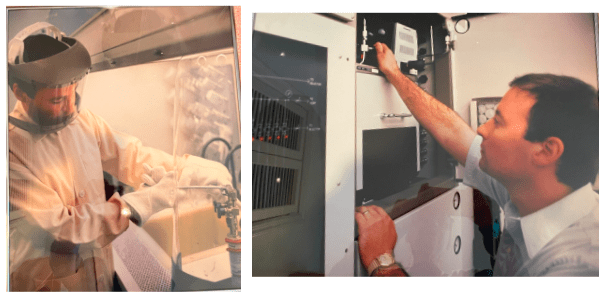
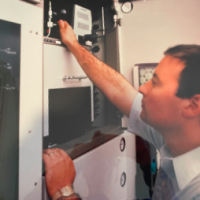
Before becoming a teacher, Dr. Hobson studied semiconductor physics and developed technology that has become the backbone of modern communication technology at Bell Laboratories. As an extremely accomplished researcher, Dr. Hobson’s experiences and advice have inspired the way I view STEM research and careers, and I wanted to share some of his words of wisdom with the NA community.
What interested you most in high school?
I would often go to the library to pick up books and read and teach myself about all different subjects in high school. I loved history and liked all subjects, but I was particularly influenced by the space program. I was very young at the time, but the landing on the moon influenced everybody during that time, including me. In the sixties and seventies, a lot of people went into science and engineering because you could see the enormous evolution of technology right in front of you. Every year, innovations were coming out, and everything with technology was rapidly changing, so I think a lot of people wanted to go into science. You really had a sense that you could make a difference in the world if you were driving this new technology and science.
What’s one strength that helped you as a researcher?
I learned a lot of different areas, and when you understand a lot of different areas, you can kind of see how you can bring things together. That’s really where you get your breakthroughs, from putting ideas together and merging all different fields. I think one of the strengths that I had was that I had an understanding of a lot of different areas of science. I would work in the laboratory all day, and then in the evenings and weekends, I would read quite a bit of scientific literature. I was very aware of everything that was going on in all of these adjacent fields, which helped me come up with ideas and know where to innovate.
What was your experience like at Bell Laboratories?
I got my Ph.D very quickly, in about three and a half years, and then I got hired directly by Bell Laboratories when I was only 25 years old. I didn’t choose to be a college professor because I wanted to develop technology that would be used in our lifetime. Bell Labs always had problems to work on, and they were really tough, challenging problems. At first the problems always looked impossible, and then you would be amazed when the team would somehow figure out how to solve them. I was probably averaging 15 or 20 papers a year for like 15 years…What’s the secret? You work with brilliant and passionate people. It’s very inspiring to work with such talented people. When I was at Bell Laboratories, everybody worked really hard, and they were totally immersed in the work — that was their lives. To do great quality work, you have to put your heart and soul into it. I have to say for me it never felt like work.
What emerging fields do you think will define science in our generation?
The medical field still has major challenges. I would say research on autoimmune diseases, cancer, and the human immune system, which we don’t understand really well, will continue to be a huge area. I’d say the other area would be sustainable energy. That’s a huge area because there’s not any real clear solution right now to these incredibly difficult problems. We have an exploding population and issues with sustainability; there’s no good solutions for this right now, so you need major breakthroughs in all of these fields. When I worked on fiber communication, which is the basis of the internet, none of us thought it would work like this. Those were amazing breakthroughs that stunned even the people in the field, so we need something equivalent in these other fields to solve these global problems.
What advice would you give to aspiring researchers?
One key skill is staying with a problem and having the ability to work for a very long time on a problem. A lot of things in science don’t work, and you must learn to deal with setbacks. Sometimes, you just need to be lucky for things to work, but other times you need a lot of resilience. The most talented people want to make a contribution and develop something impactful. People that are petty or just looking for credit, are not the most useful contributors. Most importantly, you want to be a team player.
In summary, Dr. Hobson’s advice is to find your passions and work with others to face the challenges that you see in your society. Regardless of your interest in STEM, if you love what you do to the point where it no longer feels like work, then you know you found the right job.
Leave a Reply
You must be logged in to post a comment.