By Penelope Jennings ‘22, Sports Writer

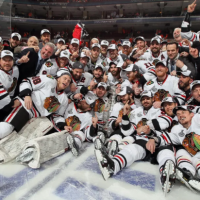
The 2010 Chicago Blackhawks pose on the ice after winning the Stanley Cup
Jim McIsaac/Getty Images
In August 2021, a legal report from the firm Jenner and Block revealed that, during the Blackhawks’ 2010 Stanley Cup run, video coach Brad Aldrich had sexually assaulted players. He was then allowed to leave the team relatively quietly, receiving positive recommendations by team management that allowed him to work with younger boys whom he also sexually assaulted. A full report spanning over 200 pages was released by the firm this fall detailing the horrific events, and even though the story exploded for about two weeks after an article written by reporter Rick Westhead for TSN was released, very little is being said about it now as the story has not continued to receive coverage. Originally the assaulted players were all anonymous, but due to his extreme bravery, we now know that one of the players was Kyle Beach. He was called up from the Blackhawks’ AHL team during the playoffs to be an extra skater in case of injury to anyone on the roster. Beach is currently playing in Germany and still suffers from PTSD from his assault. He’s courageously come forward and given interviews since the story’s break. After leaving the Blackhawks in summer 2010, Aldrich was given positive recommendations from the team and then sexually assaulted a high school player in 2013. This offense did result in jail time.
Alarmingly, reports and quotes from players show that everyone around with the team, including players and the management, knew that this was happening. Players like Jonathan Toews and Patrick Kane, who were regarded as leaders on the team at the time, are still captain and alternate captain of the team today. People like Joel Qunneville, who coached the Blackhawks in 2010, who left the team but was still in power in the league, were allowed to remain in positions of power even after it was revealed that they helped cover up this case. Quenneville resigned from his job as Florida Panthers head coach in October 2021 after extensive public pressure, but could still return to work in the NHL at some point.
This list of people who have faced delayed accountability, or no accountability at all, could go on forever. Countless other players and employees throughout the league have simply not been held responsible by their peers or media members. Reporters have a duty to use their access to hold people accountable, yet many of the most powerful people across sports media in Canada and America have let guilty people off easy. These reporters act selfishly in order to preserve their own connections and access to exclusive interviews. We as consumers also have a duty to demand better, and the power to make an impact. Social media pressure has proven to pressure teams to take action, but withholding money for tickets and merchandise, especially when coordinated on a wide scale, could have a much greater impact. We must learn from this incident and how the public media treated it. Even after cases have been brought into the public, we must not relinquish public pressure on this case or with other cases of abuse. Many of the most prominent reporters today set bad examples for how their power and access can and should be used. As we raise the next generation of reporters and media consumers, we must set positive examples, instead of being bound by unwritten rules.
Leave a Reply
You must be logged in to post a comment.