
By Allie Singh ‘25, Commentary Staff Writer
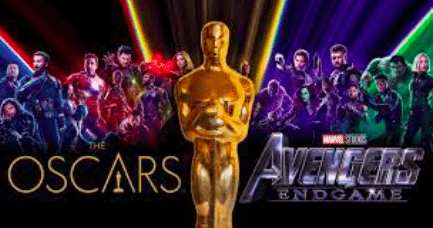
Every year, the Academy of Motion Picture Arts and Sciences votes to decide which movies are regarded as best in class. The Academy Award for Best Picture is viewed as the most prestigious award and highest honor in filmmaking worldwide. While certain technical standards must be adhered to in order for a film to be eligible for best picture, the Academy does not opine on what movie types, genres, or themes are worthy of the award. Nevertheless, serious movies that embrace the themes of feminism, racial inequity, justice, and empowerment often dominate as the winners of the prized golden Oscar statuette. Certain genres of movies, namely dramas, biopics, and historical epics, have dominated the category for decades, while comedies, action films, thrillers, sequels, and superhero films are rarely nominated despite exhibiting parallel themes.
Action movies, specifically those based on the comics of Marvel and DC, almost always incorporate themes related to equity, justice, and perseverance, and at the same time boast record box office performance. However, they are consistently denied victory by the Academy. Despite the release of 27 movies in the Marvel Cinematic Universe (MCU) since 2008, which have grossed over $25.6 billion combined, the MCU has only clinched three Oscars. All three Oscars were awarded to Black Panther (2018), but none of these awards were in the major categories of Best Actor/Actress, Best Supporting Actor/Actress, Best Director, or Best Picture. There have been 17 DC Comics movies released during the same period, with two Academy Award wins within the major categories: Joaquin Phoenix for best actor in Joker, and Heath Ledger for best supporting actor in The Dark Knight, but none has won best picture.
Many recent Oscar winners for Best Picture share captivating stories of racial inequity, social injustice, and institutional abuse such as Coda (2022), Green Book (2018), Moonlight (2016), Spotlight (2015), and Slumdog Millionaire (2008). Despite the reality that they often contain the same themes most recognized by the Academy, Marvel and DC movies are consistently overlooked at the Academy Awards and dismissed as lighthearted, action-packed flicks lacking true artistic merit. Films such as Captain Marvel (2019), Black Widow (2021), and Birds of Prey (2020) feature strong female protagonists that inspire their audience by protecting themselves, their families, and society from a powerful evil without the assistance of a male sidekick. Films including Shang Chi and the Legend of the Ten Rings (2021) and Black Panther (2018) showcase positive representations of marginalized groups that are often excluded from blockbuster films. These movies feature heroes that audiences of all ages and ethnic backgrounds can relate to, a feature that cinema has historically largely failed to provide.
While the five Oscar winners noted above are all memorable films with poignant messages, three of the five are rated R and are not accessible to a wide audience because of their complex themes and content. These five films combined generated box office revenue of about $850 million; Black Panther and Captain Marvel generated over $1.0 billion in revenue each. Many of the same themes of good over evil, conquering repression and injustice, and championing women are also explored in Marvel and DC films, albeit in a different format that often incorporates elements of humor, adventure, and fantasy. The Academy’s perceived voting bias against certain film genres, which may simply stem from tradition and historical patterns, should be reassessed. These films should be considered as respected films in their own right as they too highlight important themes and at the same time appeal to a much broader audience due to their typical PG-13 rating, gripping action sequences, and large fan base that continues to expand with each subsequent release.
Leave a Reply
You must be logged in to post a comment.