By Victoria Pevzner ‘24, Arts and Entertainment Staff Writer
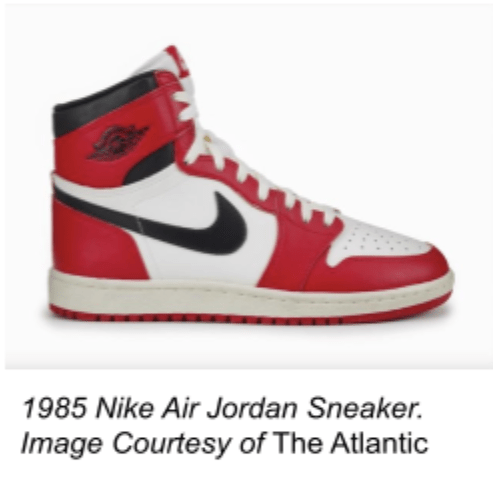
Every year as companies create new designs, eager buyers all over the world purchase the newest and most fashionable sneakers. The growing popularity of sneakers has led them to become a hallmark of high fashion, with influencers and celebrities sharing pictures on their platforms to promote sneaker brands. With all of this marketing, we — the customers — feel the need to stock up on these shoes to stay in line with the newest trends. Due to their increasing popularity, sneakers have been used not just for social purposes such as setting trends but also to express and represent political and economic ideas.
To better understand sneaker culture, it is important to understand its history. In the 1830s, John B. Dunlop, the founder of The Liverpool Rubber Company, discovered how to fasten a canvas upper to a rubber sole, creating the early prototype of sports shoes. Throughout the early 19th century, designers continued to create new sneaker designs and modify old ones resulting in a cultural change where staying fit became a priority. When World War I broke out, countries all over the world encouraged their citizens to partake in exercise in order to be physically ready should they have to fight in the war. For this reason, sneakers became more popular throughout the world.
In America especially, a new cultural identity emerged through the use of sneakers in sports. Many shoe companies got athletes involved in their campaigns — particularly tennis and basketball players. For example, the Converse Rubber Shoe Company created the All-Star basketball sneaker in 1917 and hired Chuck Taylor to represent their company. With the creation of the Chuck Taylor sneaker, Taylor became the first athlete to have shoes named after him. In more recent years, athletes like Walt “Clyde” Frazier, Kareem Abdul Jabbar, and later Michael Jordan created their own sneakers such as the Puma Clyde, Adidas Jabbar, and Nike Air Jordan in partnership with shoe and sportswear companies.
Like sports, hip hop also significantly influenced sneaker culture. Hip-hop artists sported the most trendy sneakers in their music and dance videos, which prompted the audience to get a pair of their own. Some examples of this are RUN-DMC’s “My Adidas” and Nelly and the St. Lunatics’ “Air Force Ones”. Many of the shoes created and developed during the hip-hop era are also returning as the most popular shoes among Gen Z Americans.
Finally, sneakers not only left a mark on social and economic culture but also played a role in political activism. At the 1968 Mexico City Olympic games, African-American sprinters Tommie Smith and John Carlos who medaled first and second place, stepped onto the podium without their sneakers and gloved fists raised in the air to protest the income inequality and poverty that African-Americans faced during the Civil Rights Movement. They were suspended from the US Olympic team, and when they returned home, they were met with violent threats. However, their actions significantly contributed to the Civil Rights Movement because they spread awareness about the issue of systemic oppression with their platform.
Today, influencers and athletes continue to promote certain brands of sneakers which makes people more inclined to buy them. People often look to the shoe collections of artists such as Justin Bieber, or models like Kendall Jenner and Bella Hadid to see what shoes are a must-buy at the moment. Although the marketing of these sneakers is fueled by economic motivations, companies continue to use sneakers as a medium to tackle political issues as well. For example, Puma’s “Peace on Earth” sneakers, which were released in 2018, was created to raise awareness against gun violence. Part of the proceeds earned from the sneakers went to the Trayvon Martin Foundation, an organization committed to providing support for families affected by gun violence.
Overall, sneakers have left a long-lasting mark on American culture and continue to be a means of innovation and development while simultaneously putting deep-rooted systemic issues into the light. However, some of the issues that figures in sneaker culture sought to tackle early on continue to be problematic today. For example, the growing price of sneakers makes them less accessible to underprivileged communities — one of the issues that Tommie Smith and John Carlos had addressed with their protest. In order to continue the successful sneaker culture, it is important to not to forget its rich history and how it was directed to be used in much more impactful ways.
Leave a Reply
You must be logged in to post a comment.