By Allie Singh ‘25, News Editor

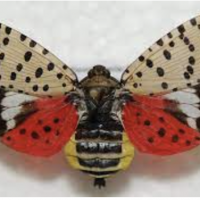
Image Courtesy of MSU College of Agriculture and Natural Resources
While northeastern summers are known for warm weather, long days, colorful flowers, and evening bonfires, the summer of 2022 featured a new but unwelcome element: the return and proliferation of the spotted lanternfly. Distinguished by their red and black wings and spots, these insects invaded our backyards, parks, outdoor restaurants, and the Newark Academy campus. In addition to hovering around, they have covered the bark of entire trees on our campus. While these pests are not harmful to humans, they are certainly a scream-inducing nuisance.
Native to China and other subtropical Asian regions, the spotted lanternfly first appeared in the United States in 2014 in Pennsylvania. Spotted lanternflies hatch in late May as small nymphs and grow into adults during the summer. In the late fall and early winter, the spotted lanternflies lay eggs to start the cycle again for the next summer. The insect feeds on over 100 species of plants including grapevines, tree of heaven, maple trees, apple trees, and birch trees. In the process, the lanternflies excrete sticky honeydew that results in mold and fungus growth, and weakens the structure of the plant, reducing its bloom or crop. This poses a significant economic risk to the agriculture and to the forestry industries, because it results in tree damage, crop loss, and increased production and pest management costs.
Although the spotted lanternfly is a nuisance, its damage to the environment and the resulting economic impacts are the primary reasons that states have implemented measures to try and stop their spread. The insect has few predators to keep its population under control, and without controls, each year’s population will likely exceed the last. The bug is a hitchhiker and jumper, so states have initiated quarantines on items that harbor the insect, such as firewood, construction waste, and outdoor equipment. New Jersey’s “Stomp it Out” campaign was created to urge residents to crush the bugs whenever possible. Nevertheless, the lanternflies have spread in 2022 and have now been reported in 14 states on the East Coast and in the Midwest. Scientists expect the insect to reach California by as early as 2027, which is a concern given the West Coast’s multi-billion-dollar fruit and wine industries.
While programs like “Stomp it Out” and regional quarantines may seem futile given the numbers of spotted lanternflies seen locally this summer, these methods have worked to manage other invasive species. An example of this is the eradication of the European grapevine moth that infested northern California in 2009 and is known to damage fruit yields. Through a coordinated effort between wine growers, researchers, and local, state, and federal governments, an effective program of detection, inspection, quarantine, and insecticide treatment eradicated the species by 2016. The USDA, researchers, and governments are working together to implement a similar program to stop the spread of the spotted lanternfly. Ms. Duszak of the NA Science Department also noted that despite their wide spread, she believes there are still options to conquer this pest, including introducing predators to keep the insect at bay as well as developing an effective pesticide. Yet, we can all do a small part to help stop the spread of this nuisance. The next time a lanternfly hovers, rather than screaming and running, please stomp it out!
Leave a Reply
You must be logged in to post a comment.