By Peyton Fisher ’27, News Editor
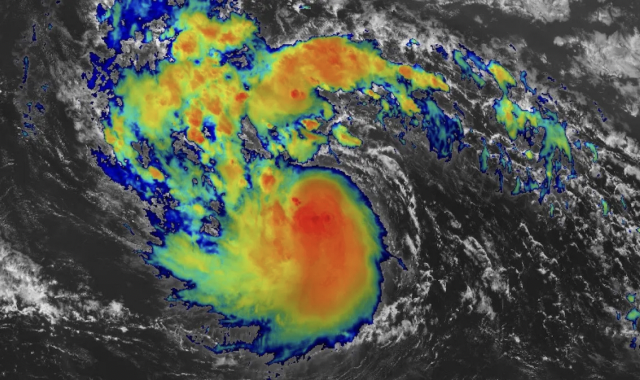
In August 2025, Hurricane Erin wreaked destruction and chaos everywhere it went. The East Coast bore the brunt of the damage. As reported by USA Today, two of the hardest-hit areas were along the Outer Banks barrier islands of North Carolina, where “waves crashed into beachfront homes and made a major road impassable,” and New Jersey, where a state of emergency was issued due to high winds and flooding.
In the aftermath, many communities faced widespread flooding and significant beach erosion. Strong rip currents were also a major concern across the coast; the National Hurricane Center reported that swimming would remain dangerous for days afterward.
As illustrated by this destruction, Hurricane Erin raises a new and terrifying concern for the future of Atlantic tropical storms and hurricanes. Erin demonstrates the growing ability of Atlantic hurricanes to intensify rapidly as climate change escalates.
Hurricane Erin rapidly intensified in the Atlantic Ocean, quickly growing into a Category 5 hurricane, with winds increasing by 85 miles per hour within a 24-hour span. According to CNN Climate, studies have shown that tropical cyclones are increasingly likely to intensify as the planet warms.
Climate Central, a nonprofit organization of scientists and science journalists, created and uses the Climate Shift Index: Ocean tool. This tool revealed that Hurricane Milton in 2024 strengthened by 120 miles per hour in under 36 hours in a region of the ocean where temperatures were “400–800 times more likely [to be impacted] by climate change.” These past analyses can be connected to the recent intensification of Hurricane Erin, raising serious concerns about the effects climate change has had on natural disasters
Leave a Reply
You must be logged in to post a comment.