By Sophie Hu’26, Editor-In-Chief
While I surveyed the incredibly flat plains of Grand Teton in search of elusive elk and moose on my family’s summer trip to Montana and Wyoming, the guide told the group about the history of the park. As an aside—somewhere between the arrival of Native American groups and the arrival of fur trappers searching for skins—the guide mentioned how national parks, including Grand Teton, were instructed by the Department of the Interior to refrain from mentioning anything that would paint America in a negative light. So, when discussing these fur trappers or so-called “American Heroes,” he was technically not supposed to address their treatment of the area’s Native Americans or their petty feuds.
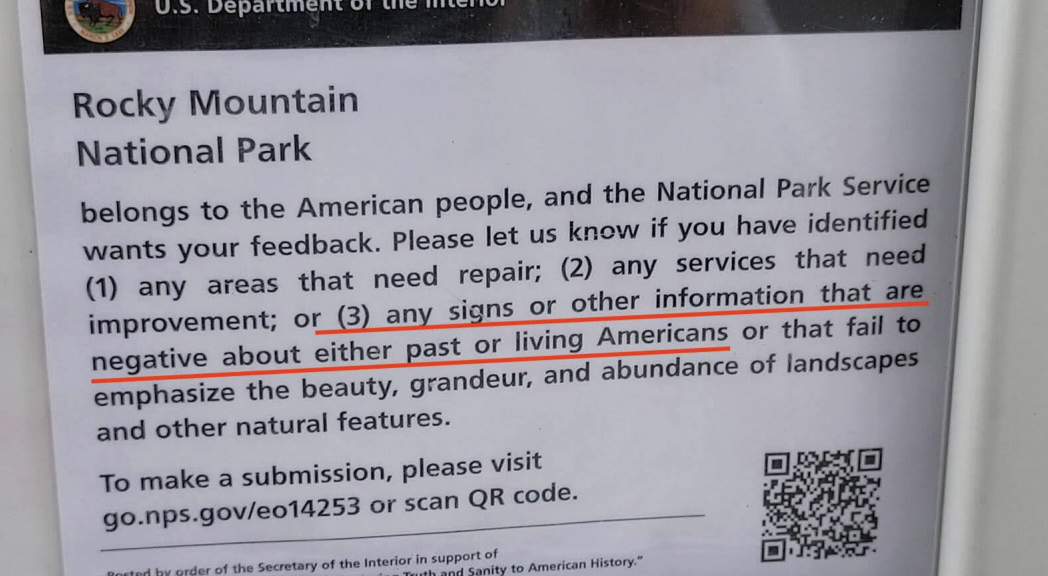
The discussion moved onto the types of edible berries in the park and the best hikes, but his comment lingered in my mind. A quick Google search confirmed the guide’s story; on May 20, 2025, the government issued the order “Restoring Truth and Sanity to American History,” proclaiming that it would take action against American monuments, memorials, statues, and more that “inappropriately disparage Americans past or living.” Instead, the order declared, attention should be focused on “the greatness of the achievements and progress of the American people.”
Is it truly a sign of greatness and progress to sweep uncomfortable truths under the rug? Which “American people” are being celebrated, and which are being silenced, relegated to ‘skeletons in America’s closet’?
It was chilling to discover that a wide-scale erasure of American history has been happening for months, right out in the open, and that I had been completely ignorant. Students I spoke to who usually keep up with current events, like Katherine Liang ’27, were equally oblivious. When I described the order to her, she deadpanned, “How can you talk about progress if you can’t talk about your issues and how you’ve improved?”
Attacks on history and truth are not limited to national parks either. Academic institutions like universities and museums have already faced pressure to change programming and policies. In his article, Shane Feinstein ’27 covers a local case of museum defunding and how it fits into a growing national pattern. Similarly, publicly funded news outlets like PBS and NPR have lost significant federal funding.
National parks were created to preserve nature and immortalize history for future generations. It would be a disservice to their original mission and to the American people—both now and in the future—to allow a narrow, myopic vision of past American glory to warp reality. The same applies to schools, museums, media outlets, and other institutions designed to educate the public.
While one article cannot undo a government order, raising awareness is the first step. Next, we, as American citizens, can reach out to elected officials to protest any censorship of history, especially locally. We can use what we’ve learned in classes like APUSH to educate others about America’s uncomfortable but necessary lessons, and remain vigilant for any changes to school curricula that mirror what we’re seeing in national parks and museums.
The truth is not as solid and unbreachable as the mountain peaks I saw this summer, regardless of how much I wish it were. Often, it is more like a weak flame, needing constant attention to keep burning. In the midst of this maelstrom of censorship, we, as learners and active members of American society, must protect that fire for future generations. We need to preserve these hard-earned, unpleasant lessons from the past to guide our future in the best possible direction.
Sanity will be restored when America faces its history as it truly is—sometimes bad, sometimes ugly, but always true.
Leave a Reply
You must be logged in to post a comment.