By Jake Cohen `14, Staff Writer
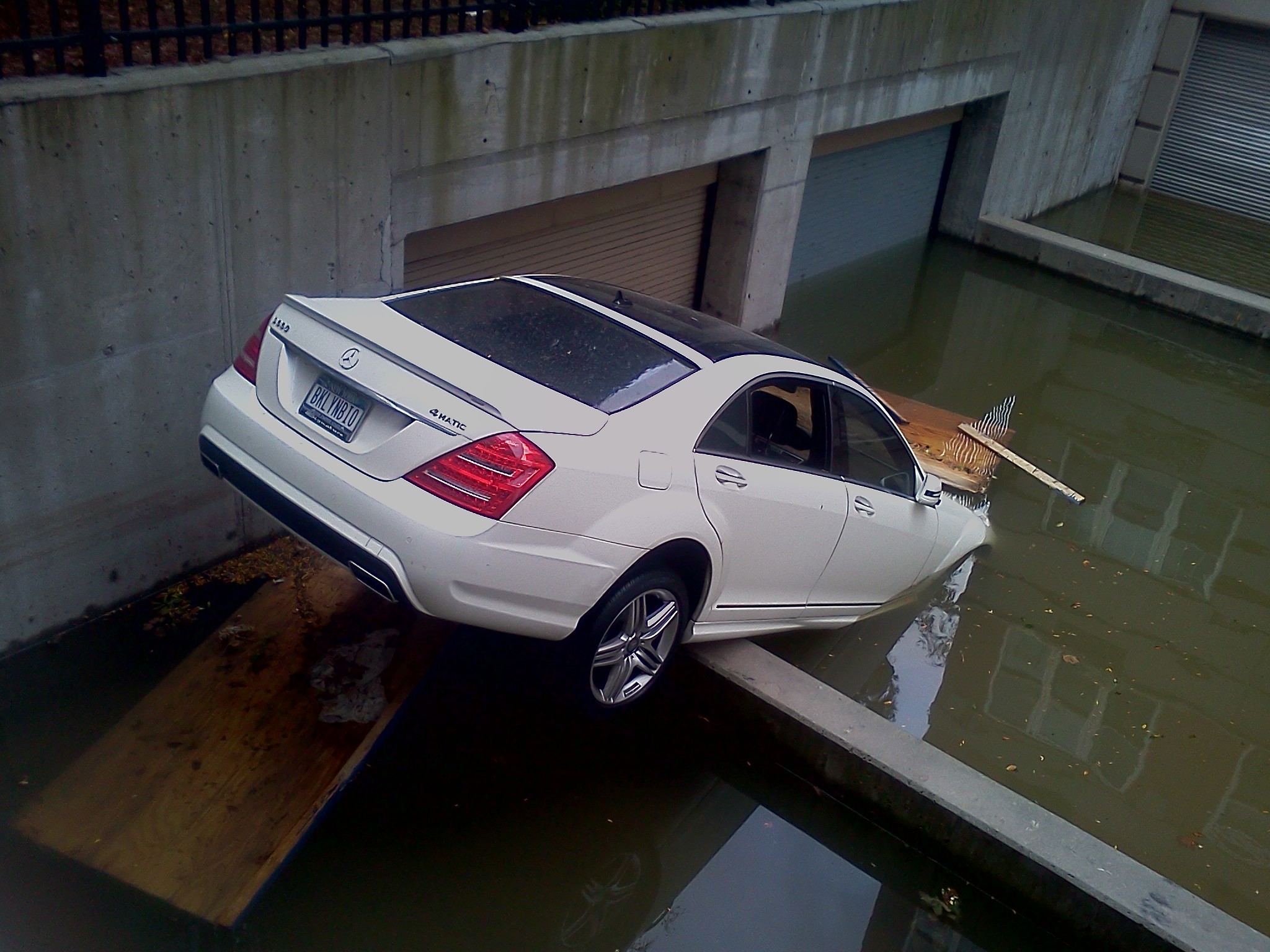
A superstorm: the only noun that could possibly describe the event that we hope has been the storm of a lifetime. As we all try to return our lives to some sense of normalcy, we cannot help but notice the many who have gone over two weeks without power, the nerve-wracking searches and waits for gasoline, and the countless families and communities that were destroyed. The storm affected nearly all of New Jersey and coastal New York. Hundreds of thousands were without power, our state’s trademark Jersey Shore has been changed forever, and our parents have relived the days of gas lines and rationing of their own adolescence that last occurred in the 1970s. As our region slowly recovers and rebuilds, we have seen several different responses from all levels of government. One of the most interesting comparisons can be made between New Jersey Governor Chris Christie and New York City Mayor Michael Bloomberg. Mr. Christie set a prime example with his decisive actions, while Bloomberg overall was inconsistent and made questionable decisions in response to the crisis.
Governor Christie was faced with a decimated New Jersey after Superstorm Sandy. The vast majority of his state had no power. Gasoline shortages were acute. The state’s glorious shoreline was completely destroyed. Wasting no time, Mr. Christie was able to assess the problems. He implemented gas-rationing, which alleviated lines at the pumps. Christie also thanked President Barack Obama for the strong response of FEMA (the Federal Emergency Management Agency). He ignored political boundaries, asserting: “I’ve got a job to do here in New Jersey that’s much bigger than presidential politics.” Many criticized Mr. Christie’s actions, arguing that that he should not have given a Democratic incumbent a political boost in the week before an election. But by showing a greater commitment to his state, Mr. Christie epitomized the qualities of a superior governor.
Mayor Bloomberg had different responses to the storm. Sandy decimated each and every one of New York City’s five boroughs. Manhattan went dark and was underwater from 31st street down; Staten Island was in shambles, and it wasn’t until three days after the storm that the first transportation off the island (the Staten Island Ferry) was reopened; Queens saw over 80 homes in a policeman/fireman’s neighborhood burned to the ground; the Bronx saw major wind and water damage; and the Brooklyn Battery tunnel was completely flooded. With his entire city in shock, one of Mr. Bloomberg’s first announcements was “we’ve decided the marathon will go on.” The New York City Marathon starts in Staten Island—the city’s worst hit borough—and travels through all five, closing bridges and major roadways on its course. Many saw this as a senseless act by the mayor, as it would divert major resources, first responders, police officers, and funds away from relief efforts. The generators used in Staten Island to power the tents at the starting line could power 400 homes each. The intense outrage shown by New Yorkers forced Mayor Bloomberg to cancel the marathon (several days later), as he continued to discover how battered his city was. In another questionable move that quickly followed the marathon debacle, Mayor Bloomberg took advantage of his city’s vulnerability and used Superstorm Sandy as an excuse to announce his endorsement of Mr. Obama for president. As Mr. Christie showed, crises are no time to focus on politics. A crisis is a time when your city or state is on the national stage, and Mayor Bloomberg used the national coverage to broadcast his politics across the nation. This shows a stark contrast between the two local leaders—Governor Christie put the crisis above politics, while Mayor Bloomberg did exactly the opposite.
While the handling of political issues draws direct contrasts between the two leaders, the management of the gasoline crises by Bloomberg and Christie showed their two different leadership styles, which accompanied two differing outcomes. In the aftermath of the storm, Mayor Bloomberg, along with New York Governor Andrew Cuomo, accepted the offer by FEMA and the National Guard to aid in the gasoline shortage facing the area by distributing ten gallons of free gasoline per person at several stations throughout the city. This initiative, though perhaps a good idea on paper, brought with it lines over seven hours long on the first day of free gasoline distribution. The Freeport Armory (a makeshift gas station scheduled to receive over 5,000 gallons of free gas) had a line with hundreds of people and vehicles waiting for hours only to find out that the gas would not be delivered. Gas line fights abounded. When FEMA approached Mr. Christie a day later about implementing the same program in New Jersey, he refused, citing the results in New York. The first few days after the storm marked similar aggression in New Jersey, but was soon augmented by Christie’s plan: instead of a disastrous free gas frenzy, Governor Christie implemented gas-rationing laws—under the presumption that controlling access would spread output and demand over a longer period of time. The odd/even license plate rationing system, revived from the gas crises of the 1970s, worked incredibly well in New Jersey. It was in fact implemented in New York City only a few days later.
It is often in a time of crisis that we see a leader’s true colors, and Governor Christie’s decisive, necessary actions show that he is up to the task of leading New Jersey. For Mayor Bloomberg, however, it will be the shortcomings and mistakes that define his response to Superstorm Sandy.
Leave a Reply
You must be logged in to post a comment.