By Siddarth Kannan ’14, News Editor

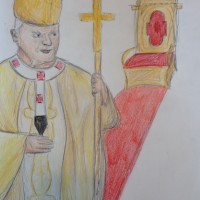
On February 11th, Pope Benedict XVI announced his decision to step down from his position as head of the Catholic Church. His resignation will be effective on February 28th. His action – due to fading strength of “mind and body” – is all but unprecedented. He is the first pope to resign in nearly 600 years, and the first to do so voluntarily in more than 700. Naturally, his decision has sent shockwaves through the Catholic world as the Church scrambles to choose a worthy successor. A Conclave of 117 Cardinal electors will convene in order to elect the next Pope. Pope Benedict XVI’s resignation has fueled a conversation as the world tries to make sense of his decision in the broader scope of Catholicism.
To truly understand the impact of the Pope’s resignation, one must consider the power of his position. The Catholic Church has over a billion followers, and the Pope is their spiritual leader. His theological decisions are considered infallible, which means they should have the ultimate weight in terms of Catholic spirituality. It follows that the Pope has considerable political power, especially concerning social issues. For example, Pope Benedict’s conservative stance on homosexuality is a major factor in the debate around same-sex marriage.
Inevitably, the institutional power of the Pope has led to speculation as to who will replace him, and what their background could mean for the church. Candidates include Italian Cardinal Angelo Bagnasco, Archbishop of New York Timothy Dolan, Brazilian Cardinal Odilo Scherer, Congo Cardinal Monsengwo Pasinya, and Guinean Cardinal Robert Sarah. The common denominator among these Papal candidates is that they are all relatively conservative when it comes to social issues. For example, Angelo Bagnasco has taken a strong position against unmarried couples and same-sex relationships. The list of candidates ultimately means that the church should more or less see a continuation of its current stance.
While most candidates are common in their conservatism, they come from diverse backgrounds. A main concern in selecting a Pope is representation: the electors will consider the candidates’ ability to represent a group as large and diverse as the Catholic population. Mr. Morelli, a humanities teacher who majored in Religious Studies, said, “The Church’s biggest group of followers is from…Latin America and Africa,” but that the popes have “always been European.” He adds that leaders who are “out of touch with the needs of all the people, simply because of geographic reasons or upbringing” make him “wonder what direction the church is headed in.” Clearly, it is important that the Conclave selects a Pope who is sensitive to the needs of his constituents.
As Catholicism represents about half of all Christians and is the religion of over 1.1 billion people worldwide, it follows that the Pope’s decision has brought the Catholic Church’s policies to the forefront of public discourse. Newark Academy is not exempt to this development. The school is generally considered a liberal community, and the reactions to the Pope’s resignation have confirmed this characterization. Several members of the school community feel that the Catholic Church’s social stances have become outdated. One anonymous student feels that “the Pope makes people not want to be Catholic,” in reference to the Catholic Church’s socially conservative ideals. Mr. Parlin, veteran humanities teacher, said, “there are certainly some changes the Catholic Church should make.” Ms. Martinez Reyes, a Catholic member of the faculty, feels that the church should do more to represent “the younger generation” and to have “such an old man running a huge religion” is not effective for the church. She adds, “the conservative views of the church can make them unpopular.” Mr. Morelli echoes Ms. Martinez Reyes’s view on the Pope’s age, adding that, “having an 85-year old man running things is not ideal.”
The Pope’s resignation is, quite simply, a big deal. It is something that has not happened in recent history, and the Conclave’s reaction will test the Church’s priorities – how far will representative qualities be considered? The resignation has brought discussion of Catholicism back into the spotlight. Around Newark Academy, the empty Papacy has encouraged a discussion as to what some perceive as the antiquities of the Catholic Church. Regardless, the Pope commands much responsibility, and the next Pope will no doubt oversee a significant bloc in the debate surrounding the social issues of today and tomorrow.
Leave a Reply
You must be logged in to post a comment.