By Elias Neibart ’16, Guest Writer
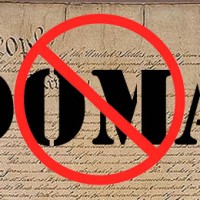
During the summer of 2013, the U.S. Supreme Court ruled that Section 3 of the Defense of Marriage Act, also known as DOMA, was unconstitutional. Section 3 of the act, which was signed into law by President Bill Clinton in 1996, did not recognize same-sex marriages for federal purposes, including certain insurance and tax benefits that hetero-sexual married couples are given access to. When Section 3 was deemed unconstitutional in June, it was seen as a big step in the right direction by the gay community. However, there is a catch: DOMA gives states the power to recognize same-sex marriages. While 17 states and the District of Columbia have legally recognized same-sex marriages, 33 states prohibit marriage equality. Although this may seem unfair because gay marriage is not discussed in the Constitution, states have the legal power to legislate on the matter due to the Tenth Amendment which states, ”the powers not delegated to the United States by the Constitution, nor prohibited by it to the States, are reserved to the States respectively, or to the people.”
Nonetheless, the LGBTQ+ community gained some ground recently. Suddenly, their goal of federal or unanimous state legislation on marriage equality appears to be attainable. California, the nation’s most populous state, ruled, this summer, that Proposition 8 was unconstitutional. Proposition 8 was a state constitutional amendment passed in 2008 that banned same-sex marriage. In Virginia, a federal judge struck down the state’s prohibition on same-sex marriage, but the ruling will not take effect until all appeals are heard.

However, of the 33 states that still have a ban on same-sex marriage, 29 have constitutional provisions that require a popular vote to overturn the ban. This will prove to be difficult in states that are adamantly against same-sex unions, like Arizona. Anna Hope Emerson ’16 believes that, “[the right for gays to marry] needs to be an amendment [to the Constitution].”
On the other hand, some students at Newark Academy stand by the Constitution’s Tenth Amendment. Zach Persing ’15 says, “As an unwavering supporter of the constitution, I thought DOMA was a blatant violation of the constitution, specifically the 10th amendment. I think every state should be entitled to their own definition of marriage. I do not support court decisions that unilaterally legalize gay marriage in a state; this is an issue that needs to be decided by the people.”
Though marriage equality seems understandable and fair to some, it is important to note that certain politicians, organizations and individuals do feel strongly that marriage should be a civil union between a male and a female, citing religious and cultural beliefs as their reasoning. I, however, while usually a strong advocate for the constitution, believe that marriage is a civil right and should not be denied because of one’s sexual orientation. The federal government should intervene with legislation regarding the matter. A law legalizing marriage equality should come from Washington and not from individual states.
Yet, while a federal law regarding same-sex marriage does not appear to be imminent, the impact of the DOMA decision and the decision of numerous states around the country is felt by all and has spurred social progress in our society. Thus, the LGBTQ+ community has been given a stronger voice.
Leave a Reply
You must be logged in to post a comment.