By Perrin Clark, Section Editor
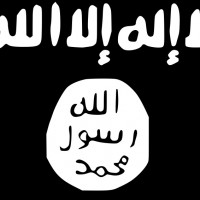
Last year, to the day, I wrote an article about a similar topic. Chemical weapons were used in Syria. The international community was horrified. President Obama vowed to launch airstrikes against Syria, claiming Assad crossed a red line of sorts. No airstrikes happened, and the nation moved on to the next news cycle. Now, we are in 2014. ISIS, the Islamic State in Iraq and Syria, is carrying out savage, barbaric acts throughout Northern Syria and Iraq. As Zach Persing, grade 12, said, “The rise of ISIS in the Middle East is quite concerning. They have claimed a landmass larger than the nation of Belgium, and they have killed countless innocent people, including two American journalists. What concerns me most about this crisis is the state of the American southern border. People who want to see the death of the United States have a fairly easy method of getting into the nation without the government knowing that they are here.” ISIS hopes to establish a Global Caliphate, which would severely threaten US national security. Now, we are launching airstrikes in Syria, this time against ISIS and its allies.
Why do I bring up chemical weapons? Because our nation cannot decide who exactly our enemies are in the Middle East. Secretary of State, John Kerry, has said America is not at war with ISIS. The White House says we are at war. Such indecision illustrates our lack of a clear vision. Who are our enemies? The answer to that question seems to change every day. At this moment, America does not have a defined foreign policy. In fact, America might cooperate to some degree with Iran, an enemy of ISIS. Iran used to be called the greatest enemy of America in the Middle East. If we do not know our own foreign policy, how are we going to be successful in eradicating ISIS and establishing some form of stability? Airstrikes could do damage, but ISIS numbers at 30,000 might be too strong for airstrikes. Mike Gibbons, grade 12, believes, “In response to Obama’s limited airstrikes, it is a step in the right direction, but I take issue with the ‘limited’ aspect of it. War cannot be limited, and if we make this mistake, this will be Vietnam all over again, but with much worse and scarier repercussions.” Ground Troops could eradicate ISIS, but I cannot possibly envision such a reality, and the withdrawal could become arduous (as we have seen previously in Iraq). Nations like Jordan, Saudi Arabia, and Kuwait should be concerned about ISIS, but I do not see a steadfast commitment on their part to actively destroying these terrorists. In fact, many Saudis actually support ISIS. Frankly, every solution will actually hurt America in one way or another, just as our decisions regarding Assad did in 2013. Therefore, we must ask ourselves, which option hurts the least?
Of course, the tumultuous events in Iraq and Syria go beyond our foreign policy. Imperialism, jihad, natural resources, poverty, and even Islam itself are significant factors that have impacted the region for hundreds of years. Simply put, we need the right people. We need statesmen and women who are capable, thoughtful, and visionary. In other words, we need people who can see the big picture. We need not only capable US politicians, but also politicians in the Middle East. We need people who can answer the question, which option hurts the least? Right now, I see a horrifying lack of such leadership. I am also not saying we need conservatives, or liberals; the future of the Middle East goes far beyond petty partisan politics. I hope that our own generation can change that reality. Hopefully, our education at NA will prepare and motivate some of us to bring this conflict to end once and for all. Christopher Clark, a historian at Cambridge, wrote that Europe committed suicide in 1914, because the nations’ leaders were inept. As a result, they created the worst conflict in human history up to that point. We cannot make the same mistake again.

Leave a Reply
You must be logged in to post a comment.