By Jake Furst ’16, Commentary Editor
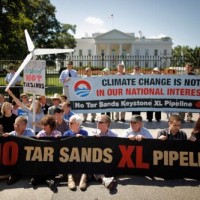
In 2008, a Canadian oil company called TransCanada proposed a 1,200-mile extension to their Keystone pipeline, which currently transports thousands of barrels of oil per day from Alberta, Canada to Cushing, Oklahoma.1 The proposed extension, called the Keystone XL, would connect to the pipeline in Canada and take oil to both southern Nebraska and the Gulf of Texas. Because the pipe would cross an international border, TransCanada needs a presidential permit to begin construction, and Obama has ignored it due to environmental concerns. Now that Republicans have control of both houses of Congress, however, they can potentially pass a bill giving permission to TransCanada to build the pipeline without Obama’s approval. Environmentalists have been objecting to the pipeline for years, but only recently have their actions sparked a national controversy and a political frenzy. Many Democrats have passionately argued that the pipeline could be disastrous for the environment, while some Republicans claim that the American economy is dying for this project. The truth, however, is that the importance of the pipeline has been hilariously exaggerated by liberals and conservatives alike.
On one side of the debate, environmentalists ardently protest that the pipeline could have serious ecological consequences. One of their arguments against building the pipeline is that the type of oil extracted from the fields of Alberta, called tar sands oil, emits much higher levels of greenhouse gases when refined than regular crude oil. This argument assumes, however, that preventing the construction of the pipeline would severely restrict the amount of this oil being transported into the United States. In truth, a report from the State Department concluded that the oil will be extracted and transported regardless of the Keystone XL; instead of by pipeline, however, the oil will be transported by rail shipments that emit their own greenhouse gases into the air.2 This is not to say the pipe would not have the potential to cause economic disaster. Any pipe has the potential to burst, spilling millions of gallons of oil. In fact, this phenomenon is all too common. Just last March, a pipe carrying tar sands oil burst in Arkansas, sending 378,000 gallons of oil down residential streets.3 The Keystone XL pipeline, however, is no more likely to burst than any other of the many pipelines that transport oil across the nation, so it is interesting that some liberals are fighting so hard to prevent the construction of this particular one.
On the other hand, the main argument Republicans have in support of the project is their claim that construction will produce tens of thousands of jobs for the American people. Although some have claimed that the pipeline could provide upwards of 500,000 jobs, most Republicans are more than content with the State Department’s projection of 42,000 jobs created either directly (through construction) or indirectly (through restaurants, hotels, supply houses, etc.).4 However, most of these jobs would be low paying, and nearly all of them would be temporary. President Obama summarized this by saying “the most realistic estimates are this might create maybe 2,000 jobs during the construction of the pipeline, which might take a year or two, and then after that we’re talking about somewhere between 50 and 100 jobs in an economy of 150 million working people.”5 Other Republican proponents of the Keystone XL argue that the American people want the pipeline, citing a Washington post/ABC News study that said Americans support the pipeline 65% to 22%, and that the government has a responsibility to listen.6 Speaker John Boehner even went so far as to say, “A Keystone Pipeline veto would send the signal that this president has no interest in listening to the American people.”7 In reality, the support of construction has breadth but lacks depth. Now that gas prices have fallen to extremely low levels, many “supporters” have become apathetic, and would probably understand if the project was rejected due to environmental concerns.
Ultimately, the pipeline will probably have very limited economic or environmental impact. So how has the debate blown up to such extreme proportions? Well, in a sense, environmentalists were looking to pick a fight, not because environmentalists have pugnacious tendencies, but because leaders of the environmental movement thought that by focusing on one issue, even as insignificant as the Keystone XL pipeline, they could revive a national conversation about climate change. In this they have been wildly successful, successfully sparking a national debate over the future of American energy sourcing. On the other hand, Republicans have used this as a political opportunity, as a veto from President Obama would go against the wishes of a vast majority of Americans. The scale of the Keystone Pipeline does not warrant this political debate. However, much like a small battle in a long war, Keystone XL has the potential to be a turning point in the way American politicians address the very real threat of climate change.
1“What Is the Keystone XL Pipeline?” Texas RSS. Accessed January 25, 2015. http://stateimpact.npr.org/texas/tag/keystone-xl-pipeline/.
2Jaffe, Alexandra. “Keystone Debate Ends with Democrats’ Ire – CNN.com.” CNN. January 23, 2015. Accessed January 25, 2015. http://www.cnn.com/2015/01/23/politics/senate-keystone-amendments/.
3Smith, Mitch. “Defending Family Farm Traditions in Battle Against Keystone Pipeline.” The New York Times. January 22, 2015. Accessed January 25, 2015. http://www.nytimes.com/2015/01/23/us/defending-family-farm-traditions-in-battle-against-keystone-pipeline.html.
4“What Is the Keystone XL Pipeline?” Texas RSS. Accessed January 25, 2015. http://stateimpact.npr.org/texas/tag/keystone-xl-pipeline/.
5Ibid.
6Jaffe, Alexandra. “Keystone Debate Ends with Democrats’ Ire – CNN.com.” CNN. January 23, 2015. Accessed January 25, 2015. http://www.cnn.com/2015/01/23/politics/senate-keystone-amendments/.
7Ibid.
Leave a Reply
You must be logged in to post a comment.