By David You’18, Staff Writer
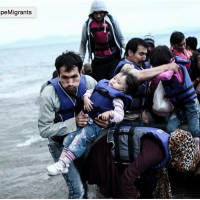
As millions of refugees leave their homelands and cross into the unknown, Europe and neighboring nations continue to be confronted with the gargantuan issue. The Syrian Civil War between Bashar al-Assad’s government against rebel forces, as well as the threat of the Islamic State of Iraq and Syria (ISIS) has forced many to trek over 100 miles in order to get to safety. Thousands have died crossing the Mediterranean Sea, but these people are trying everything they can in order to secure a future for themselves and their family. As António Guterres, the United Nations High Commissioner for Refugees says, “This is a defining moment for the European Union, and it now has no other choice but to mobilize full force around this crisis.”

There are an estimated 4 million refugees in the five countries closest to Syria. In Lebanon alone, there are over 1 million refugees. 1 in every 5 people is a Syrian refugee. If that number were shrunk down to the students at Newark Academy, almost 120 students would be refugees. This astonishing number reflects just how desperate the situation in Syria has become. Although people may think that military-aged men are all joining rebel or jihadi groups like ISIS, most of these men do not find the idea of war favorable. The number of fighters is insignificant compared to the number of refugees leaving with 20,000 heading in while about million head out. These young men who are heading out pave a trail for their families to follow and find a new home.
Meanwhile, Europe continues to be baffled by the incoming refugees. There are countries such as Germany who are welcoming refugees, but countries such as Hungary are not willing to make the accommodations and open their doors. According to Ms Schottland, a 9th grade Ancient World teacher, the Syrian refugee crisis has the “potential to destabilize Europe”. She has also criticized Middle Eastern nations such as the United Arab Emirates, Oman, and Saudi Arabia for not accepting refugees. Furthermore, refugees need to be helped in basic needs including food, water, shelter and safety. Hannah Tarnow ’16, co-president of the Human Rights Club, believes developed countries such as the United States and many European countries need to create more programs to fulfill these basic humanitarian needs for the refugees. Hannah is also a firm believer in private companies or foundations helping with the crisis.
Meanwhile, on the other side of the world, the US has sent over $300 million dollars in aid to the refugees, even though many Americans do not view it as an American crisis. Ms Fischer, a history teacher at NA, understands this idea but she also wants more refugees to enter the country. She hopes that these “refugees can become huge influences” and have a “positive influence on the American Identity.” On the other hand, Ms Schottland also believes the government should put more economic pressure on Bashar al-Assad. While many believe that military solutions would be helpful in this situation, both Ms Fischer and Ms Schottland believe that troops on the ground would not be effective. Ms Schottland also expresses that the crisis is a “complicated political powder keg” and that “Syria is the lynch pin.”
As refugees continue to escape the horrors of war into an unknown land, one thing is for sure: unless we speak up and raise awareness about this issue in order to prevent crises like this from reoccurring, nothing will change. Ms Fischer, who agrees to the importance of speaking up about this issue, wants serious support systems for the refugees. She said, “governments need to work on disaster responses now in order to respond to these crises.” Finally, Ms Schottland reminds us that this crisis is “heartbreaking on a human level” and believes we must do everything in our power to save these innocent lives.
Leave a Reply
You must be logged in to post a comment.