By Roman Wright ’19, Staff Writer

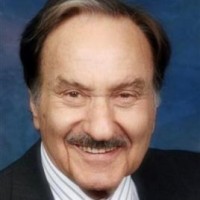
Mr. Jay Kislak was quite possibly the greatest convocation speaker in recent memory. His off-the-cuff remarks made him few friends and many enemies at this school, but his speech ultimately carried a message that he wished to impart to people whose entire thought process differs greatly from his own. It was the main focus of his speech to deliver life lessons to the student body. He did precisely that, albeit in a manner deemed brusque and potentially derisive. His unwitting controversy-inducing comments served a reminder of how censored society has become. It is almost certain that, having been presented with a copy of the speech Mr. Kislak was to present, the administration would have hurriedly arranged for a different speaker. And while a dithyrambic piece is not in order, it is necessary to realize not only the minor role of the contentious remarks of his speech, but also the response that he should not have even been allowed to speak represents a censored approach to education that is impermissible.
Firstly, there is a point behind his various detrimental word choices: they completely obfuscated his meaning, which was often meant to be positive and lauding in nature. His first controversial comment, whose intent was to celebrate the diversity of the student body, was obscured in pupil’s minds because of his use of the term “dark faces.” While simply meaning non-white, or to use the Newark Academy website’s phrase, “students of color,” and calling attention to the 45% of students who fall into that category, Mr. Kislak made obvious a subject that Newark Academy claims to celebrate: our differences. The reaction from members of the student body would make it seem as though they are exceedingly uncomfortable with acknowledging differences. It thus fell to Mr. Kislak to take the blame for the student body’s unwillingness to recognize the manifold differences between them.
The next disputatious comment was during his second life lesson when he told the students to, “Cherchez le femmes,” or look for the women. He also said that he used to hang out by the tennis courts and talk to the women as they left, and that maybe several of the sixth grade girls would make it onto the tennis team. While not fit for a convocation speech and the only comment of his that was truly indefensible, its significance has been vastly overblown. It was a mere aside in his overall point on the benefits of networking; it was not a main point of his speech at all. To conclude therefore that he is misogynistic because of a three sentence aside is ludicrous and proves that the speech by and large was not offensive.
Mr. Kislak’s unscripted remarks produced several comments outside the typical range of ideas for many of the students, but also left the administration unprepared for his comments and therefore unable to stop his remarks, which provided good discussion points and, in the end, were neither malintentioned nor hate-filled. It is very likely that had they known what Mr. Kislak was going to say, the administration would have at the very least thought twice about inviting him, owing to a few minor comments that could be perceived as unaware or mildly offensive. Even something as harmless as Mr. Kislak’s inadvertently disagreeable comments are not tolerated at a place that preaches tolerance of all ideas. It was therefore a wonderful thing for Mr. Kislak to speak and remind the school of how over-sensitive it has become.
The controversial elements of Mr. Kislak’s speech were blown out of proportion by members of the student body to make it appear as though he should not have been allowed to speak. In reality, all that those efforts showed was how censored the school environment has become, that asides and brief points which do not constitute the ideas nor most of the content of a speech are cause enough for withdrawal of an invitation from an engagement. Essentially, Mr. Kislak’s speech served as a reminder of censorship in the school and provided several important life lessons for us to take to heart.
This article reflects the opinion of one staff writer, not The Minuteman as a whole. To share your opinion, comment below! Also be sure to check out an alternative viewpoint by Jocelyn Tolpin ’17.
Leave a Reply
You must be logged in to post a comment.