By Ellie Pitkowsky ’18, Staff Writer
As citizens of a country that calls itself the “land of the free and the home of the brave” we, as Americans, pride ourselves on the equality that exists within our nation. One of the essential parts of this American view of equality is that all citizens over the age of eighteen have the right to vote. Unfortunately, some of the rules and regulations do not clearly adhere to this principle. In all states except Maine and Vermont, prisoners cannot vote while incarcerated. With 1.3[1] million citizens presently incarcerated, elections lack the input of this underrepresented demographic. Prisoners, citizens on parole, and citizens on probation should all have the right to vote in every state due to the fact that all American citizens possess the right to vote. According to an anonymous junior, “They’re still citizens, and just because they did one thing wrong, doesn’t mean their rights should be taken away.”
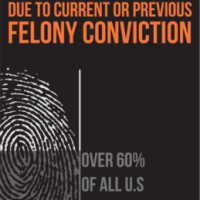
The struggles with voting rights do not stop after one’s mandated term of incarceration has ended. In four states, the ability to vote is restored after the term of incarceration and following the end of parole. In twenty states, voting rights are restored after terms of imprisonment, parole, and probation. Unfortunately, in eleven states, such as Florida, Alabama, and Delaware, it is highly possible that the right to vote can be permanently revoked even after time in prison, probation, and parole[2]. Policies such as these leave a large demographic group void of their rights.
-

http://www.motherjones.com/mojo/2014/02/felony-convictions-voting-rights-black-american-african-disenfranchisement

With presidential elections on the horizon and with so many of the candidates addressing problems with the prison system and mass incarceration, there is no vote more important than the vote of a citizen who has been through the system itself. The two candidates that are the most outspoken on the need for prison reform are Rand Paul and Martin O’Malley, but their views differ slightly. O’Malley is much more focused on the racial problems within the prison system, such as mass incarceration and unfair sentences, in addition to enabling felons to vote right out of prison. Meanwhile, Paul is more focused on shorter sentences just to cut spending. Granting those imprisoned with the right to vote would give voice to those who have firsthand perspective of the difficulties of imprisonment and the struggles that people from less privileged socioeconomic backgrounds often face.
Additionally, the socioeconomic makeup of those in prison is not very diverse. In 1991, more than half of all prisoners reported an annual income of less than $10,000, which is $1,000 less than the minimum wage of that time[3]. As presidential candidates focus on the issues concerning the lack of a large middle class and flaws in our tax system, those who are greatly affected by these possible new policies should be a part of the voting demographic.
A common argument that is made against giving inmates the right to vote addresses the judgment of those incarcerated. According to newsmax.com, “Children, non-citizens and the mentally incompetent can’t vote because of standards involving trustworthiness and responsibility. The same requirements should apply to felons.[4]” Though this point has some validity, I do not believe that it should affect all convicts. There is some justification for taking away the right to vote from a convict that is classified as mentally ill, as his or her judgment cannot be trusted enough to contribute to the voting demographic, but mentally ill convicts comprise only 53% of the general prison population[5]. Felons who have committed small crimes such as drug crimes and minor unarmed robberies should without a doubt be given the chance to vote while imprisoned. In addition, prisoners should be granted the right to vote because many people in prison serve far more time than is necessary. A simple drug crime such as possession could land someone in prison for up to two years[6], which is likely more than enough time for someone to learn his or her lesson for one mistake. Zak Cox ’17 stated that any prisoner should be granted the right to vote because they should “be able to decide what the society looks like when they reenter it and they should have the means and motivation to stay up to date on current events. Voting contributes to that.”
In conclusion, as citizens, those who are incarcerated and express good judgment and a healthy state of mind should have the right to vote. America cannot call itself a free country without giving this right to all who deserve it.
This article reflects the opinion of one writer, not The Minuteman as a whole. Check out this article for an alternate perspective!
[1] http://www.bjs.gov/index.cfm?ty=tp&tid=11
[2] http://felonvoting.procon.org/view.resource.php?resourceID=000286
[3] http://www.publiceye.org/defendingjustice/pdfs/factsheets/11
[4] http://www.newsmax.com/FastFeatures/felons-voting-rights/2015/04/15/id/638743/
[5] www.theatlantic.com/…prisoners-are-mentally-ill/389682/
[6] http://www.eraygreen.com/
Leave a Reply
You must be logged in to post a comment.