By Dean Tan ’18, Staff Writer

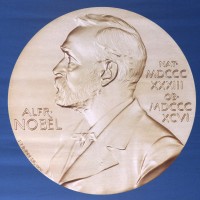
Earlier in October, the Nobel Committee, composed of various Swedish and Norwegian committees, recognized select researchers, writers, and activists for their revolutionary discoveries and outstanding contributions in 2015 by awarding them with international honors, cash prizes of 1.2 million USD, and the prestigious Nobel Prize Medal.
The Nobel Prize was established by the will of Swedish inventor and chemist Alfred Nobel. Nobel amassed a large fortune from his inventions, which included dynamite and smokeless explosives among 355 others, and in his will requested that a series of prizes be awarded to those who contribute the “greatest benefit on mankind” in the areas of physics, chemistry, physiology, literature, and peace (economics was added in 1968). Since its inception in 1901, several hundred individuals have won what is regarded as the most prestigious award in their respective fields: the Nobel Prize.
Here are the Nobel Prize winners of 2015 in the order they were awarded.
Physiology/Medicine: William C. Campbell, Satoshi Omura; Youyou Tu (Awarded 10/5)
William C. Campbell and Satoshi Omura shared ½ of the Nobel Prize for their discovery of Avermectin, a drug that combats parasitic diseases such as river blindness and Lymphatic Filariasis. Youyou Tu won the other ½ of the prize for her discovery of Artemisinin, an extract from the plant Artemisia annua that is highly effective against malaria. The discovery of this drug has revolutionized treatment and is predicted to decrease malaria mortality rates by over 20%.
Physics: Takaaki Kajita, Arthur B. McDonald (10/6)
Takaaki Kajita and Arthur B. McDonald received the Nobel Prize for their discovery of neutrino oscillations, showing that neutrinos have mass. Neutrinos are electrically neutral elementary particles, and it was previously believed that they did not have mass according to the Standard Model of particle physics. This discovery has yielded an important insight into one of the most abundant elementary particles in the universe, and proven that the Standard Model is incomplete. It also postulates that because neutrinos are now known to have mass, they make up a significant part of dark matter (70% of the mass of the universe that we cannot see).
Physics teacher Mr. Bitler shared,
“The demonstration that the neutrinos are oscillating between different forms, a complicated quantum mechanical phenomenon, implies that the neutrinos do indeed have mass and thus must move at less than the speed of light. The Standard Model of Particle Physics, which purports to explain a lot about all the particles in the universe, predicts that neutrinos will be massless. Thus, this research, which shows neutrinos to definitely have mass, shows that there is something askew about the Standard Model. And that means, we have some more thinking to do about some very, very, very deep things.”
Chemistry: Tomas Lindahl, Paul Modrich, Aziz Sancar (10/7)
Tomas Lindahl, Paul Modrich, and Aziz Sancar were awarded the Nobel Prize for “mechanistic studies of DNA repair.” At a molecular level, they have mapped several mechanisms by which DNA, a naturally unstable molecule that often is changed or damaged spontaneously, is repaired. The Nobel Laureates have mapped three mechanisms: base excision repair, which counteracts the collapse of DNA; nucleotide excision repair, which repairs damage from ultraviolet radiation; and mismatch repair, which greatly reduces error frequency in DNA replication.
Chemistry teacher Dr. Hobson, a former scientist at Bell Labs, knows several former colleagues who are now Nobel Laureates, such as Shuji Nakamura (Blue LED, Physics, 2014), Horst Störmer (Quantum fluid, Physics, 1998), Arno Penzias (Cosmic microwave background radiation, Physics, 1978), Alan MacDiarmid (Conductive polymers, Chemistry, 2000) and Melvin Calvin (Calvin cycle, Chemistry, 1961), among several others. Dr. Hobson himself has worked extensively in the fields of lasers and transistors, with over two hundred publications and patents to his name.
With regards to winning the Nobel Prize, Dr. Hobson shared,
“It has to change the way we look at things fundamentally or have a profound effect on the way things are done. It used to be more theoretical, but in recent years it has become more practical. Just a few years ago, a Nobel Prize was awarded to a Bell Labs scientist for coming up with the charge-coupled device, which is used in all of the digital cameras. Last year was for the blue LED laser. More and more, it is for things that have become very impactful in terms of society as opposed to just some crazy particle theory or something like that.”
Literature: Svetlana Alexievich (10/8)
Svetlana Alexievich was bestowed with the Nobel Prize in Literature “for her polyphonic writings, a monument to suffering and courage in our time.” A Belarusian journalist and writer, Alexievich has chronicled the history of the Soviet Union, investigating events such as the Soviet-Afghan War, the fall of the Soviet Union, and the Chernobyl disaster. Her works often reveal perspectives that are not often heard, as she documents personal memories and monologues of women through interviews. She is the first journalist –and the first from Belarus — to receive the Nobel Prize.
Peace: National Dialogue Quartet (10/9)
The Nobel Peace Prize was awarded to the Tunisian National Dialogue Quartet “for its decisive contribution to the building of a pluralistic democracy in Tunisia in the wake of the Jasmine Revolution of 2011.” Founded in 2013, the Tunisian National Dialogue Quartet mediated a stable and peaceful political process in the wake of violence and social unrest and was instrumental in establishing Tunisia’s constitutional system of government that guarantees equal rights to the entire population. The National Dialogue Quartet is comprised of four separate organizations – the general labor union, confederation of industry and trade, league of human rights, and order of lawyers – but the prize was awarded to the Quartet as a whole.
Economics: Angus Deaton (10/12)
Angus Deaton won the Nobel Prize in Economics “for his analysis of consumption, poverty, and welfare”. A Professor of Economics at Princeton University, Deaton has transformed the field of economics through his development of the Almost Ideal Demand System, a method of estimating how demand for a good depends on the prices of all goods and on individual incomes. His research has also focused on the analysis of individual data, through household surveys, as opposed to theoretical aggregate data, allowing him to explore patterns of income and consumption as well as measuring poverty and welfare.

Leave a Reply
You must be logged in to post a comment.