By Elizabeth Merrigan ’16, Staff Writer
You’re in the New Wing, and you and your classmates begin to take your seats around the semicircle of desks. As the second bell rings, almost in unison, you reach into your bags and pull out Macbooks—sleek, silver-bodied, and bearing the same glowing logo.
(There might be a PC or two, but the cult-like effect of 10-12 blue lights illuminating faces from below is the same in any case).

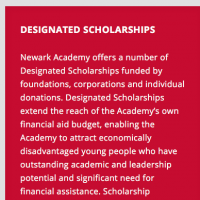
“Newark Academy welcomes and celebrates diversity,” says the website. The road to diversity is no smooth one, however, and though the debate over Affirmative Action and quotas rages on, inevitably an admissions decision made solely on academics and some extracurricular achievement is a narrow one, indeed. Newark Academy makes a commitment to creating a community that will ensure a meaningful learning experience for all students. Part of admissions is an exhaustive financial aid process to ensure that students will receive the assistance they need. “I spend a lot of time interviewing families seeking financial aid, hoping to level the playing field. We don’t want kids to be unable to do what others are,” said Ms. Reinhard, Director of Financial Aid. As of this year, 15% of the student body receives financial aid grants ranging from $5,000 to full grants. In total, the financial aid budget for the 2015-2016 school year is more than $2 million. In addition, Newark Academy’s Newark Scholars program provides full scholarships to top students from Newark, and the school has maintained a close relationship with the NJ SEEDS program, which places high-achieving students from low-income families in selective independent schools and provides financial aid packages. “The diversity at our school is so important, and you can’t really get a good amount of diversity without funding,” Ms. Reinhard said.
So how does the handpicked nature of Newark Academy’s student body account for divisions based on socioeconomic status?
“I think [students] do a really good job of not clustering according to socioeconomic breakdowns. I think part of that is a result of how hard we work to bring in a diverse study body,” said Mr. Taylor, Director of Admission and Enrollment Management. “Having said that, I think birds of a feather flock together. You find people of similar backgrounds to connect with, so you’re going to see kids from similar areas and similar cultures grouping together, and they’re probably going to be similar socioeconomically as well.”
When asked what socioeconomic status meant to them, students Maya Kannan ’20 and Paige Cooper ’16 defined it as “your social and economic standing” and “your place in society based on how much money you have,” respectively.
Socioeconomic status is, according to the American Psychological Association, the measure of an individual or group’s education, income, and occupation conceptualized as social standing or class. Socioeconomic status has been shown to have a heavy impact on psychological and physical health, education, and family life, especially those of racial and ethnic minorities. In environments such as private schools where efforts to diversify the student body lead to significant financial disparity, socioeconomic status can become a source of discomfort and alienation for some students.
Just as a person can only claim to be “colorblind,” in the sense that he or she is not able to acknowledge race, it is difficult to prove whether someone can ignore socioeconomic status in social situations. “I don’t think they’re overtly conscious of [socioeconomic status],” Mr. Taylor said, “and I think that’s a very good thing…but it can also be a negative because it creates situations, unintentionally, where they make others uncomfortable.”
He described the following scenario: Three students sit together, perhaps at a lunch table. They describe their plans for break. Two of them talk excitedly in anticipation of a week spent at a private beach house, or going on boating trips and overseas vacations. The third student, less economically privileged, quietly evades the conversation.
Some similarly self-conscious situations occur at the intersection of cultural and economic differences. “For example, bar mitzvahs—and bar mitzvah gifts, which can be expensive,” said Ms. Reinhard. “For families who have never even heard of those things, or might not have enough resources, it can be stressful to navigate.”
Back to our initial snapshot: Perhaps, sitting in the midst of these classmates typing away at their laptops, is a single student handwriting his or her notes.
“People look at you and judge you based on how you dress or who your friends are,” said Maya, when asked how socioeconomic status played into the “NA experience.” “And if you think about it, it’s still really relevant once you leave. People will continue to judge you based on your wealth. But I don’t think I draw conclusions based on that, or at least I like to think I don’t.”
“What is socioeconomic status?” I asked one anonymous student.
“Oh god,” she said. “I don’t even know.”
Leave a Reply
You must be logged in to post a comment.