By Jake McEvoy, Staff Meme Analyst
2010. A simpler time. The Saints won the super bowl, the winter Olympics were held in Vancouver, and Belgium left the recession with 0.5% growth in the third quarter. Teenagers were all on the internet, and now and then they would see a funny picture, and laugh. That funny picture, with words at the top and bottom in block white letters – was a meme. Nothing else was a meme, and if you referred to anything else as such, you were considered uncool, or out of the loop. An Avid memer, Danny Lifson ’18, describes his relationship with memes in 2010 – “In 2010, everyone was a normie pleb and didn’t understand memes like I did. Long live George Bush.” A light hearted influence, certainly, but something changed. Something happened between 2010 and 2016. Was it gradual? Was there a concrete turning point? The world may never know, but analysts across the world agree – meme culture exploded. The rules of memes disintegrated, attitude towards memes changed, and the meme viewers shifted from a select few, to the entire world. Memes are a theater performance, and the human race is merely the audience.

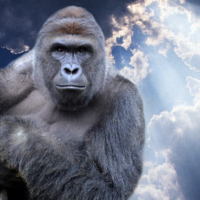
The broad nature of current memes is possibly meme culture’s most drastic development since 2010. Take the recent death of a gorilla at Cincinnati zoo. As you may all know his name, this gorilla became a “meme” to the entire world. Along with this, every single picture, phrase or even abstract idea found on the internet is now a “meme.” How has there been such a dramatic nomenclatural change toward internet phenomena? Scientists speculate that with the large increase of audience comes a looser set of rules for what is and is not a meme. Clearly this has gone much farther than anticipated – which brings me to my next point.
The meme audience has blown up from the original naïve teenagers just surfing the web. The meme audience now includes young children, moms, people who hate themselves and talk about it online, and animals. It seems in this days of abundant memes, there is a meme for everyone. A local novice meme designer, Ellie Pitkowsky ’18, describes her relationship with memes back in 2010 as “0” – clearly a very low number, in fact the lowest of the numbers, not counting negatives. Her perception has dramatically shifted, as she says, “they have entirely taken over my life. I don’t even eat or sleep anymore, I just look at garlic bread memes.” With this increase in audience, many complex branches of memes are becoming available to the public, such as ironic memes, in which one pretends to like a meme based on the comedic value of the sarcasm that comes with it.
These fast times are making it hard for everyone to stay on board with the flow of new memes into society! Local student, Benjy Berkowitz ’18, has actually been creating educational videos on recent memes to help those who just cannot keep up. “I would say I made [the videos] to educate the non-memers of the world or the more inexperienced ones about memes and meme culture,” he said, while wearing a $65 “Forever Alone” meme shirt, and added, “and also to tell the fans of the memes about the history and status of their favorite memes.” A true hero. We all need to be more like Mr. Berkowitz in these revolutionary times if we want to keep up with the ever-changing culture that is meme.


Leave a Reply
You must be logged in to post a comment.