By William Corprew ’20, Staff Writer
In early 2016, the Dakota Access Pipeline, a 3.7 billion dollar project owned by Energy Transfer Partners, was approved after several states resolved issues regarding eminent domain and permits. The underground pipeline will transport crude oil from the Bakken Oil Field in North Dakota through South Dakota and Iowa to an oil storage facility in Illinois, stretching approximately 1,200 miles. The project is scheduled for completion in January of 2017.
New drilling technologies such as horizontal drilling and hydraulic fracturing, commonly referred to as fracking, have driven the need to increase the capacity of oil transportation. The pipeline will transport 470,000 barrels of oil per day with a maximum capacity of 570,000 barrels.
According to Energy Transfer Partners, the pipeline will deliver local as well as national benefits. The company claims that between 8,000 to 12,000 jobs will be created during the construction phase of the project. The pipeline is also expected to alleviate the stress placed on rail and truck infrastructures as oil and agriculture producers compete for their limited capacity. Finally, pipeline advocates assert that pipelines are more environmentally friendly and cost-effective, while also being safer than ground and rail transportation.
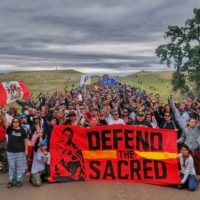
In April 2016, significant resistance began to grow against the pipeline. Over 200 Native American tribes and other opposition groups formally organized on the Standing Rock Reservation and sued for an injunction to halt the project. However, the injunction was denied. The complaints against the pipeline included concern over oil spills, contamination of drinking water from the Missouri River, the impact on climate change by increased fossil fuel production, and the desecration of sacred Native American lands and burial grounds. Julie Marcano ‘20 shared, “I am opposed to the pipeline. I firmly believe that it is the right of the native people to fight for their homeland and to attempt to preserve their culture.”

The Dakota Access Pipeline has suffered several setbacks due to the movement lead by the Sioux of Standing Rock. Violent clashes between pipeline protesters and local police began in October 2016 and have continued to the present, with protesters trespassing onto private land and blocking roads and construction sites; however, some protest peacefully by praying and burning incense. The North Dakota Pipeline has become an international issue and many protesters have been arrested. Furthermore, as of mid-November, organizers have begun to target banks that have invested in the pipeline.
Another notable development is that President Obama has instructed the U.S. Army Corps of Engineers to take a second look at the route before it completes the controversial leg of the pipeline which crosses the Missouri River. So far, the Army Corps of Engineers has resisted changing the route, and Energy Transfer Partners is set to resume the project very soon, despite President Obama’s calls for a temporary delay. On November 11, the Obama administration stated that nothing had been finalized and the permit allowing the pipeline to cross the Missouri River had not been issued.
With the election of Donald Trump as president, the fate of the pipeline is up in the air. To date, president-elect Donald Trump has not taken a public stance on the pipeline. However, resistors of the pipeline have highlighted the fact that Donald Trump owns stock in Energy Transfer Partners and had accepted a campaign donation from the company’s CEO.
For those who are opposed to the pipeline, the question must be asked: how will we collectively reduce our dependence on fossil fuels? Oil and oil-based products are consumed in just about every aspect of American life. History teacher Mrs. Schottland says, “I am trying to do my share as an individual. I am an avid recycler, as I visit my town’s recycling area at least once a month. I try to reuse my water bottles and do not consume individual water bottles. I also try to use public transportation whenever I go into New York City. These are tiny steps to be sure, but I think each of us can make our own efforts in order to reduce our own carbon footprints.”
Leave a Reply
You must be logged in to post a comment.