By Zachary Burd ‘19, Staff Writer
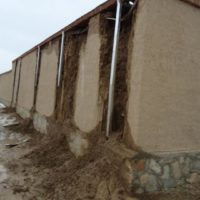
In 2007, a $335 million power plant was built by the United States for use by the Afghan military. It is abandoned now, gradually collecting dust. American taxpayers have also funded a $150 million residential complex in Afghanistan’s capital, Kabul. It houses only ten Department of Defense employees. In 2015, a $500,000 police training facility meant to resemble an Afghani village was also built by the United States. Its walls melted in the rain due to the substandard construction of freelance architects. Just this year, Afghan contractors were given $130,000 by Americans to build a small shower facility “without holes in the walls.”

These incidents are a reflection of the larger trend of the misappropriation of American aid in Afghanistan. Not only are the funds going towards projects that do not produce the desired results, but a large portion of them are also being siphoned off by corrupt officials and warlords. In the words of Melody Xiao ‘18, “Misuse of money is never good… There needs to be more careful investigation into the expenditure of American aid. If we’re going to make a real difference, we need to have more oversight.”
The United States has given as much as $13 billion annually in economic and military assistance to Afghanistan in the past several years. While that number has slowly dwindled with the decreased American troop presence in the country, a newly-released report from third-party watchdog groups, including the Special Inspector General for Afghanistan Reconstruction, shows that billions of dollars of funding have been misspent.
In the January 13 report, a quote from a top Pentagon official stated that the United States is “paying the salaries of tens of thousands of non-existent Afghan soldiers, police, teachers, and civil servants.” The report detailed the numerous ways that American money is wasted in Afghanistan, contrasting with the modest humanitarian and strategic gains achieved with funds that have been used appropriately. The document goes on to say, “The U.S. contributed mightily to the problem by dumping too much money, too fast, into too small an economy, with too little oversight… We are concerned that this may be another example of U.S. government officials not looking out for American taxpayers’ dollars.”
Zach Kessel ‘19 believes that a large portion of American aid to Afghanistan is simply lining the pockets of our enemies, compounding the problem of ineffective funding. “Corrupt Afghans use the stolen aid money to grow poppy plants,” he says. “Therefore, the United States indirectly funds the heroin industry, which we give millions of dollars to others to fight.”
According to the Agency Coordinating Body for Afghan Relief and Development, it is estimated that the average Afghan paid more in bribes than taxes in 2016. While a certain amount of bribery is needed to accomplish many projects in a corrupt country, it has become clear that heavy American investment in Afghanistan has not hindered the militant groups located there — nor has it raised the country out of third-world status.
As for possible solutions, Humanities teacher Mr. Hawk suggested, “[Afghanistan] is not an ordinary problem of corruption . . . [The United States] has to create infrastructure from scratch. It’s not just having to build a road, it’s needing to create the capacity to produce asphalt… With complexity always comes corruption. The issue is not if there is corruption, but how much you can tolerate.”
Leave a Reply
You must be logged in to post a comment.