
By Andrew Wyshner ’18, Commentary Editor
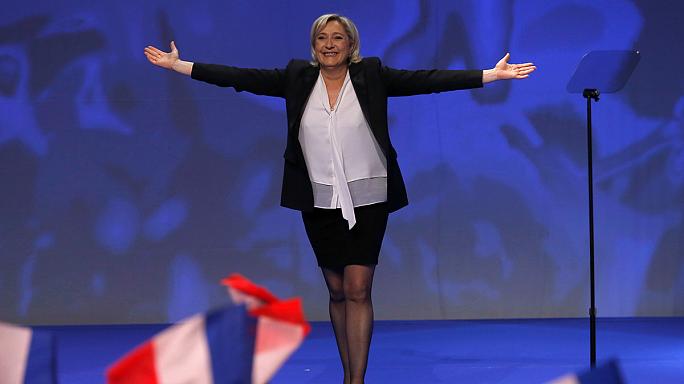
Marine Le Pen lost to Emmanuel Macron in a landslide defeat. Emmanuel Macron, founder of the En Marche party, will become the new leader of an extremely divided France. Emmanuel Macron, 39, is a centrist who supports remaining in the EU and continuing to use the euro as the French currency. Le Pen is the leader of the Front National, and supports leaving the EU, reestablishing the franc as the French currency and securing the French borders.
While Le Pen’s far right ideology is too extreme even for many conservatives in America (like myself), Macron’s victory is a loss for France. The ideological differences are stark, but most important are the differences between the two candidates’ histories. Marine Le Pen battled throughout the campaign to break from her party’s past; her father, Jean-Marie Le Pen, was the former leader of the party and became an undesirable image for the party. Le Pen expelled her father from the Front National in 2015. She has also expelled party members for anti-Semitism and racism. Her attempts to, as she says, “de-demonize” the party have succeeded in increasing the party’s popularity. Emmanuel Macron’s history should have alienated voters to the point that he was unelectable; Le Pen was the better choice for French voters on May 7.
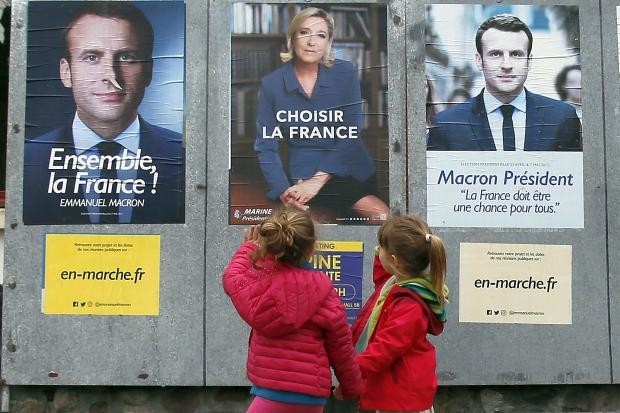
Macron was the continuity candidate for a failing country. France is losing jobs to foreign nations rapidly, and one of the most infamous instances was the closing of the Whirlpool factory in Amiens, France, which became central to both campaigns. France’s unemployment rate currently sits at almost 10%, yet they still elected the candidate that worked under Hollande’s abysmal administration. Even more astonishing is Macron was the Minister of the Economy under Hollande’s administration; if he was unable to fix the economy when it was his only job, it is impossible to expect him to do so when he must also deal with foreign policy and the terrorism that has plagued France. Mr. Bitler offered his view on a Macron-led France, saying that “France has high unemployment, its debt is sky high […] and its share of the world GDP is declining quickly. France has suffered from several horrific terrorist attacks in recent years—which Macron has said the French need to learn to live with. Though I wish France well, I do not expect any of the problems […] to be fixed to any great extent under Macron.”
As Mr. Bitler indicates, Macron’s presidency is destined to be one of continuity and little change. Macron’s greatest issue will be the lack of a strong coalition behind his ideas. He won because he was the alternative. According to a French high schooler, “nobody really supported Macron 100% at first. He was not bad but there were better [candidates].” Macron’s supporters are a loosely united group that simply wanted to avoid a Le Pen presidency; this tenuous coalition will collapse once he must make decisions in office. However, some believe it is too soon to tell: Mme. Ronan says that “there is a long tradition of party coalitions in France. It’s impossible to say more until after the assembly elections in June.” However, Macron will be unable to find supporters to run for assembly under him within a month, and no coalition will form. Contrary to Macron’s supporters, Marine Le Pen’s supporters were extremely devoted to her and her cause. She would have surely been able to bring about change and take a decisive stand on issues such as the future of the EU and terrorism. Macron is doomed to remain a centrist and toe the line; he will attempt to satisfy all, and, as a result, he will satisfy none. France needs a decisive president willing to bring about massive change, and Macron is not going to be that president.
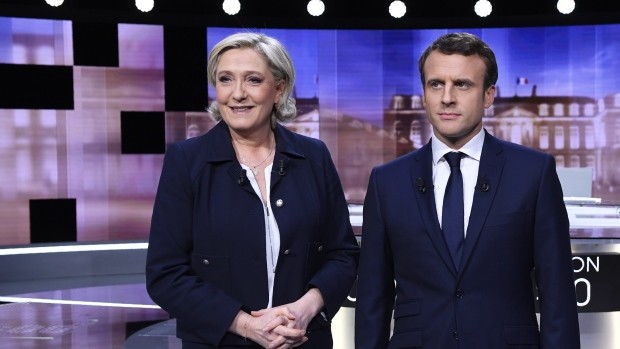
To compare Macron to a 2016 American presidential candidate, he has the undesirable lack of experience Trump had, and the establishment and continuity traits Clinton had. On the other hand, Le Pen is experienced in politics and has been her whole life, which was one of Clinton’s positives, yet she still holds the intrigue that an outsider candidate like Trump had. Marine Le Pen lost because France remains one of the strongest left-leaning countries in Europe. Emmanuel Macron feasted on the political landscape, and united the “Never Le Pen” faction to win. People are hailing Macron’s victory as a victory for the left, but, the incumbent being a member of the socialist party, a victory for a centrist is practically a conservative victory. Sadly, 2017 France will be very similar to 2022 France. Over 60% of the French voted for stagnation, and France lost the election. Despite Le Pen’s far-right ideas, she was the candidate France needed because she was the only candidate remaining who was capable of fostering change.
Leave a Reply
You must be logged in to post a comment.