By Sophia Ludtke ’20, Feature Editor
Every day we are flooded with news about what is happening in the world. Optimistic or dire, serious or frivolous, it seems as if the world is always talking about the latest big story. But, where do we learn this information? From family and friends, to standard newspapers, to Snapchat, the possibilities are endless, but it is important we all find accurate and reliable sources that work for us.
Choosing the Right Sources
Particularly because of the advent of digital news, it has never been easier to stumble across sources, some of which are more reliable than others. I asked English teacher Dr. Lankin, for her advice on how to choose the best sources. She explained that multiple factors must be considered when determining a source’s reliability. Considering the website’s web address, the source’s reputation (if it has one), its advertising, and the author’s background, according to Dr. Lankin, are all good steps to take before deciding whether to trust a source.
Yet, reliability has proven to be a serious issue for Americans. According to the Pew Research Center, “about two-in-three U.S. adults (64%) say fabricated news stories cause a great deal of confusion about the basic facts of current issues and events.”
Luckily, in this day and age, numerous reputable news sources exist, both online and in print. However, a source’s bias has proven to be a murkier issue, especially in light of current events. Freshmen are taught in Ancient World classes to read multiple sources that span the political spectrum. This technique allows students to find the overlap between sources and weed out the true facts from the oftentimes biased commentary from sources on both sides of the political spectrum.
Finding reliable, verifiable information can be challenging, but it is an essential first step towards finding the right news sources.
Types of Sources
How people, and our generation in particular, experience the news has radically changed in the past few years. Given the wide variety of options, we have never had more opportunity to adapt how we get our news to how we live our lives.
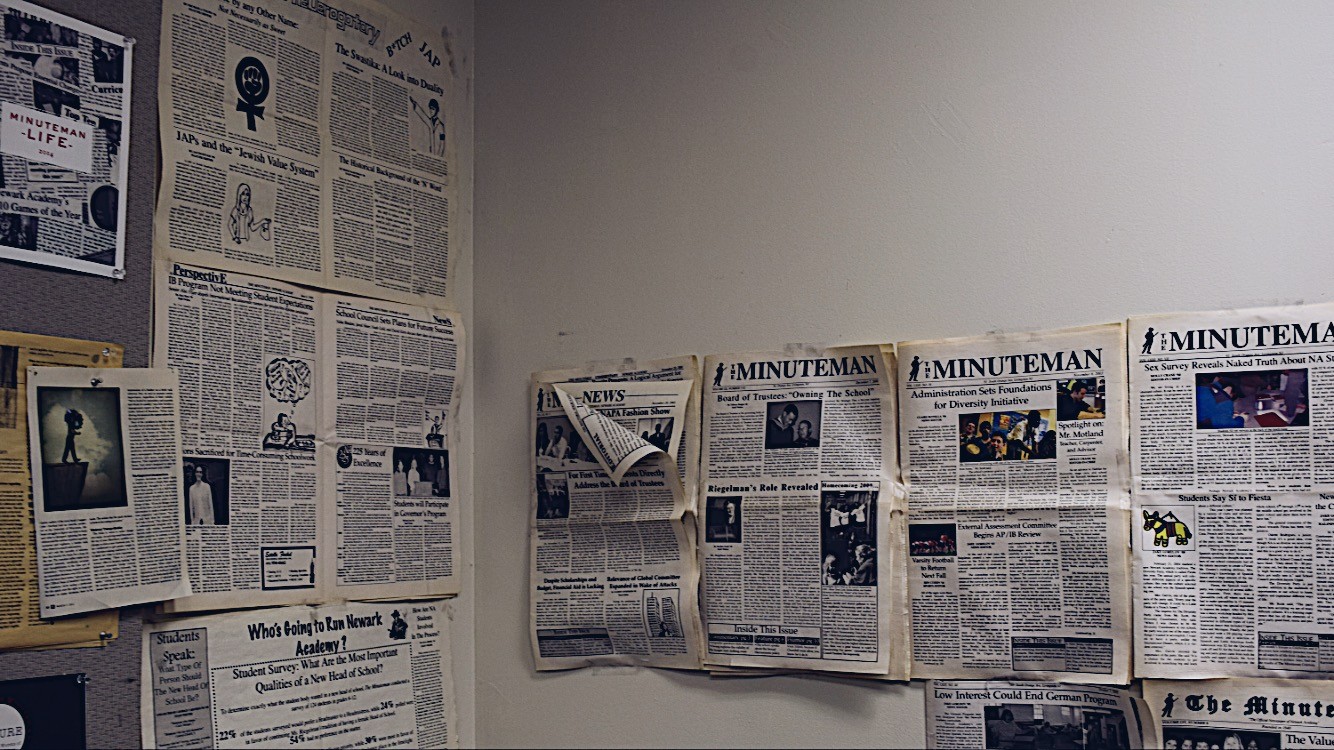
- Newspapers: According to the Pew Research Center, paper newspaper circulation has steadily declined since 2014 as people are moving away from paper news in favor of quicker, digital counterparts. Online newspapers can be a reliable source of information, as long as you choose a well-researched and well-respected newspaper.
- Many newspapers provide readers with the option of signing up for daily “news briefings” which are delivered by email and can provide a snapshot of current events.
- Wire services, such as The Associated Press, provide readers with unbiased facts and limited political commentary, making these prime sources for objective news.
- Social Media: How we learn about the news has radically changed because of the influence of social media. From Facebook, where we can share trending news stories, to Twitter, where we can follow significant political and cultural figures, to Snapchat where we can see live footage taken by other users at various current events, social media has allowed us to receive news in real time, oftentimes from primary sources.
- However, recently, social media has been accused of creating a vicious cycle where we are only exposed to the news that we want to hear — the news that reflects our views. The Wall Street Journal’s Red Feed, Blue Feed, demonstrates just how different social media feeds can be.
- Word of Mouth: This is perhaps the most prevalent news source today, as we are constantly discussing current events with one another. Yet, we need to be wary of how trustworthy this information actually is. The Pew Research Center explains that, “Overall, 23% [of people] say they have shared a made-up news story, with 14% saying they shared a story they knew was fake at the time and 16% having shared a story they later realized was fake.”
- The School Newspaper 🙂 And, of course, the school newspaper is always a great way to learn about current events from the perspective of your peers! By seeing news stories about NA and the outside world side-by-side, we can gain an even better understanding of how our experience at NA fits into the ever-changing climate of the outside world.
It can be easy to get lost in the whirlwind of current events, but, by taking some time to seek out reliable and convenient news sources, you can be on your way to having a better grasp of what is happening in the world around you.
Leave a Reply
You must be logged in to post a comment.