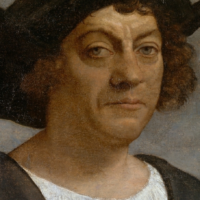
by Spencer Glassman ’19, Staff Writer

Christopher Columbus has long been a revered figure in American history. He prompted a new era of cultural and technological exchange between Europe and the Americas, which led to the formation of the great nation we reside in today. Spain, Italy, and many countries throughout the Americas have celebrated Columbus, but the United States has a special affinity for him. Our nation’s capital is the District of Columbia, “Hail, Columbia” was nearly the national anthem, and presidents throughout our history have credited Columbus with engendering the great American experiment. Columbus was a trailblazer who forged the way for the creation of the United States and all of the benefits it has gifted the world. Columbus represents a crucible where Western civilization realized a new frontier and immense progress for humankind.
However, Columbus is not universally admired. Recently in the United States, a movement has claimed that many of Columbus’s “contributions” were not actually his, and he was in fact genocidal and evil. These recent attacks were sparked by the book A People’s History of the United States by Marxist historian Howard Zinn. Zinn describes Columbus as someone who killed and enslaved indigenous Americans for capitalistic motives, while not revealing any new truths. Zinn believed that the common narrative in American education inaccurately framed Columbus as a heroic and flawless figure. Madeleine Levinsohn ‘19 agrees with Zinn’s initial point regarding education. She initially believed that Columbus was a valiant figure, but “as I got older and learned more about American history, I realized that Columbus Day was actually celebrating the genocide of indigenous peoples.”
Columbus can not be seen as faultless, and his many sins have to be recognized, but historian Arthur Schlesinger warns that “revisionism redresses the balance up to a point; but, driven by Western guilt, it may verge on masochism.” When we look to right Columbus’s wrongs we ignore the immense benefits that Western Civilization has bestowed upon the world because of his voyage. Vilifying Columbus only is useful up until the point where we deny ourselves from celebrating, or even realizing, the greatness that has emerged in this continent subsequent to his voyage. Columbus’s achievements have brought the immense opportunities we now enjoy as both a nation and a world.
A blanket demonization of Columbus does not do justice to history; it ignores Columbus’s accomplishments, diminishes the importance of the convergence of the Old and New worlds, and lacks contextualization. Many contest the claim that Columbus had any major accomplishments. After all, Leif Erikson had already been the first European to reach the Americas, the world was already known to be round, and the initiation of trans-Atlantic trade did more harm than good because it brought slavery.
Columbus inadvertently discovered a new continent, but he still possessed much ingenuity; he connected the world. His plan to circumnavigate the globe and reach the Indies was initially scorned, but brilliant in hindsight. Columbian trade was vital for technological advancement, agricultural growth, and cultural exchange. He linked Europe to the Americas, fostering immigration and trade, sparking a new age of development in both regions.
The atrocities committed by Columbus and the Europeans after him against the indigenous peoples were horrific, but they were state-sanctioned, legal, and even promoted. It is easy for us today to demonize much of 15th century society, but we grew up in a different paradigm. Spain sent Columbus to conquer the lands he found through whatever means necessary; just as the Aztecs would kill, enslave, and rape those whom they conquered, the Spaniards were no different. Christopher Lightcap ‘20 believes, “Conquest is a dominant theme of history, where usurpation was the only feasible means for advancing a society…The omission of the valid contributions which are scorned by some creates an incomplete historical narrative more prone to the distortion of truth.” Conquest is innate in human nature, stretching back from prehistory to the modern day. Why is it that the European conquest of the Americas is seen as particularly malevolent? Christopher believes we should examine the whole picture. In a world where conquest and its implications at the time were so common and unopposed, we must not forget the great enrichment that civilization was endowed by the convergence of the continents.
The issue of the Columbian legacy remains, despite his remarkable contributions. The blood of the conquered people stains his life’s chronicle. Ms. Lifson believes the way in which we remember Columbus is extremely complex: “Regarding Columbus, it is tricky because we honor him for an act that is inherently questionable and yet very important in our history, with levels of bravery and acumen, and also inherent horrors for native peoples.” The conflict in historical narratives between the greatness and reprobation of many figures creates a convoluted tapestry. We must search through the convolution in order to find the impact these people have had on the us in the modern day. George Washington was a slave owner, and so was Thomas Jefferson, but the transformative ideas and values they bequeathed upon this country have changed the world. What has emerged in the New World since Columbus’ arrival has altered the course of human history and has brought us to this modern moment of unprecedented prosperity, freedom, and knowledge.
Leave a Reply
You must be logged in to post a comment.