
by Zachary Burd ‘19, News Editor
The Secret Service finds itself unable to pay hundreds of its agents in the first year
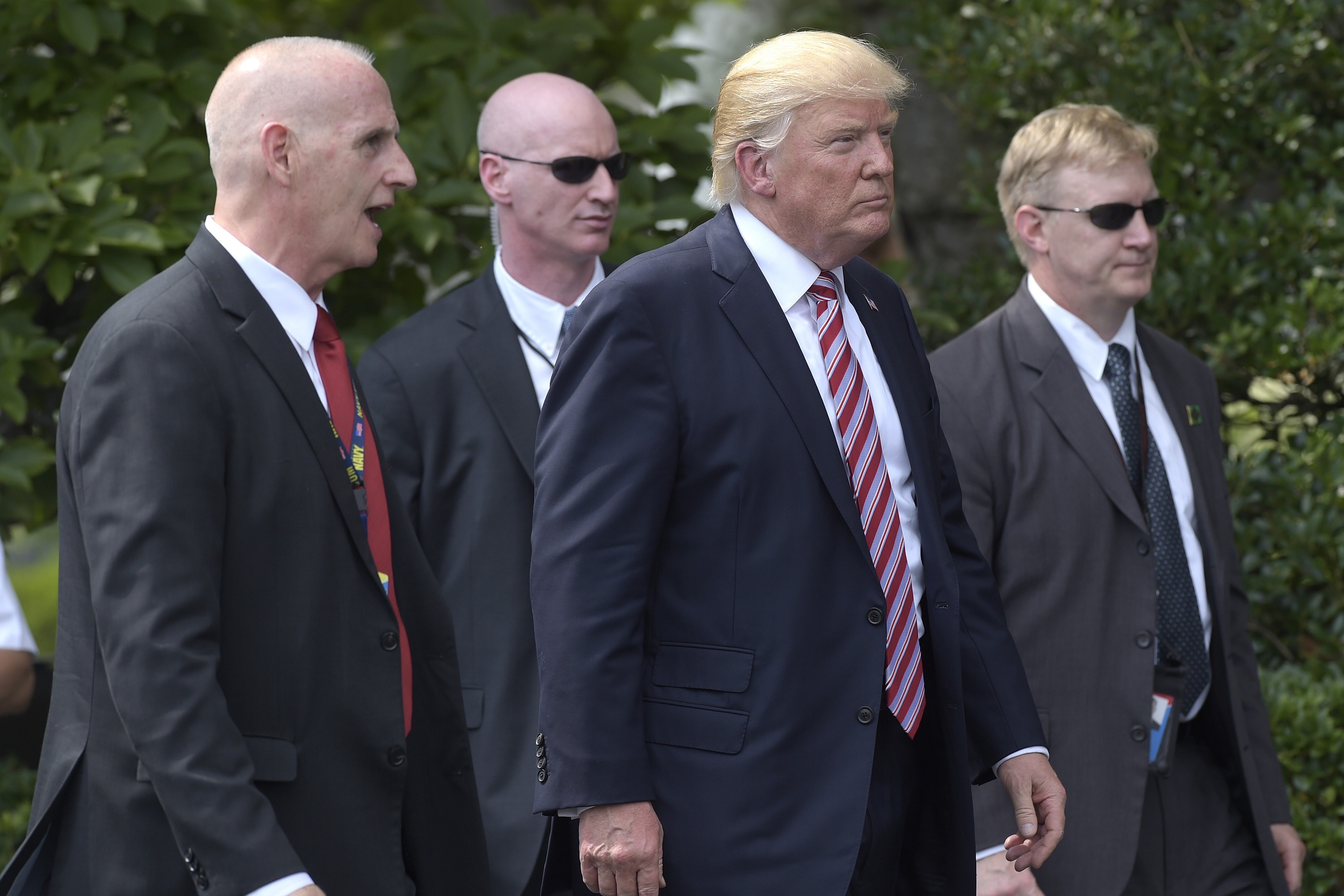
of Donald Trump’s term as president.
Trump’s large family and near-weekly jaunts to his various East Coast estates are among the precipitating factors of this catastrophe.
42 people need protection from the Secret Service under Trump, including 18 members of his family, as compared with 31 for Obama. “The president has a large family, and our responsibility is required in law,” Secret Service Director Randolph Alles said. “I can’t change that. I have no flexibility.”
As executives of The Trump Organization, the president’s children make many business trips around the world. The Secret Service paid nearly $100,000 for hotel rooms alone during Eric’s lengthy trip to Uruguay earlier this year.
Legally, Trump himself isn’t allowed to pay for his Secret Service protection. Yet his immediate family can decline it or substitute it for private security. Trump’s oldest son, Donald Jr., announced in August that he is doing just that—before restoring his protection in late September.
Some people have suggested that Trump could spend more time at the White House or Camp David, the traditional presidential retreat in rural Maryland, to save money. Trump’s trips to the Mar-a-Lago country and golf club, his favorite destination, which has been nicknamed the “Winter” or “Southern” White House, cost the Secret Service $3 million per trip.
But Trump does not seem inclined to change his destinations. “Camp David is very rustic, it’s nice, you’d like it,” he told a European journalist just before his inauguration. “[But] you know how long you’d like it? For about 30 minutes.”
The Secret Service is not legally allowed to accept any funds that are not appropriated by Congress. That means Trump can’t throw them any bones like free golf cart rentals, which cost them $150,000 this year alone, or complimentary hotel rooms while at his resorts.
Secret Service officials had hoped that their workload would normalize after a polarizing presidential campaign that saw frequent clashes between protesters at Trump rallies. At one point, agents mounted bike racks in front of speakers to block crowds from rushing onto the stage. However, Trump’s frequent travel and the increased number of protectees in his administration have made that expectation impossible to realize.
At the end of September, more than 1,500 agents had already hit the federally-mandated salary and overtime caps that were meant to last the entire year, the vast majority of whom are special agents (field personnel who protect the president, vice president, and select others). The Secret Service is not even able to pay agents for the work they have already done.
This combination of overwork and backpay has led to a troubling attrition rate—500 agents have left in the past year. Maryland Representative Elijah Cummings, the ranking Democrat on the House Oversight and Government Reform Committee, was the first to call attention to the issue. “We cannot expect the Secret Service to be able to recruit and keep the best of the best if they are not being paid for these increases (in overtime hours),” he said.
It becomes a vicious cycle: the more protective assignments that are given to the Secret Service, the more the agency is stretched thin and the more agents are overworked, thus leading to increased personnel departures. This fewer number of agents in turn leads to even more overtime work and an increased likelihood of departures.
Congress would need to intervene to raise the salary and/or overtime caps to get the 1,500 agents paid. Cummings has co-authored a bill along with a Republican colleague to raise the overtime pay cap to $187,000 from $161,900 per year. The raised cap would apply to this year as well as to 2018.
The bipartisan effort has already passed through the committee but has yet to be voted on by the entire legislature. It is likely to pass, though, as a similar bill was approved in 2016, with 1,400 agents compensated by year’s end.
The real question is whether these short-term fixes address the overarching problems of overwork and skyrocketing expenses within an agency still reeling from the revelation of sexual misconduct in Colombia and several White House security breaches.
Leave a Reply
You must be logged in to post a comment.