by Justine Seo ’19, Staff Writer
The meaning of the term “safe-space” is difficult to understand, especially when reading about it for the first time. As Judith Shulevitz noted in her New York Times article on the topic, does coining a specific space as “safe” therefore make every other place outside that space unsafe? (1) Does a safe space by nature include everyone? What does safe mean? Although the term seems to be relatively fluid, it may be helpful to examine its origins in order to better understand its implications.
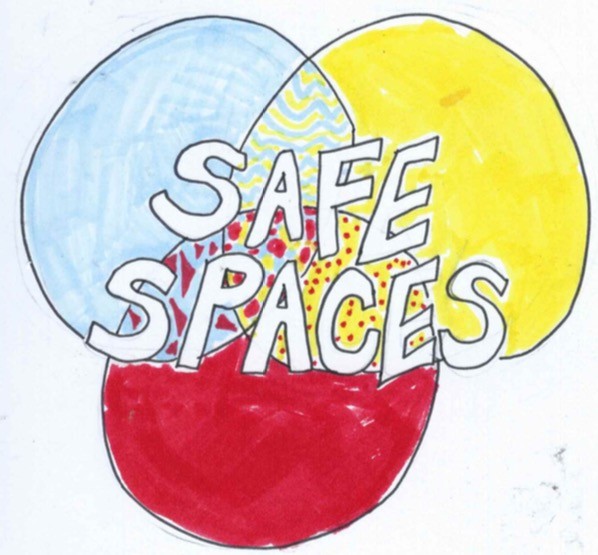
The term was initially used to describe spaces (usually in educational settings) in which marginalized groups, particularly members of the LGBT community, could have an autonomous place to speak about their experiences with oppression and marginalization. Although the term came from a place of acceptance and freedom to express the difficulties of existing in a marginalized group, many opponents claim that they restrict freedom of speech and hinder the discussion of controversial issues.
As we continue to discuss the effects and intentions of “safe spaces,” the very definition of the term evolves as well. While the term initially applied to marginalized groups, it now describes a setting in which all opinions are allowed and people are free to say what they think without judgement. This presents a clear contrast between the two definitions. If a safe space is a place where everybody is allowed to say what they want without judgement, then what if someone in the space feels threatened by that opinion? Doesn’t that make the space no longer safe for them?
It all boils down to whether a safe space should be comfortable for all individuals, or the ability for everyone to speak their mind. Alice Jiang ‘19 stated that she thinks it is more important for a safe space to be accepting of all points of view, but she also believes that “comfort goes along with being able to speak your opinion.” A place where people can be open and honest about what they believe, she feels, can harbor good discussion about important topics and foster an environment in which everyone feels accepted.
The term has also been questioned by those who use it as a way of expressing their political beliefs. In my history class at the beginning of the year, we read an article about the implications of language. This article discussed the usage of “safe space” by Trump to address Mike Pence getting booed at the Broadway musical, Hamilton. By claiming that Pence deserved a “safe and special place”, Trump implied that a safe place was somewhere in which all political opinions should be valued. But the action of booing Pence went beyond just politics; for Trump to use the term in such a manner was a complete reversal of what it originally stood for. The original usage of the term, as mentioned before, was to describe places where members of the LGBT community could be free from persecution. To claim that the theater should be a safe space to Pence, a supporter of conversion therapy, among other policies that negatively affect the LGBT community, would be a complete subversion of what the term originally meant. While the meaning of the “safe space” is elusive and seems to constantly change, it is vital, just as with any term or phrase, to remember the origin of the word and what it has always stood for.
The issues faced by many marginalized groups have become more and more obvious, and widely discussed, in our country today. It is vital that we have places where we can freely and productively talk about these issues. At a school with a liberal majority in which many feel they are not free to express their opinions, I think it is important for people to speak on what they believe. At the same time, some groups may perceive genuine threats to their safety depending on the environment, so it is essential to be sensitive to certain issues. The truth is that different people will feel differently in different spaces, and it might be impossible to have a universal safe space in which everyone feels accepted and respected. We should strive to foster an environment in which everyone can feel safe, whether that be to express their opinion or simply to be who they are. The biggest step forward we can take to achieve that requires listening to one another and elaborating on why we may agree or disagree.
(1) https://www.nytimes.com/2015/03/22/opinion/sunday/judith-shulevitz-hiding-from-scary-ideas.html?rref=collection%2Fcolumn%2Fjudith-shulevitz&action=click&contentCollection=opinion®ion=stream&module=stream_unit&version=latest&contentPlacement=6&pgtype=collection
Leave a Reply
You must be logged in to post a comment.