By Rahul Kaul ’12, News Editor
From November 22nd to November 23rd, Newark Academy hosted the director of the French College International de Cannes, Mr. Patrick de Bouter. Mr. de Bouter helped students of all French levels hone their pronunciation skills through entertaining speaking exercises and theater.
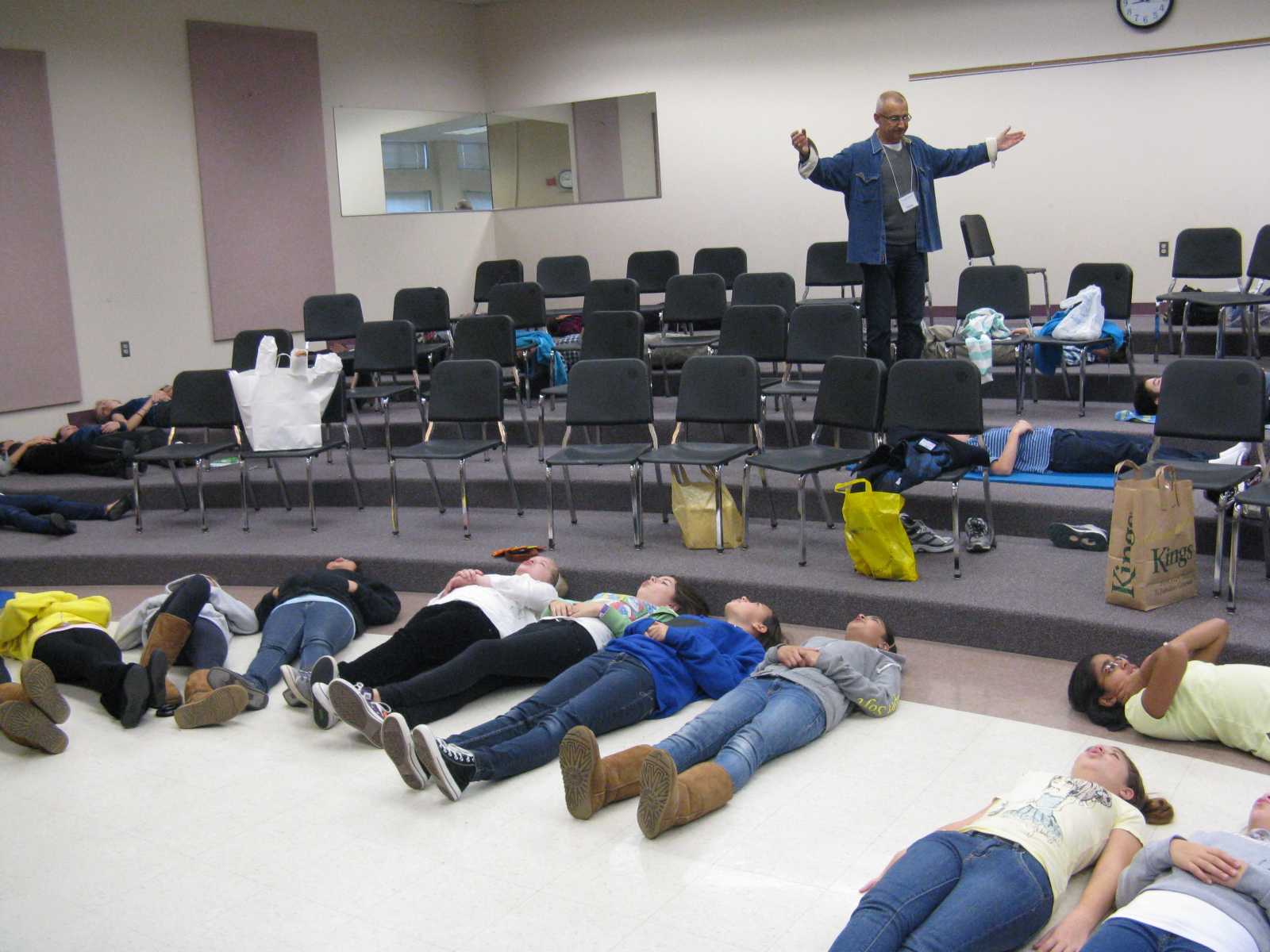
Proactive French teacher Mlle Obydol remembers how almost two years ago, thanks to Newark Academy, she participated in a 10-day theatre workshop for French teachers at the beautifully-situated College International de Cannes in Southern France. She left a course run by Mr. Bouter “so impressed by what he did and [what she] learned as a native speaker that [she] promised [herself] to bring him to NA.”
Mlle Obydol wrote a proposal for the Ohaus Chair award, which grants a stipend to its teacher award recipient in order to help him or her fulfill one of his or her pedagogical goals. The award administration looked favorably on her idea of students spending a day trying to “act like Frenchies,” as she humorously put it, and granted her the Ohaus Chair. Recalling to mind Mr. de Bouter’s plays written exclusively for foreigners, his very prestigious Chevalier des Arts et des Lettres distinction in France, and the international reputation he has built over the years, Mlle Obydol invited Mr. de Bouter to Newark Academy.
At the start of his second session, after introducing himself to Newark Academy’s young Francophiles, Mr. de Bouter made the students lie on the ground of the Great Hall and regulate their breathing. A chorus of every possible pronunciation of the letter ‘O’ soon resonated the corridor as NA students came to realize just how precisely they must enunciate French words. Visiting French instructor Mr. Guiglielmi dubbed the next section of the programme as the “pronunciation battle,” where he watched “students who are usually shy [take] an active part [in the] day.”
After sharing typical French food with one another, the students braved tongue-twisters and then more solemn poems, taking advantage of Mr. de Bouter’s constructive criticism after each performance. The day ended with an hour’s worth of preparation for groups of students, organized by proficiency in French, to present a skit written by Mr. de Bouter.
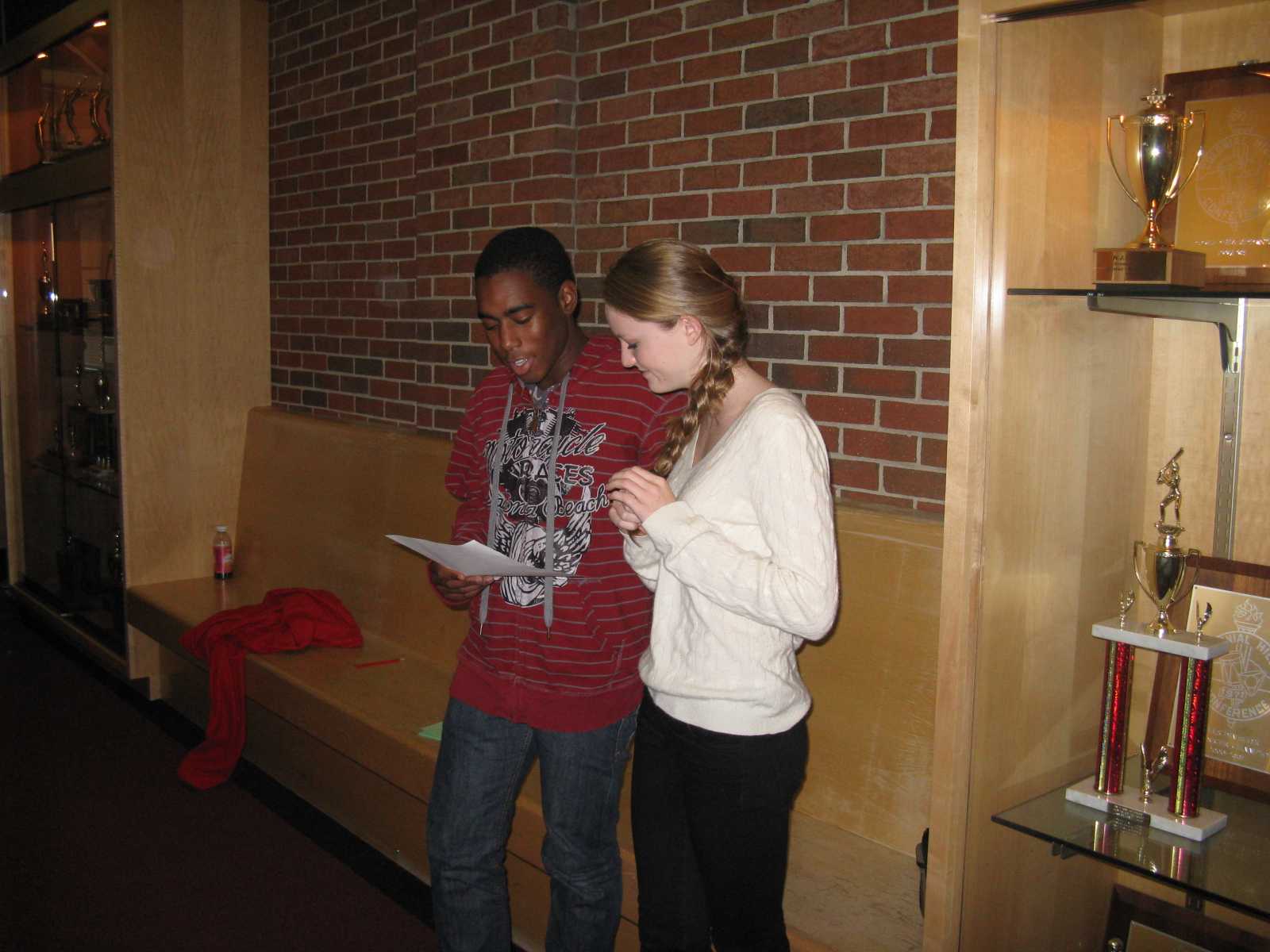
Though some students may have had a premature feeling of tryptophan-induced drowsiness just two days before Thanksgiving, many were quite appreciative of and excited about Mr. de Bouter’s workshop. Senior Timarie Diehl thinks that “Mr. de Bouter did a good job [making] us learn a lot with the restricted time that we had” since “he could help [students with] different experience levels equally.” Junior Carly Gruenberg feels that “when he went over how to individually pronounce words in poetry, it actually helped.”
French teacher Ms. Ronan describes how “it was interesting how [students] actually try to figure out how a particular sentence was supposed to be said” since “a lot of times students just read the words without really knowing the expression or emotion that the author is trying to transmit.” She remembers when certain students had their “lightbulb moment, when they realized that how they were [performing] a particular scene was not at all how it was supposed to be expressed.” Mr. de Bouter’s visit encouraged French students to brave the correct pronunciations of difficult words.
What then, does Ms. Obydol feel? She explains: “I was definitely nervous because some students were worried about missing classes […] and I did not know what to expect behavior-wise. It was also the first time for [Mr. de Bouter] to work with such big numbers [at such] a young age” and one-tenth of his usual time. Though she realizes that “you can’t win with everyone,” she can safely say that “everybody left with something they did not know before, or made progress in one day in phonetics, vocabulary, [or the] projection of their words.” She reflects that “the best reward was to see students come up to [Mr. de Bouter] and tell him they had learned many useful things for future oral exams and real life [French-speaking] situations.” Such comments made her “very proud.”
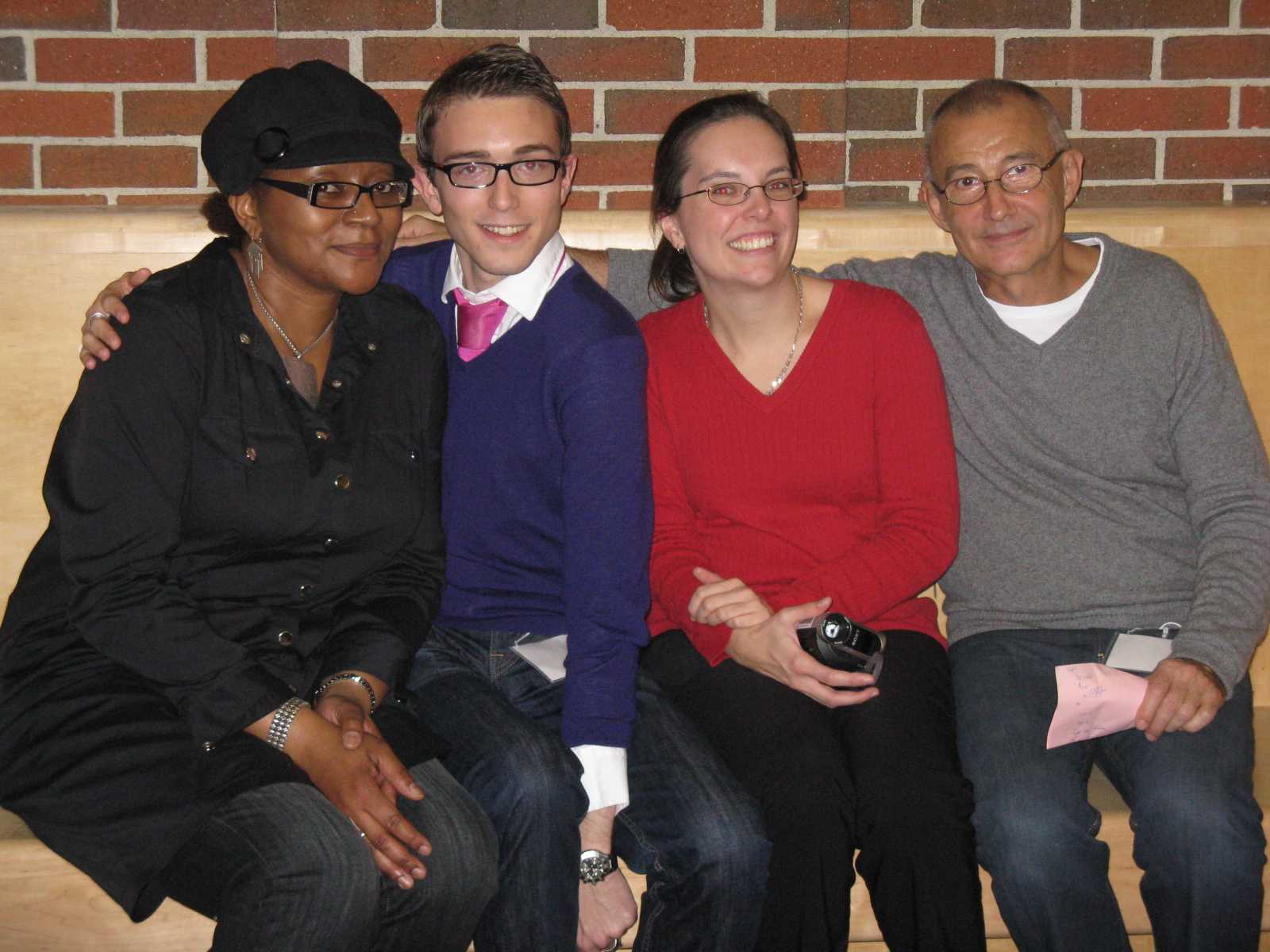
Mlle Obydol further acknowledges that “French is a very hard language to learn or teach. You see ten letters, you only say five of them. One has to exaggerate sounds to learn to make them properly, hence [the use] of theatrical skills.” The key to good communication, she holds, is articulation. She recalls her own experience as a teenager, watching American movies, not just to understand English but to learn the body language that accompanies words. These realizations highlight how a drama-style imitation of a native speaker “works everywhere” for improving one’s speaking skills.
At the end of his visit, Mr. de Bouter offered copies of his original plays to Head of School Mr. Austin and the French teachers, after which it was time to bid “au revoir.” Fortunately for those who participated in the workshop, Mr. de Bouter reflected that the students, once they started working on something, lived up to his expectations.
For more information on potential future French-related happenings, such as a guitar-accompanied professional French storyteller presentation or a trip to Mr. de Bouter’s school in Cannes, France, please contact Mlle Obydol in the Foreign Language Department.
Leave a Reply
You must be logged in to post a comment.