
by Abbey Zhu ’18, Feature Editor
49 dead. 58 wounded. On June 12, 2016, Omar Mateen entered Pulse — a gay nightclub in Orlando, Florida — and committed the deadliest attack against LGBT people in United States History and the deadliest terrorist attack in the US since 9/11. Though the mass shooting occurred 18 months ago, its occurrence sent a chilling message to members of the LGBT community throughout the United States and the world: You are not wanted here.
This societal rejection of the LGBTQ identity has translated into chilling statistics.[1]
LGBTQ individuals are two or more times more likely to have a mental health condition.
LGBTQ youth are four times more likely to attempt suicide, experience suicidal thoughts, or engage in self-harm.
Between 38-65% of transgender people experience suicidal thoughts, and 11% of transgender individuals report being denied care by mental health services because of their gender identity.
Individuals who were faced with rejection after coming out to their families were more than eight times more likely to have attempted suicide than people who were accepted by their families.
20-30% of LGBTQ people abuse substances and 25% abuse alcohol, while only 9% and 5-10% of the general population abuses substances and alcohol respectively.
To make matters worse for the LGBTQ community, the current US government seems to show no sign of support for their rights. During the 2016 election, the Republican Party stated that it supported the “right of parents to determine the proper medical treatment and therapy for their minor children,”[2] leading many to believe that the party was subtly endorsing conversion therapy. (Conversion therapy, which has been discredited by the medical community, attempts to change a person’s sexual orientation or gender identity so that an LGBTQ individual is “converted” into a straight person.) The Republican Party also opposes same sex-marriage and supports state laws limiting which public bathrooms transgender people can use.[3]
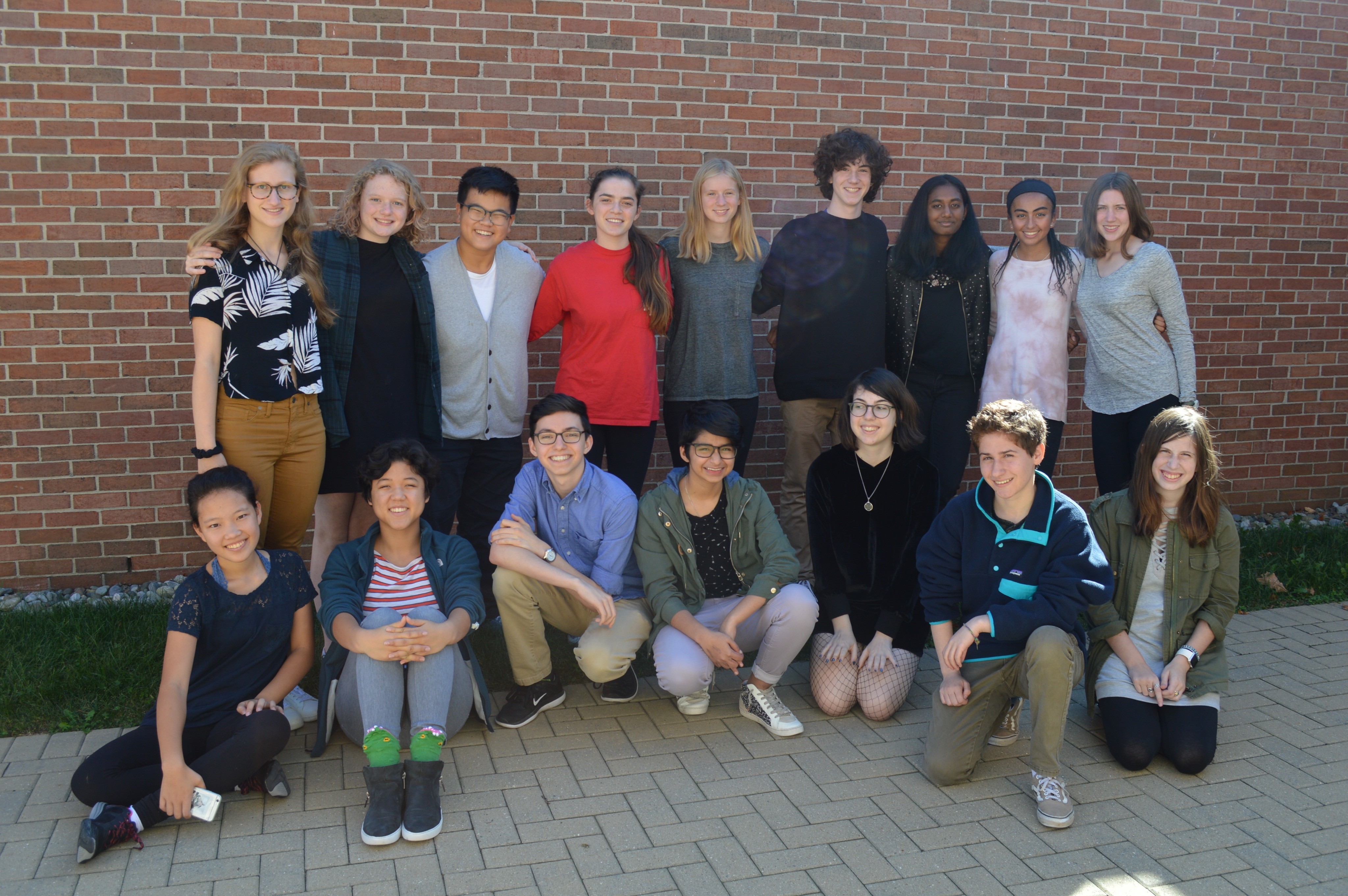
When the outside world is doing little for the LGBTQ community, how is NA doing in terms of creating a safe space for LGBTQ students?
Ezra Lebovitz ’18, co-president of NA’s GSA (Gay-Straight-Alliance), says that the GSA “serves a dual function, which is both to educate and start discussions, and to act as a source of community and comfort.”
NA also has gender-neutral bathrooms in the new wing, and teachers who have placed rainbow stickers in the windows of their classrooms have indicated that their classrooms are “safe spaces” for LGBTQ students. Additionally, every year, the GSA gives an all-school morning meeting presentation, in which members of GSA shed light on their experiences as allies or members of the LGBTQ community. And on April 27, 2018, the GSA will be participating in the “Day of Silence,” in which students dress in all black and take a vow of silence to represent the silencing of LGBTQ students.
All of these efforts to raise awareness, however, do not mean that LGBTQ students at NA feel completely welcome. Despite NA’s reputation for being a liberal and progressive space, there is still a disconnect between what the school says it stands for and what actually occurs in its halls.
When asked if NA is a safe space for LGBTQ students, Ezra said, “I think one of the issues we see at NA is this dissonance where people consider NA this accepting, progressive space [when, in reality, it isn’t always]. If you’re straight, you don’t always notice all the little things—the way people laugh at certain jokes or what people say behind closed doors. I think there’s a tendency to assume that everyone believes what you do, so if you consider yourself a straight ally, you don’t always notice dissenting opinions.”
For Ezra, the hardest thing to deal with at NA isn’t the “clear-cut” homophobia, but when “people who consider themselves allies write off the actions of their friends, or ignore it when they see or hear something unjust, or act like it’s someone else’s problem.”
Harry Echtman ’18 also believes that there is much work to be done at NA in terms of truly accepting LGBTQ students into the community. He said, “I don’t think it’s enough to tolerate gay people; what we need to start doing is accepting gay people. The recurrence of language and attitudes that mark gay people as ‘other’ leaves a large emotional impact that can take a very long time to come to terms with. There was a very long time at NA when I was really, really sad. And no one would have known it. Some words of confidence from members of the [NA] community really would have helped me through that time. Instead, people just pushed me deeper [into my sadness] with slur after slur.”
He continued by describing some gestures that might make people feel more comfortable: “You never know what someone is going through. So rather than just ‘not minding’ that gay people exist, if we could try to actively let gay people know that they are welcomed, that would be amazing. The stickers on teachers’ doors that said ‘safe space’ were an example of a very minor gesture that really let me feel at ease. I knew I could trust those people.”
Harry believes that these small acts of kindness go a long way. “Something as minor as a rainbow flag on a desk or a bit of mindfulness about language that teachers use about gender can make a large difference. Younger Harry would’ve loved if someone gave him a little help by bailing him out of a tough situation where he felt intensely wronged because of the way his friends were talking about gay people.”
[1] All of the following statistics were taken from the National Alliance on Mental Illness website and apply solely to the United States. https://www.nami.org/Find-Support/LGBTQ
[2] https://www.nytimes.com/2016/11/30/us/politics/mike-pence-and-conversion-therapy-a-history.html
[3] https://www.nytimes.com/2016/11/11/us/politics/trump-victory-alarms-gay-and-transgender-groups.html
Leave a Reply
You must be logged in to post a comment.