by Sophie Gilbert ’19, News Editor
A new Ohio bill regarding abortion rights has created immediate conflict and controversy, even attracting attention from the American Civil Liberties Union (ACLU).
The bill, which was signed into effect by Ohio governor John Kasich on December 22, 2017, bans abortions when the fetus has, or likely has, Down syndrome. It states that if prenatal tests reveal Down syndrome or provide reason to believe that the fetus has another genetic condition, then abortion is prohibited. The consequences are severe; a physician who performs the procedure could face a fourth-degree felony charge or lose their license. However, the woman seeking out the abortion would not be held accountable or face any charges. The law is set to go into effect on March 23rd, and it is the 20th restriction of reproductive rights signed by Governor Kasich in the past six years.
There have been mixed reactions to the bill. Many Republican lawmakers applaud it, saying that it is not about restricting abortion, but about fighting discrimination. Sarah LaTourette, the Ohio representative that first introduced the bill, said that “It is an issue of discrimination–discriminating against a person, not allowing them their God-given right to life, simply because they might have Down syndrome.” Additionally, many pro-life groups have been strongly in favor of the new bill. The organization Ohio Right to Life campaigned heavily for the bill. Referring to the bill as the Down Syndrome Non-Discrimination Act, the organization’s president, Mike Gonidakis, stated that, “While elective abortion is never the right choice, it’s particularly egregious that unborn children can be denied life simply due to the presence of a disability…Ohio is…a state that sees the lives of people with Down syndrome as lives worth living.” Other pro-life groups hold similar sentiments. However, there has been much criticism of the new bill, most notably in the form of a recent lawsuit.
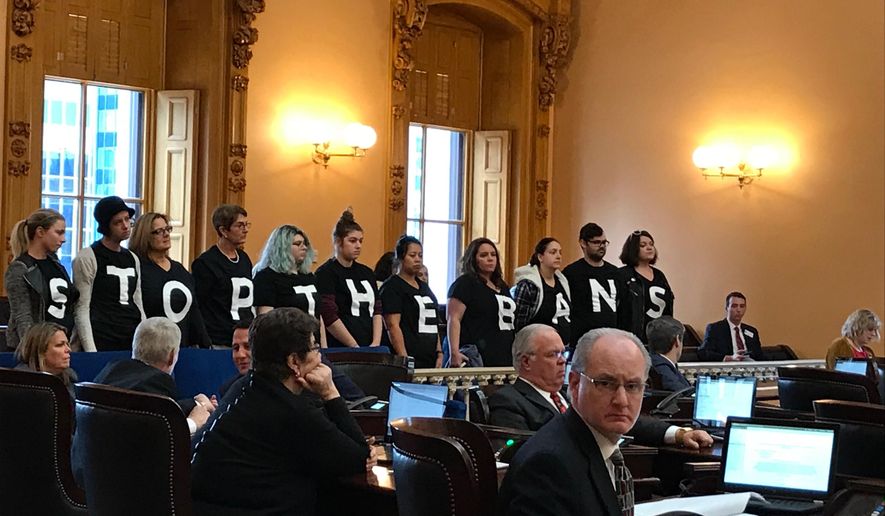
On February 15th, the ACLU of Ohio, along with the general ACLU, filed a lawsuit to challenge the ban. The lawsuit was filed on behalf of Preterm Cleveland, Planned Parenthood of Greater Ohio, and many other local abortion care providers. The goal of the lawsuit is to delay enforcement of the law beyond its March enforcement date. The ACLU is suing because they believe the bill simply restricts womens’ freedom of choice and does nothing to actually support families who are raising special-needs children. Freda Levenson, the legal director of the ACLU of Ohio, wrote, “This ban is just another thinly veiled attempt to push abortion out of reach and interfere in a woman’s personal decision…This law does nothing to honor or support families who decide to bring a special needs child into the world.” She additionally stated that providing access to health care or education would be a more meaningful way to aid children with genetic conditions. While the ACLU is the most prominent opposer of the bill, they are not the only group vocalizing their opinions. During the bill’s passing in December, abortion rights activists stood in the Ohio senate chamber wearing shirts reading Stop the Bans in protest of the restrictions brought on by the bill. One student finding herself on the side of the ACLU and other activists is Alice Jiang ‘19. She states, “It should always ultimately be up to the woman for what she wants to do with her body, and a special needs child can cost much more [to raise] than a neurotypical child.” Ultimately, she says, “I don’t think it’s right to subject a woman to that kind of mental or physical strain.”
There have been many situations similar to the Ohio’s throughout the country in recent years. In North Dakota in 2013, the first law to ban abortions because of genetic defects was successfully passed, along with many other restrictions such as legalizing abortion after a fetal heartbeat was detectable. In Indiana in 2016, a similar law that forbid abortions on the basis of a fetus’ genetic abnormalities was not passed successfully. Instead, it was temporarily blocked by a federal judge. The following year, the law was blocked permanently, the judge stating that restricting a woman’s reasoning for obtaining an abortion was not within the state’s authority.
There is no telling what will eventually become of this new Ohio law, given that similar laws have had varied levels of success. The debate surrounding abortion law goes far beyond this one bill, spanning decades of discourse over every facet of reproductive rights. The discussion surrounding the new Ohio bill is complex, with both sides concerned about the different, pressing topics of discrimination and bodily freedom. However, with the ACLU now involved, challenging of the law is sure to continue.
Leave a Reply
You must be logged in to post a comment.