By Justine Seo ‘19, Feature Editor
The abstract expressionist Jackson Pollock was known worldwide for his dynamic drip painting technique, used to create his wild, gestural, and highly recognizable paint patterns. With pieces marked by such a unique style of painting, it should be easy to tell which of the following works is a Pollock original and which is a forgery:
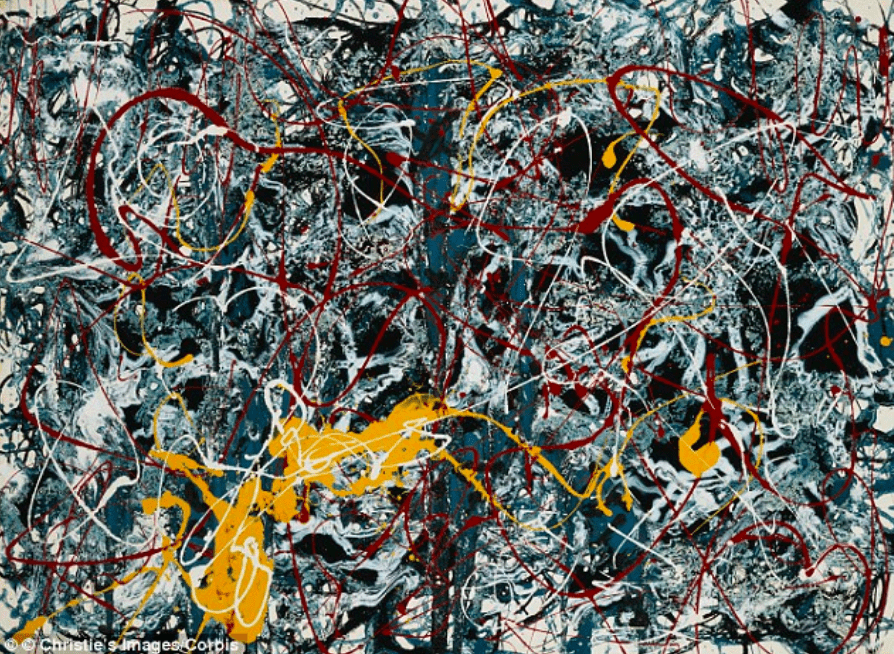
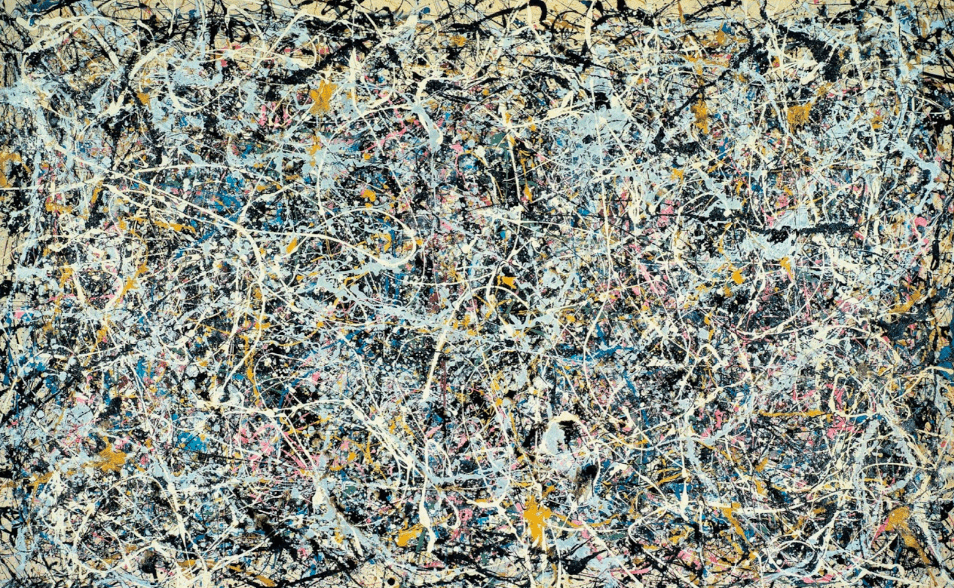
If you’re feeling a little stumped, it’s okay. Over fifteen years, the distinction between the real and fake Pollocks also escaped the radars of some of the top gallery curators in New York.*
In 1995, an art collector with the rather mysterious name of Mr. X started to supply the New York City art scene, bringing a slew of works from the biggest 20th century abstract masters, including previously undiscovered Rothkos, de Koonings, and Pollocks. At a time in which few pieces of older art were being discovered, these paintings became worth millions.
As the demand for these masterpieces grew and many became interested in investing in the works, a major flaw was discovered: the paintings were fake. Although collectors and galleries had poured millions into obtaining an original Pollock drip painting, they had their hands on something entirely different. What was assumed to be a piece made in Pollock’s home studio in post-WWII America was actually a creation from inside the Queens home of Pei-Shan Qian, a Chinese immigrant in his seventies. A painter disillusioned with his inability to gain traction as an artist, Qian was noted for his impeccable ability to recreate the work of these abstract masters.
Forgery is an interesting crime because it is an art in itself; the art of mimicking, of convincing others of an fake painting’s truth. The process of fooling both the public and well-seasoned curators is a craft in itself. For instance, an important consideration during this process is the appearance of aging, which Qian did with the application of tea and vacuum cleaner dirt. Paramount to this, however, is the forger’s ability to understand the intention and method of the original artist, which takes both great artistic skill and analytical talent. Qian not only knew how to mimic Pollock’s signature drip moves, but also had a keen understanding of his color palette, where to source paint from, and how he might arrange a composition.
The existence of forgers speaks to the interesting role of name and prestige in the economic value of art. A painting created during the same time period by an artist who creates similar work to Pollock but, importantly, is not Pollock, would be lucky to sell for over a thousand dollars, and understandably so. Pollock is representative of a highly influential era for abstract work, and has great cultural value. If a well-known artist’s name is slapped on a piece of work, its price skyrockets. And as soon as that name becomes invalidated through forgery, then the piece can become worthless. The painstaking process endured in order to create a replica of these sought after names can indicate what values are most important to us while considering art, whether they be the prestige of a well-known artist or the chance to own a little segment of history. This human desire almost makes me think that the collectors, when confronted with the mysteriously appearing Pollocks and Rothkos, may have suspended their disbelief, in awe of the sheer power of what they held in their hands.
During Art History one day, Ms. Galvin asked the class to differentiate between the original paintings of Vermeer, the famed artist behind The Girl with the Pearl Earring, and the forged Vermeers of Van Meegeren. As we blurted out answers, trying to find details that could give away the forgeries, I was taken aback by not only how difficult it was to decide which painting was made by which artist, but also by the sheer power that Van Meegeren had as a master forger. Under the guise of Vermeer, hundreds of Van Meegeren’s works were avidly purchased by leaders during the Second World War to increase their countries’ social and cultural capital, indicating the sheer importance artists’ names and forgers held in our assigning a value to art.
As dating and identification technology becomes more advanced, forgery has become a crime more and more difficult to get away with. With the dwindling ability to “discover” paintings from old, influential artists, it will be interesting to observe how and if the art market will change in terms of the value that is assigned to newer artworks from lesser known artists. However, as long as there continues to be value placed on the allure of an artist and the impact their name represents, I have no doubt that we will continue to come across Pollocks that seem to appear out of thin air.
*If you were wondering, the second is the actual painting.
Leave a Reply
You must be logged in to post a comment.