By Kaya Patel ‘22, Arts and Entertainment Editor

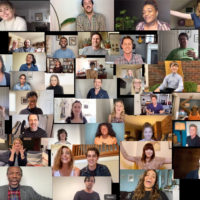
Picture from the Virtual Choir Performance for Stephen Sondheim’s 90th Birthday (courtesy of the New York Times)
As the coronavirus continues to ravage the country and the world, the performing arts industries have suffered tremendously. The magic of performing arts comes from watching a live performance where actors can feed off the energy from the audience, and with the current pandemic, neither of these fundamental aspects of performing can happen. As a result, the industry has gone dark, leaving thousands of performers and producers in a state of uncertainty. One place in particular that has suffered from the loss of performing arts is Broadway. On March 12th, Broadway closed its 31 shows in running, 8 shows in preview, and 8 shows in rehearsal stage to prevent the spread of the virus. In October, the Broadway League confirmed that shows and ticket sales would be suspended until May 30, 2021, which marks 444 days after the initial closure of Broadway. When Broadway will actually open is up for debate. Some people in the business believe that shows will be able to resume by late spring or summer, whereas others suspect that shows may not begin to open until fall 2021 at the earliest.
While the damage may seem insignificant, Broadway generates $1.8 billion dollars each year without even including the revenue brought from tourism. Broadway’s closure not only impacts people who work for the shows themselves, but also local businesses like Times Square restaurants. But the most devastating impact of Broadway’s closure is the unemployment of over 97,000 Broadway performers and workers, uncertain as to when they can return to their jobs. Since theater may be one of the last industries to bounce back from the pandemic, it could take years for Broadway to return to normal, or a possibly new normal.
Nonetheless, playwrights and performers have found new ways to hold performances, setting an example for how performers around the world can continue to make art together despite the challenges presented to them. Over the summer, a group of Broadway stars put together a virtual celebration of the famous composer Stephen Sondheim for his 90th birthday, featuring beloved songs from his musicals. This impressive event displayed the power of performing as a way to celebrate and bring people together, even on a virtual platform. Another way that performers have continued to bring people together despite their physical separation is through virtual choirs, such as the inspiring performance of “You Will Be Found” from Dear Evan Hansen. Furthermore, the Berkshire Theatre Group successfully put on a socially distanced outdoor production of Godspell, showing that safe performances can be held even during the pandemic. These performances have continued to keep both audiences and performers feeling hopeful during the pandemic through the healing power of song and the performing arts.
Not only has Broadway adapted to this change, but people around the world have taken inspiration from some of these performances to create their own virtual choirs, shows, and concerts. As Newark Academy attempts to continue holding its annual performances, such as the Winter Musical and the choir/orchestral concerts, it will be interesting to see how the school will create its own methods for holding performances and take inspiration from the different virtual productions occurring around the world. Although indoor live performances like Broadway shows are unlikely to return anytime soon, the performing arts are resilient. The industry will continue to find ways to share stories with their audiences; it might just be in an entirely new form.
Leave a Reply
You must be logged in to post a comment.