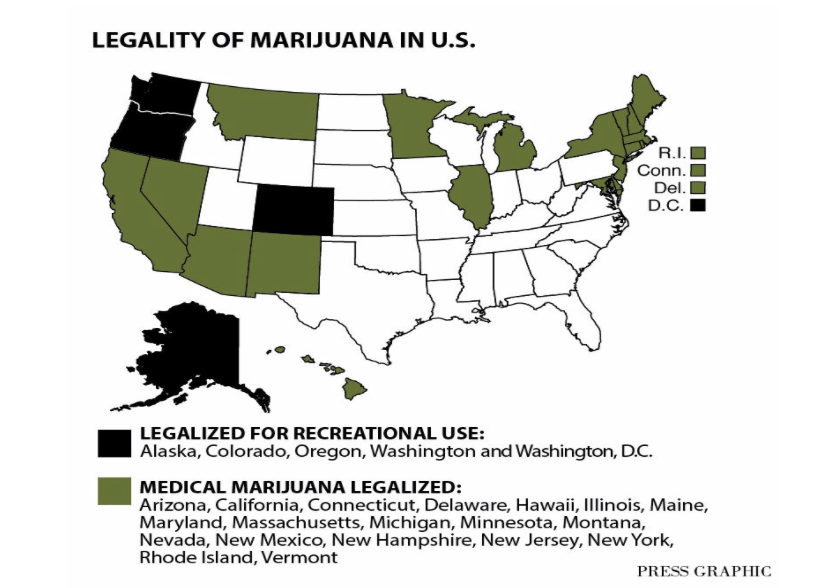
States Where Marijuana is Legalized
By Trisha Bala ‘22 and Vittoria Socolof ‘22, News Editors
In the November 2020 election, New Jersey voters authorized the legalization of recreational marijuana, which will go into effect on January 1, 2021. After many years of trying, the state passed Question 1, its proposed constitutional amendment, with more than two-thirds of the vote, which wasn’t even a surprise as polling revealed 65% of voters supported it. One of the most important factors in the passing of the bill is the disproportionate number of arrests that minority communities faced due to marijuana. Prior to the legalization, around 100 people were arrested each day for the possession of marijuana. A black person was three times as likely as a white person to be arrested, despite similar rates of use. A marijuana conviction on someone’s record can make it even more difficult to secure a job or housing, adding to the disproportionate effect on families of color. The ACLU, a member of the coalition in favor of legalizing marijuana, explains that the legalization of marijuana use and possession will lead to ending the enforcement of marijuana possession and distribution, thus ending racial profiling by police, eliminating consent searches, and more. The legalization of marijuana can help towards a more equitable future for all communities.
While many racial justice advocates are pleased about the new law, there still are some frustrations. Though the bill sets aside 15% of licenses to sell to racial minority applicants, and the other 15% to women and veterans, it does not direct tax revenue from marijuana sales back into communities hurt by the drug war (government-led initiative that aims to stop illegal drug use that increased prison sentences for both drug dealers and users). Early legislation for the legalization of marijuana benefitted rich white communities, and not those who were negatively impacted by the war on drugs.
An aspect of the 2019 draft of the bill called for everyone with a cannabis conviction, under a certain threshold, to be eligible for expungement. Expungement is when the legal record of an arrest is erased in the eyes of the law. The 2020 draft fails to mention expungement, which has caused some to be upset as they believed expungement would be part of the bill.
Another aspect of the bill that is important to ensure is that the tax on marijuana is not too high because that risks leading people to the black market. In California, illegal sellers outnumber legal sellers, and the profits in the illegal market are greater than the profits in the legal market. In order for legal marijuana to be sold to voters, they need to be convinced that the tax revenue is too good to pass up.
Overall, the legalization of marijuana in New Jersey leads to a brighter future for the state. New Jerseyans hope to see a dramatic decrease in the amount of minority citizens sent to prison for marijuana charges. Also, the marijuana tax, set at a reasonable price, can be used for the betterment of the state and its people. For example, in California, tax revenue from marijuana has funded childcare and adult anti-drug programs as well as environmental efforts to clean up parks and other public gathering spaces. Though the bill passed has not included everything (e.g. expungement), the legalization of marijuana in New Jersey is seen by many as a step in the right direction.
Leave a Reply
You must be logged in to post a comment.