By Lauren Siegel ‘23, Arts and Entertainment Staff Writer

Image courtesy of Adweek
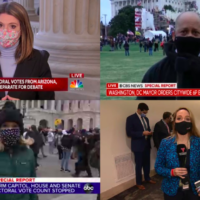
On Wednesday, January 6th, a violent mob stormed the United States Capitol in response to Congress’ anticipated certification of the Electoral College votes for the 2020 Presidential Election. Five people died and more than fifty were injured. Throughout the day, American citizens from every corner of the nation watched with rapt attention as rioters climbed over walls and scaffolding, broke windows, and marched through the Capitol building with Trump flags in their hands and Neo-Nazi slogans on their chests. For hours, our feeds were brimming with footage from inside the building and our screens continuously flashed live updates. It seemed as though everyone in the world was tuned into the events inside the nation’s capital, pausing the course of their daily lives in order to see for themselves how the crisis would unfold.
About a week prior, Wonder Woman 1984 was released on HBOMax. The film was streamed over 2.2 million times on its first day on the platform. On Wednesday, the day of the unprecedented attack, CNN averaged 5.2 million viewers; the highest single-day viewership the network had ever had in its 40-year history. The insanity of the real world trumped the glory and excitement of a fictional one; a development that would appear unexpected had the real-world events not been so catastrophic.
While this development represented the pinnacle of astonishing historic news events that keep us glued to our phones and TVs, considering the course of the past year, it can hardly be considered unfamiliar. The first presidential debate between Donald Trump and Joe Biden on September 29, 2020 raked in almost twice as many viewers as Mulan did on Disney Plus within the first three weeks of its release. An event which would usually be met with indifference had this year been like any other was able to draw in more viewers than a film promised to be a smashing success. With the aforementioned presidential election, various wildfires, the spread of the coronavirus across the globe, Black Lives Matter protests and the resulting response of the police, and not one, but two presidential impeachments, this year has been full of extraordinary events that are constantly being broadcast before our eyes in real time. Now, congressional scandals, changes in foreign policy, and fantastical movies seem old-fashioned, pale in comparison, and barely make it onto the nightly news cycle.
Everytime you turn on the TV, another “once in a lifetime” event is occurring. Another global catastrophe or bewildering development is underway, and it has become exceedingly difficult to avert your eyes. With all of the gore and frenzy that the news displays, it itself has become a form of riveting entertainment. While we have become partially immune, we have also become dependent on absorbing every new update, searching to understand how it will affect our lives and the future of our nation. Our news has become a platform where our worst fears and wildest imaginations are being broadcast live, and we can’t tear our eyes from the screen any longer. While it is true that most of us haven’t been able to spend much time at the movies this year, who needs Hollywood blockbusters when we have the news?
Leave a Reply
You must be logged in to post a comment.