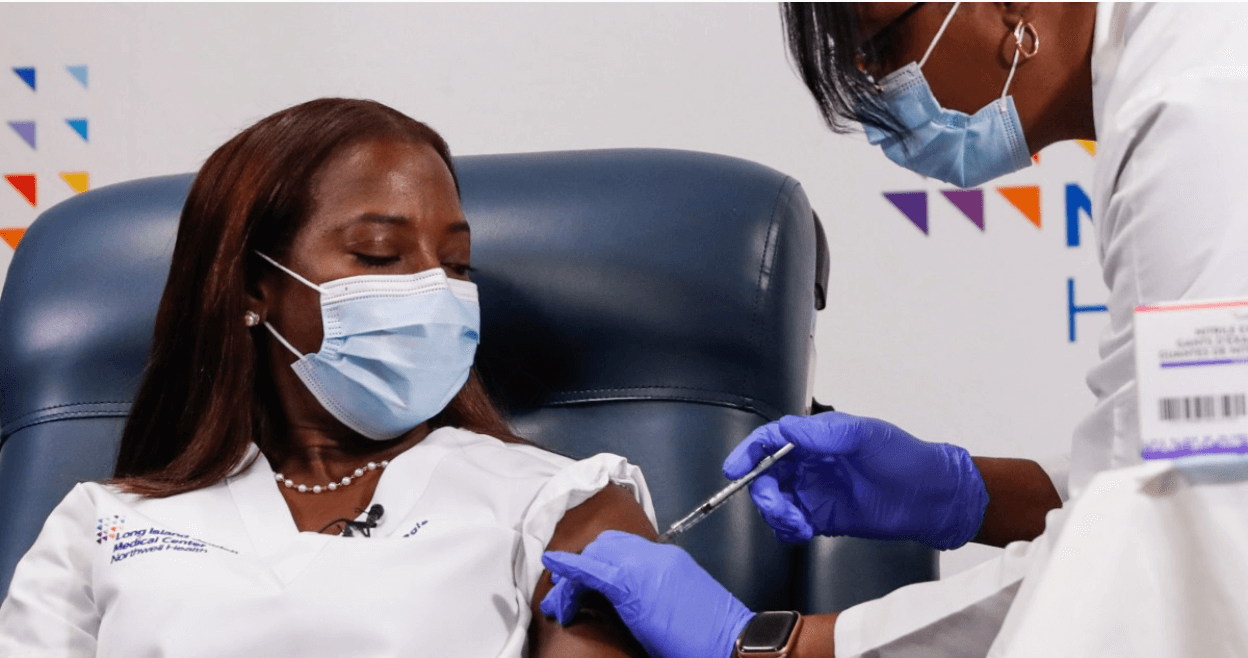
On December 11, 2020, the FDA officially approved the distribution of the Pfizer-BioNTech COVID-19 Vaccine in the U.S. While vaccine rollout initially began with high-risk workers in the healthcare industry, the conversation has always been, “how do we prioritize who should receive the vaccine?” The answer to this questions was those who are the greatest risk of COVID-19, elderly people and healthcare workers. However, as the Biden administration acknowledged in their national COVID response outlines, because of inequity, Black and LatinX communities were also among the groups most likely to contract and die due to the virus. Early on in the pandemic, the CDC identified that due to disparities in healthcare, occupations, housing, and many other key factors, LatinX persons were hospitalized at a rate four times higher than that of non-Hispanic white people. Therefore, it is imperative to review and improve the equity in the distribution of the vaccine to prioritize at-risk minority communities.
While we know information about the roadblocks to vaccinating minorities, it becomes hard to effectively analyze it as of now, since the data is hard to collect and incomplete across the country. For example, the KFF COVID-19 Vaccine Monitor currently has over 99% of race/ethnicity data from North Carolina, yet reports only 40% of data from Washington D.C. Therefore, understanding the need for this data, states added required questions which ask for race/ethnicity from all people registering for the vaccine. Data is still limited but with new rules, the CDC states that of those vaccinated, 65% were White, 11% were Hispanic, and 8% were Black, as of April 6, 2021. However, the U.S. Census reports that 13.4% of the country is Black or African American, and 18.5% is LatinX, proving that distribution is unequal and failing to address those communities higher contraction rates.
The data is significant, and states have already understood the inequities with contraction rates, encouraging them to develop a multitude of strategies to target issues. To prevent discrimination in the selection of those who receive the vaccine, states have begun to allocate vaccine doses for disproportionately affected populations and areas. Using the CDC’s Social Vulnerability Index, states like Massachusetts have reserved 20 (or more)% of vaccines for communities of color. Similarly, states have been placing more vaccination sites within or in proximity to underserved areas. By partnering with pharmacies and community healthcare centers, places like Tennessee have been able to significantly increase the number of vaccine clinics and mitigate transportation issues for low-income groups.
Despite states addressing those problems, it is clear that there are still issues that lead to disparities in vaccine distribution. One of the most pressing equity issues that researchers have identified is the need for online registration in a majority of states. This primarily hurts Black and Hispanic families who are continuously less likely to own traditional broadband home internet service. To address this specific issue, states have added a hotline that residents can call to schedule an appointment, as cellular service is significantly more accessible. However, it will take time for it to be a feature in all fifty states due to the need for a large staff that can cross language barriers. Another problem arises with the lack of a national, unified system, and as different states move forward with varying speeds and methods, the lack of clarity creates a barrier for all citizens, specifically older residents and those in underdeveloped counties.
Equity can be measured in statistics but should also be analyzed through the policy enacted to address inequitable systems. If there is one message that can be taken from this analysis, it is that understanding the inequities and speaking up can lead to systematic change which will influence all future events. Acknowledging that booking vaccine appointments over the phone can be both beneficial but also a slow process to integrate, will produce more effective policy. Through their efforts, states have managed to reduce disparities compared to the beginning of the pandemic, but as this year has shown, there is always a need for improvement and a willingness to fight, which will continue to hold systems accountable and work towards a more equitable public health system.
Leave a Reply
You must be logged in to post a comment.