By Emily Qin ‘25, Commentary Staff Writer
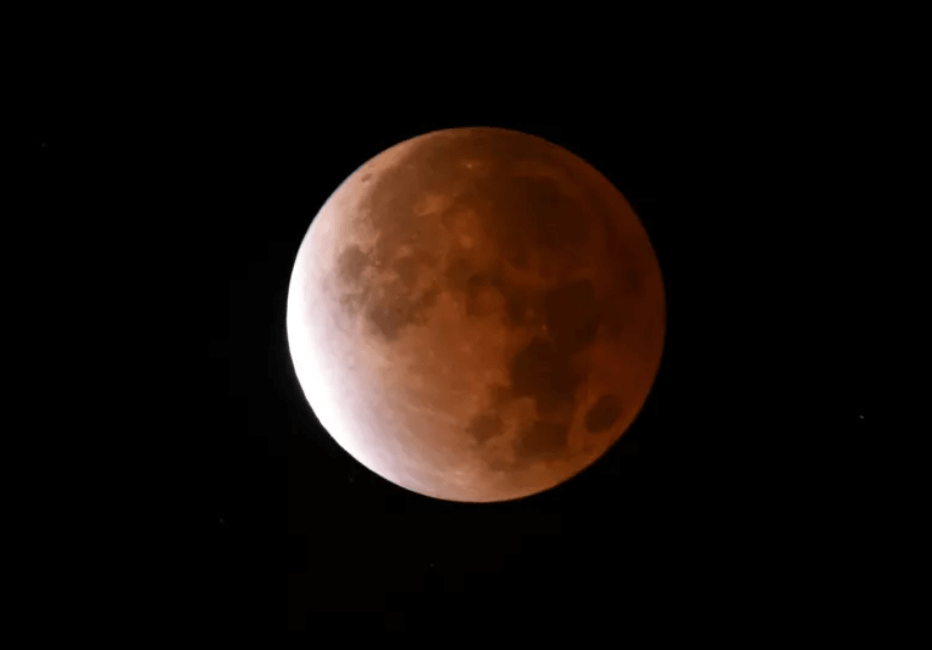
I bet you didn’t know thaton November 18th, Earth experienced its longest partial lunar eclipse in over five hundred years, also known as 2021’s Beaver Moon. Scientists all over the world, from the United States to Mexico to Thailand, were eager to witness this historic event, and some cities in Southeast Asia even celebrated it with festivals. The eclipse was visible to those on the West Coast late at night on November 18, 2021, while the East Coast of the United States was able to view it on the early morning of November 19, 2021.
Partial eclipses occur when the Earth, moon, and sun almost completely align, causing the moon’s surface to be slightly obscured by the Earth’s shadow. I, like many others, remember the last total eclipse that occured in August 2017, which was much better known to the public than any other lunar eclipses. Your family may have bought solar eclipse glasses to view the eclipse, and even the president at the time – Donald Trump – viewed it as well. However, this eclipse was one of the few important astronomical events that has gained momentum through the media, and, consequently, was widely known to the general public.
The Beaver Moon is just one example that demonstrates the large gap in communication between the science community and the general public. When was the last time you remember hearing about or watching a space launch? What about seeing planets like Saturn, or Jupiter, in the night sky? Have you ever seen a shooting star, or a comet?
One of the bigger reasons that science seems to be straying away from the rest of the populace is because of its increasing inaccessibility. As science advances, so do its discoveries, causing increasingly complex data that is difficult for those without scientific background to understand. Many papers written by scholars and scientists are also now charging readers to view, which only adds to the preexisting break between science and the public created from the seemingly incomprehensible data. Scientists all over the world make groundbreaking revelations every day, but fewer and fewer reach the knowledge of the majority of society.
Consequently, this large communication gap between the science community and the general public obscures future scientific discoveries. As Katie Trauth Taylor, PhD and Stephen Taylor, PhD note in an Untold article, “For knowledge to be understood and acted upon, it must be accessible to the broader public.” They note that some people have opinions of science based on their “particular worldviews,” meaning some have begun to perceive science as a political belief. This misunderstanding causes citizens to treat science as a topic of debate as opposed to an intricate field with thousands of possibilities.
Many organizations and universities recognize and are fighting to find a solution for this issue. For example, the EU set a goal to make all of its scientific papers free and accessible to all in 2020, which allows for wider spread knowledge of discoveries directly from scientists themselves. In doing so, there is less room for misunderstanding or misinformation from the scientific community to the general public through the spreading of awareness.
But we, as part of the Newark Academy community, can do our part, too. We can stay updated on major scientific events through the media, and it is imperative that we understand science through direct evidence and multiple perspectives. If we encounter someone else who has a misconception of science or a particular topic, we should attempt to see where they are coming from and inform them of the facts to prevent the spread of misinformation. I’ll even provide a head start: the next total lunar eclipse will occur on Monday, May 16, 2022, so mark your calendars and keep an ear out for other scientific events until then!
Leave a Reply
You must be logged in to post a comment.