By Kieri Keys ‘24, Commentary Staff Writer

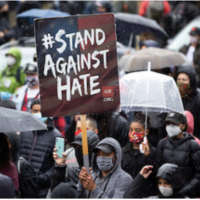
Protest in Washington D.C. against hate speech as part of the First Amendment
(David Hudson)
As humans, we communicate through language, complex systems of speech, and sound. Every word we speak conveys a meaning recognized and generally agreed upon by society. Certain words, however, hold extreme amounts of power. The culture created around these words and their use is long and complicated so, should we even keep them around?
Hate language is considered to be any language that is harmful, appropriative or derogatory towards minorities and marginalized groups of people. One of the most recognizable forms of hate speech is the slur: an individual word whose origins are immeasurably harmful.
Throughout history, words have been created to isolate and attack racial minorities. The N-word originated from the Latin word for “black”. It quickly became identified as a derogatory term to use for African Americans and Black people. The purpose of the slur was to dehumanize its targets and uphold an anti-Black consensus. Accompanying caricatures of Black bodies and lives from the 1800s continuing into the 21st century, the N-word serves to strengthen the hateful stereotypes of Black people. The intense connotations attached to the word are so significant that people outside of the Black community using it can be removed from work and learning institutions.
Much like language targeted toward racial demographics, hate speech can also be directed toward aspects of personal identity. The Fa-slur was originally used in the 16th century to refer to someone who practiced religious heresy. The meaning of the word evolved to a derogatory slur used to target and attack all members of the LGBTQ+ community. Sometimes the Fa-slur will be used as a synonym for “feminine” or “gay” in casual language by straight, cisgender individuals, which is problematic in its erasure of the more intentionally hateful use of the word that creates extremely unsafe spaces for queer individuals.
These words are hateful. However, the use of words that have historically degraded and oppressed people can be reclaimed by those same groups in an act of empowerment and freedom. When exchanged casually amongst each other, a mutual understanding of respect and equality builds community through the safe use of these words. As a member of both of the groups I’ve mentioned in this article, I myself do not choose to exercise my right to use these words. I believe that reclamation is important and empowering, and I still support the choices of other marginalized people to integrate their formally oppressive language into their culture, but in my opinion, the disappearance of these words from the modern language altogether would prevent opportunities to cause further harm. It would not eradicate hate but it would be a step forward.
Regardless, every individual is entitled to their own beliefs and experiences. There is no consensus that every Black person is comfortable embracing and reclaiming the N-word, just as every queer person does not feel empowered by the use of the Fa-slur. There are careful social rules to be followed in order to prevent cultural appropriation and racism, however holding debates over which oppressed groups maintain the right to use a slur among themselves is a dangerous path to follow. The choice to use slurs depends on whether or not someone finds power in speaking them. In the wrong mouth, that power becomes oppressive and dangerous. Reclaiming a piece of history created to oppress one’s identity is powerful for many people, but it comes at the price of keeping the language relevant and present in our modern day; however, for once, the choice belongs to the cultures who hold the power of language.
Leave a Reply
You must be logged in to post a comment.